Magnetic Spice Storage Ideas for the Side of Your Fridge
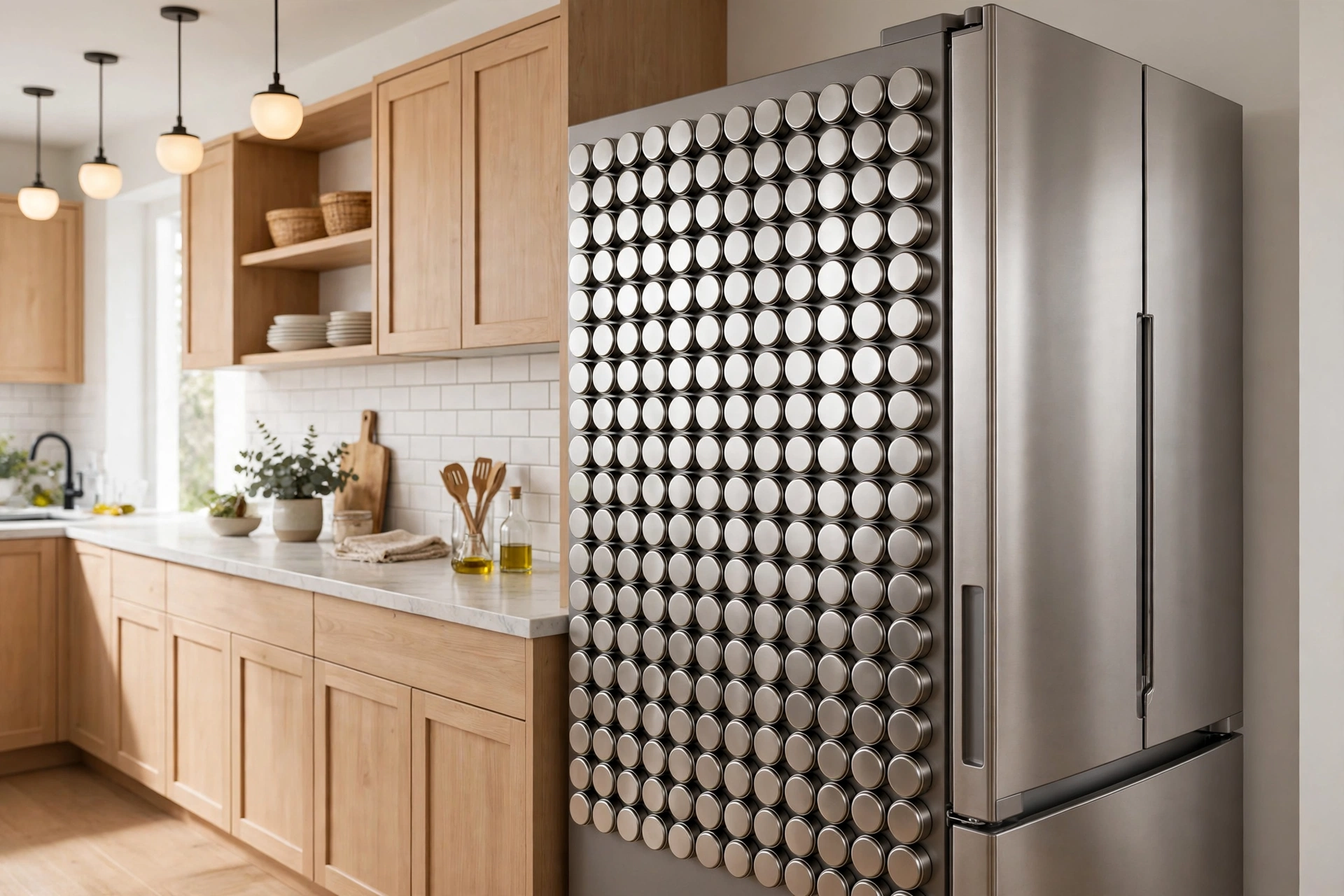
That strip of steel on the side of your refrigerator is the most overlooked storage surface in a small kitchen. It is flat, empty, and magnetic on most fridges, and it is tall enough to hold every spice you own without taking a single square inch of cabinet, drawer, or counter space. Moving spices there can free an entire cabinet shelf: a place you can then use for food storage, small appliances, or simply breathing room.
This guide covers the two ways to do it (magnetic spice tins and magnetic shelf racks), how to check whether your fridge side actually holds magnets, which tins to buy, how to fill them without spilling a fortune of paprika on the floor, label ideas that survive steam and fingerprints, and what should never live on that fridge side. It is fully renter-safe: no drilling, no adhesive strips on walls, nothing to repair when you move out. For the bigger kitchen plan this fits into, see our complete guide to small kitchen organization.
Why the Fridge Side Works So Well
Idea 1: Reclaim a whole cabinet shelf. A crowded spice cabinet in a small kitchen usually eats an entire shelf. Fifteen to twenty spice jars stand in double rows, and the back row is invisible, so you end up buying duplicates. Moving that collection to the fridge side gives you back that shelf in one afternoon. The difference is immediate because spices are one of the few cabinet categories that transfers completely: there is no odd-shaped lid or tall bottle left behind.
Idea 2: Zero holes, zero damage, zero landlord trouble. Magnets are the most renter-friendly mounting method that exists. They grip the steel side of the fridge with no tools, and they come off the same way, leaving no marks and no residue. If you rearrange the kitchen or move to a new apartment, the whole spice wall moves with you. For more no-drill upgrades in the same spirit, see our renter-friendly kitchen upgrades.
Idea 3: Spices you can see get used. Most spice cabinets fail because of blindness: jars hide behind each other, and whatever hides gets forgotten. A magnetic wall keeps every tin visible at eye level in a single grid. You grab what you need while cooking and put it back in one motion, which means less digging and fewer half-empty duplicates at the back of a cabinet.
First, Check That Your Fridge Side Holds Magnets
Idea 4: Test with a plain fridge magnet. Before buying anything, walk up to the side of your refrigerator with a souvenir magnet from the front door. If it sticks firmly, your fridge side is magnetic steel and you are set. On many stainless steel models, the front doors are not magnetic while the sides are, so do not give up if the front rejects magnets; test the side specifically. A weak, sliding grip means a textured or painted surface that may hold light tins but not a loaded shelf.
Idea 5: Know the honest limits of your surface. A smooth, flat, bare-steel fridge side is ideal. If your fridge side is heavily textured, has raised vents, or is covered by a decorative panel, magnets will not grip well enough for a full spice collection. Also check which side of the fridge you can reach easily: a wall wedged against one side leaves you only the other, and that is fine, as long as it is the side you actually cook next to.
Idea 6: If the side is not magnetic, use a removable steel plate. Some fridges simply will not hold magnets, and some renters prefer not to cover the fridge at all. Thin steel plates that stick to the wall with removable adhesive strips can stand in as a mounting surface. You lose nothing: the tins still attach by magnet, and the plate peels off the wall cleanly when you move.
Tins or Shelves: Pick Your System
Idea 7: Magnetic spice tins, the most popular option. These are small round tins with a magnet built into the base and a clear lid on top. The standard size is about 3 ounces capacity, roughly 2.4 to 2.5 inches wide and 2 inches tall, which is enough for a normal quantity of one spice. The clear lid lets you see the contents without twisting anything open, and many lids have a twist top with both sift holes and a pour slot. Each tin holds a few ounces of weight, so a wall of fifteen tins is only a couple of pounds spread across the fridge side.
Idea 8: Magnetic shelf racks, if you want to keep your jars. These are small metal shelves with a full magnetic back that snap onto the fridge side, and your existing spice jars sit on them. Most single shelves are rated to hold around 5 to 10 pounds, so check the listed capacity and keep them well under it. They suit renters who do not want to decant anything: you keep your current jars, labels and all, and just change where they live.
Idea 9: Combine both for a complete system. Tins are best for the spices you buy most often and keep refilling, because the sift and pour lids make daily cooking fast. A small shelf rack alongside them handles the awkward extras: a tall vanilla bottle, a big container of salt, or the chili flakes you buy in bulk. One fridge side easily holds a row of tins plus one slim shelf without looking cluttered.
Fill the Tins Without the Mess
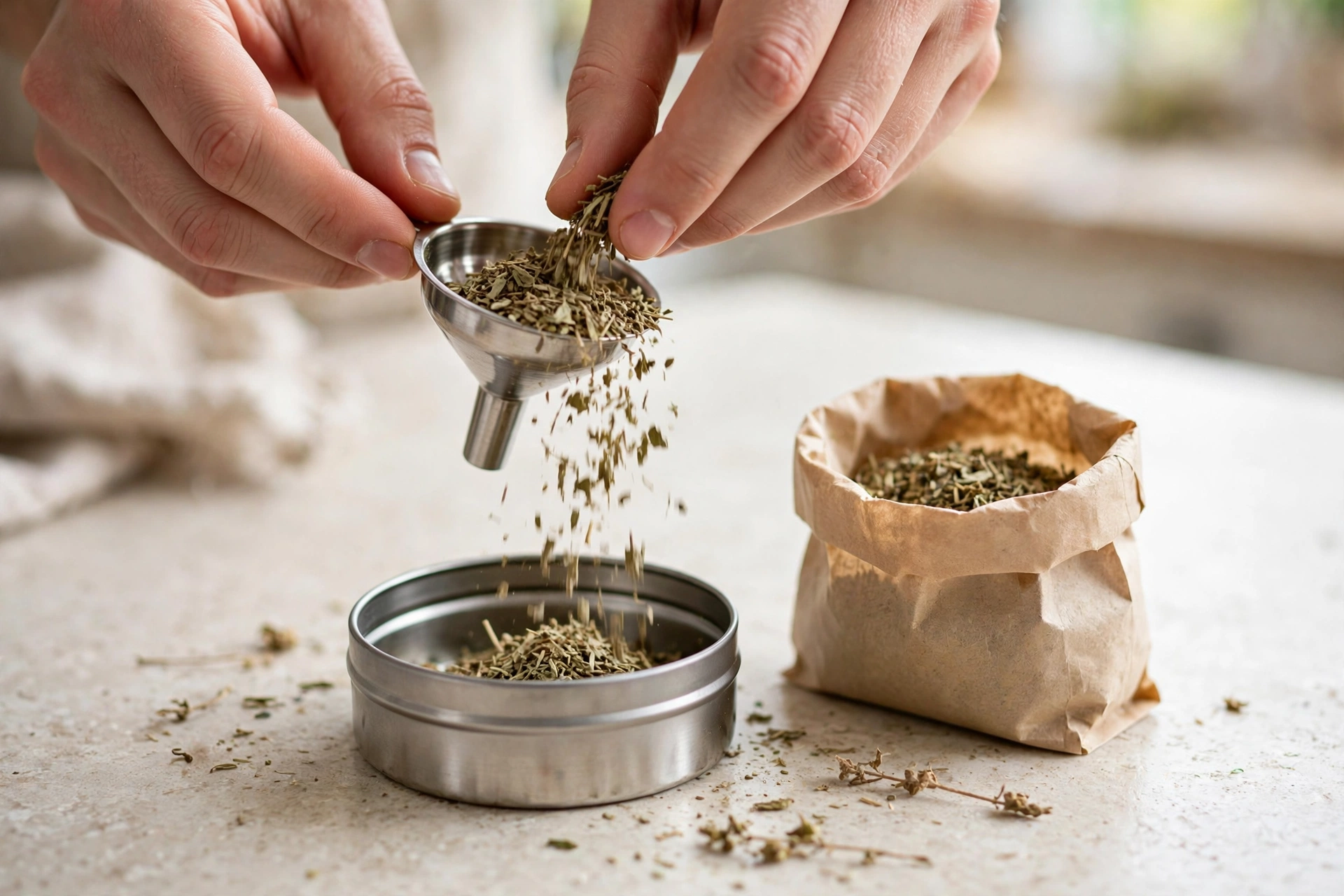
Idea 10: Use a small funnel, not the bag. Decanting spices straight from a bag into a two-inch-wide opening is how paprika ends up across the counter. A small stainless steel or silicone funnel that fits inside the tin opening makes the pour controlled and nearly spill-free. Hold the funnel in place, pour slowly, and stop when the tin is about three-quarters full; spices compact and settle, and overfilled tins spill the moment you open the lid.
Idea 11: Buy in bulk and refill, on a tight budget. Bulk spice bags from the store or market usually cost less per ounce than new glass jars of the same spice. Decanting them into your tins keeps the savings without the clutter of a dozen floppy bags in a cabinet. This pairs well with the budget strategies in our small pantry organization guide: refill what you use most, and keep only a small backup supply stored elsewhere.
Idea 12: Write the refill date on the lid. Ground spices lose their punch over roughly 6 to 12 months, and whole spices last longer, but nobody remembers when a jar was opened. A tiny sticker or a note in grease pencil on the tin lid, noting the month you filled it, turns your spice wall into a self-auditing system. When the date looks old, rub a pinch between your fingers and sniff: if the aroma is faint or dusty, it is time to refill, not time to mourn it.
Labels That Stay Put and Stay Readable
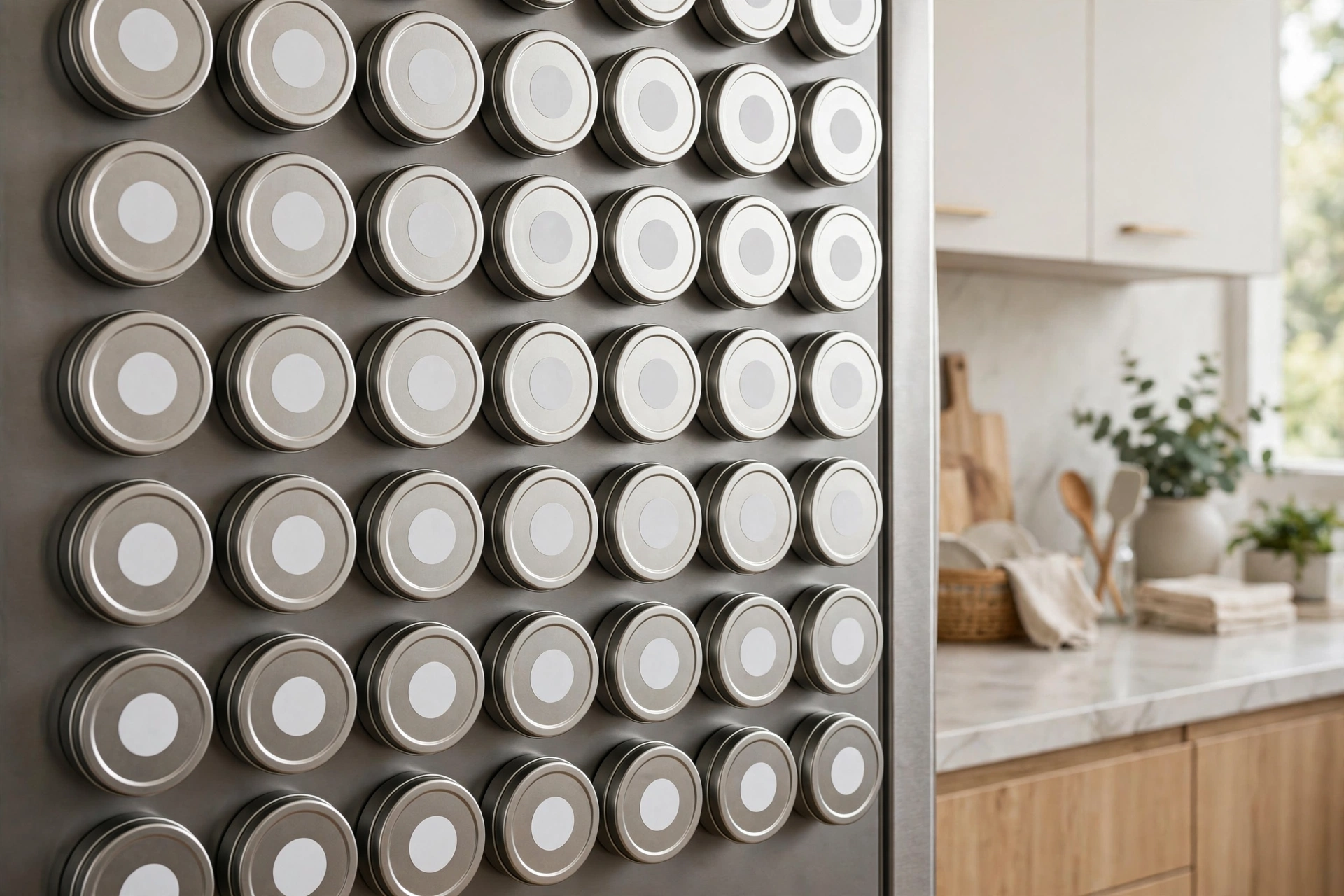
Idea 13: Use preprinted labels for the common spices. Most tin sets include preprinted labels covering the usual suspects (cumin, paprika, oregano, cinnamon, and the rest), plus blank ones you can write on. Stick to preprinted labels for the classics and save the blanks for your custom blends and regional seasonings. One 1.5-inch round label fits neatly on a standard tin lid and stays readable at arm’s length.
Idea 14: Put labels on the lid if the tins hang vertically. When tins sit on a fridge side, the lids face outward, so the lid is the surface you read. Labels on the lid let you scan your whole collection without pulling anything down. If you later move the tins flat on a magnetic wall plate, the same lid labels keep working, which makes the system portable between apartments.
Idea 15: Choose water-resistant vinyl over paper. Kitchen air carries steam and grease, and paper labels on spice tins curl and smudge within months. Water-resistant vinyl labels, the chalkboard-style round ones included with most tin sets, wipe clean with a damp cloth and do not peel when the kitchen gets humid. If you write on blank labels, a chalk marker wipes off for relabeling while a permanent marker stays put; pick based on how often your spice lineup changes.
Arrange Them So Cooking Feels Effortless
Idea 16: Sort by cooking job, not alphabetically. Alphabetical order looks tidy but forces you to scan the whole wall for every meal. Instead, group by how you cook: everyday savory spices (salt, pepper, cumin, paprika) at eye level in the middle; baking spices (cinnamon, nutmeg, cloves) in a separate row; finishing touches and blends (flaky salt, chili flakes, your favorite mix) at the edge nearest the stove. Most weeknight meals come from one zone.
Idea 17: Keep the collection small on purpose. A fridge side holds roughly 15 to 25 tins comfortably, and that limit is a feature. It forces the one-in-one-out rule: when a new spice joins, an old or duplicate one leaves. Backstock stays in the pantry or the cabinet shelf you just freed, and only the working collection lives on the fridge. A curated wall you actually read beats a crowded wall that blends into noise.
What Not to Put on the Fridge Side
Idea 18: Keep spices away from heat and steam. Heat, light, moisture, and air are the four enemies of spice freshness. The fridge side facing the stove gets warm during cooking, so use the cooler side of the fridge, or the far end of the same side, away from the burners. Also resist the habit of shaking a tin over a steaming pot: the steam rises into the open lid and clumps the spice inside. Measure over the counter, then add to the pan. One industry guideline recommends keeping spice storage below about 68 degrees Fahrenheit and 60 percent humidity; a fridge side away from the stove fits comfortably inside that.
Idea 19: Do not overload shelves with heavy items. Tins are featherweight, but magnetic shelves tempt you to load oil bottles, vinegar, and jars of honey. Every shelf has a rated weight capacity, commonly 5 to 10 pounds, and exceeding it risks a slow slide down the fridge in the middle of the night. Keep shelves for light jars and tins only, and treat the fridge side as a spice wall, not a replacement pantry.
FAQ: Magnetic Fridge-Side Spice Storage
Will magnets damage or scratch my refrigerator?
Not if the magnets sit flat and clean. Wipe the fridge side before placing anything, and slide tins and racks into position gently rather than dragging them. Dragging a gritty magnet across the finish can leave fine scratches, so lift and place instead.
Do magnets stick to stainless steel refrigerator doors?
Often the front doors of stainless steel fridges are not magnetic, but the sides usually are. Test with a basic fridge magnet: if it grips the side firmly, your spice tins or racks will hold. If the side barely holds, that surface is not suitable for a loaded setup.
Is the side of the fridge the same as storing spices in the fridge?
No. Storing spices inside the refrigerator is generally not recommended because condensation forms each time a cold jar meets warm kitchen air, and that moisture causes clumping. The outside side of the fridge is room temperature, so none of that applies. You get the convenience without the condensation problem.
How long do spices stay fresh in magnetic tins?
About the same as in any other airtight container, because the tin, not the location, protects them. Ground spices keep good flavor for roughly 6 to 12 months; whole spices last longer. The refill date on the lid (Idea 12) is what actually keeps you honest.
What if I want my spices somewhere else entirely?
The same tins stick to any flat steel surface: the side of a microwave, a metal pantry door, a filing cabinet in a home office. If you would rather keep spices inside a cabinet, the removable steel plate from Idea 6 can mount inside a cabinet door and hold the same tins.
Your Next Step
Test your fridge side with a magnet today; it takes five seconds. If it sticks, order one set of magnetic tins this week and move your eight or ten most-used spices first. The moment that first cabinet shelf stands empty, you will see exactly what to do with the space. Then fold the spice wall into your wider kitchen system with our complete small kitchen guide and the kitchen hub for more ideas.