Over-the-Door Pantry Organizers Worth Buying in 2026
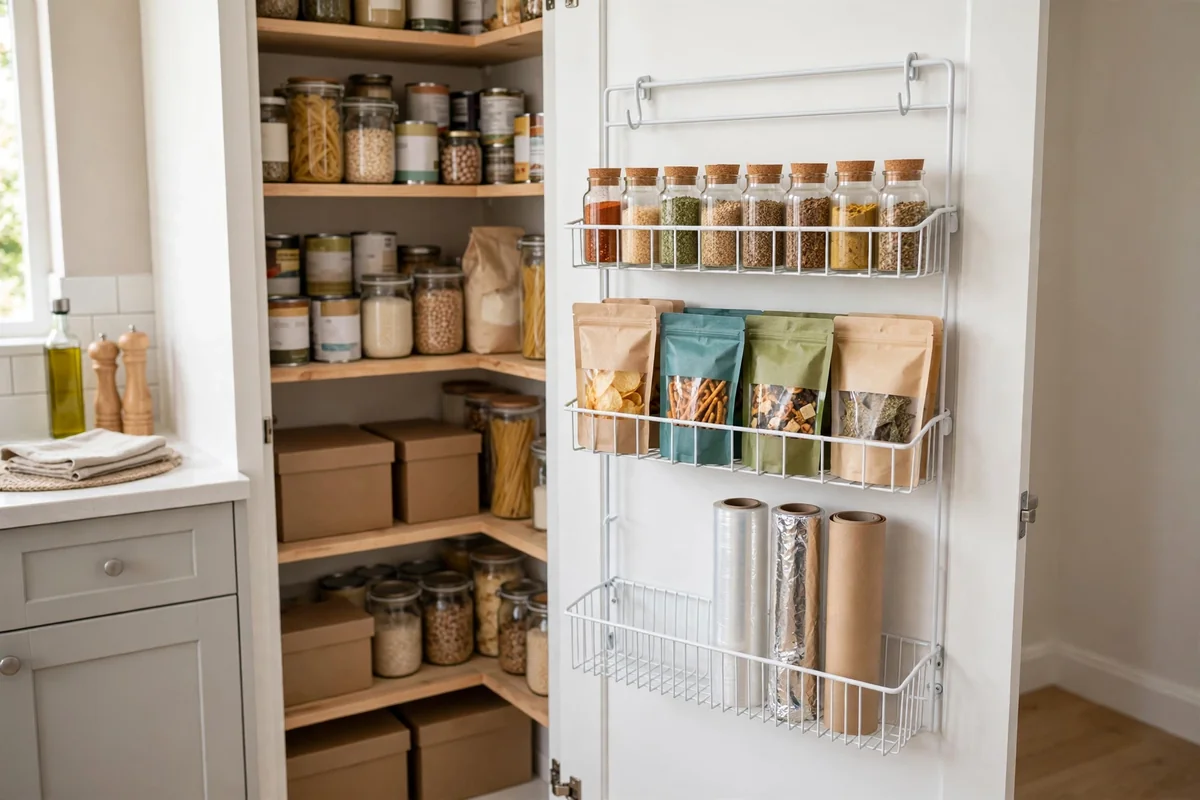
The back of a pantry door is some of the most underused space in a small kitchen. It is a full wall of storage that collects nothing but scuffs, while the shelves inside the pantry overflow with spice jars, cans, and half-empty snack boxes. An over the door pantry organizer fixes that mismatch in about ten minutes, with no drilling and nothing permanent.
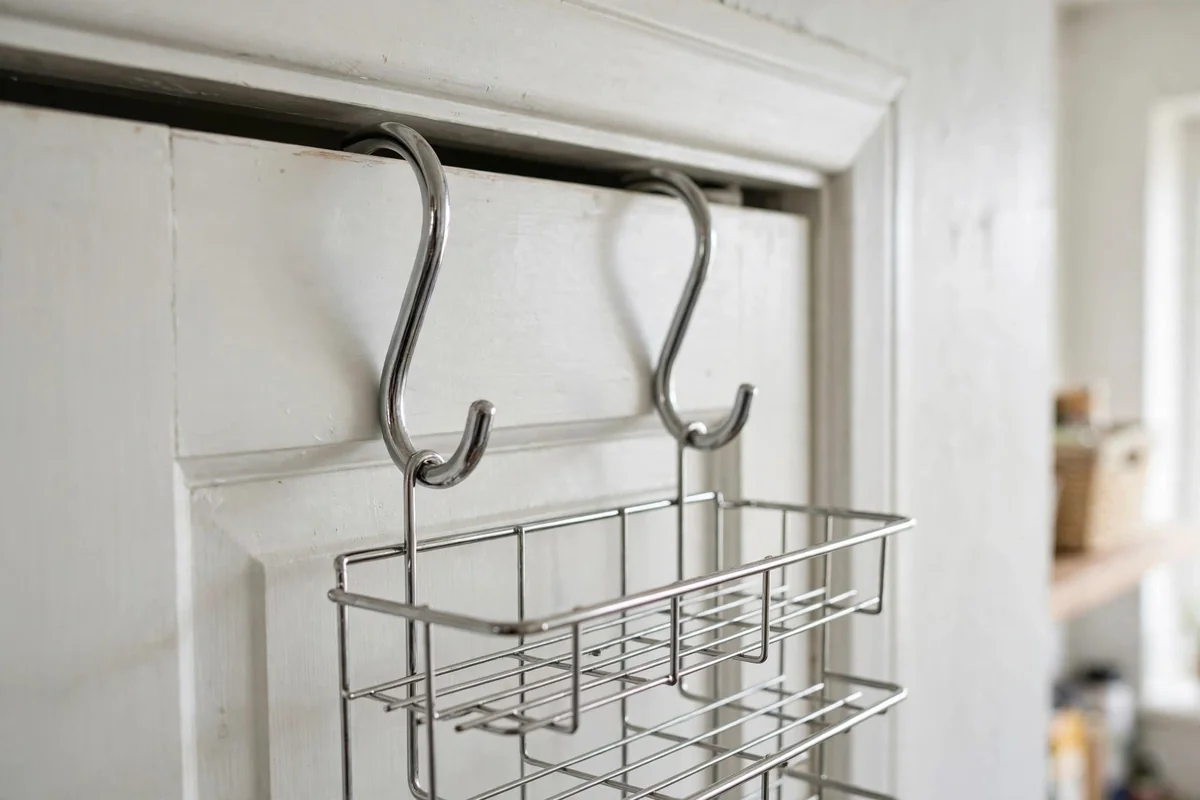
These racks hang from the top of the door on curved hooks, adding four to nine tiers of shelving where there was only air. But not every rack suits every door or every kind of item. This guide compares the main styles, shows you what to measure before you buy, and walks through what to store on each tier so the door still closes properly.
The Main Rack Styles, Compared
Most over-door pantry organizers fall into four families. Knowing which family you are looking at makes the rest of the shopping decision easy.
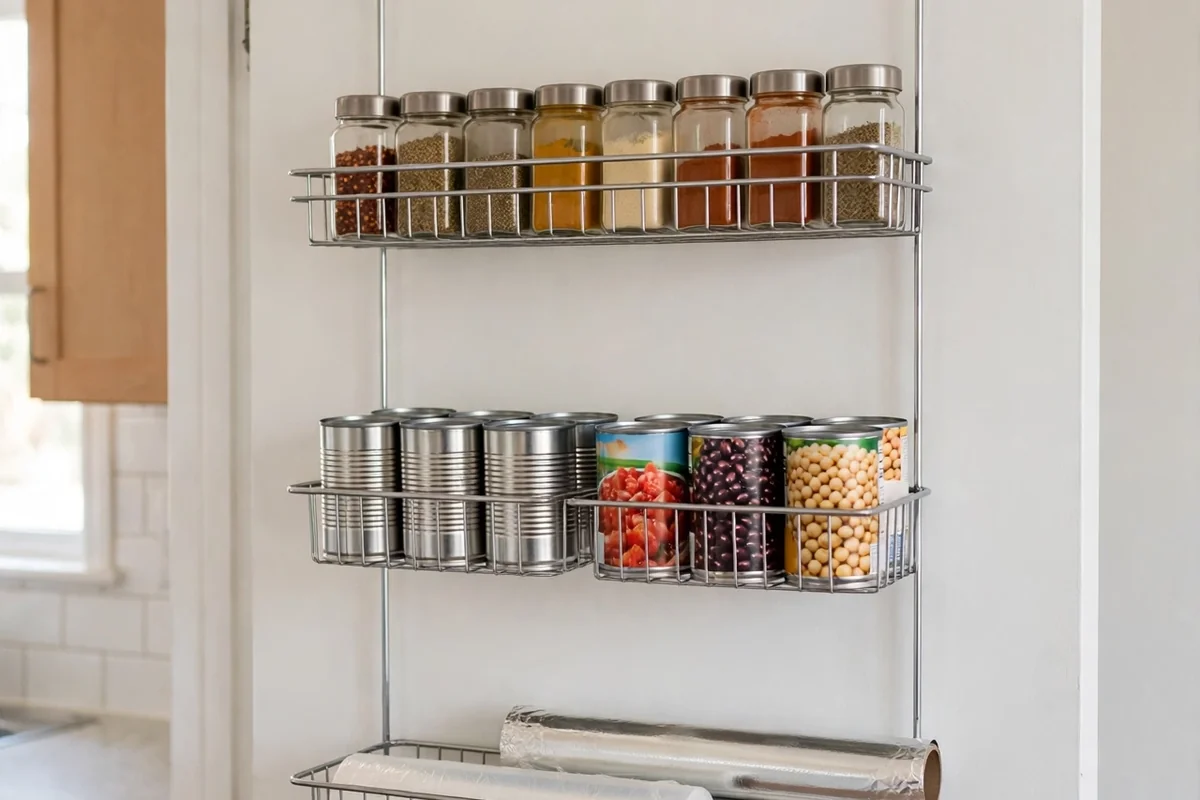
Wire and metal basket racks. The classic: a vertical frame with wire or mesh baskets you can often slide to different heights. They hold the most weight (many list around 10 pounds per tier), suit cans and jars, and let air circulate so nothing gets musty. The downside is that small items can poke through wide wire grids, and the racks add the most weight to the door itself.
Clear plastic basket racks. A steel frame with transparent PET baskets, like the popular clear-front designs. You can see contents at a glance without pulling each basket out, which matters when three people share one pantry. The baskets tend to be shallower than wire ones, so tall bottles may need a lower shelf position.
Fabric pocket organizers. Non-woven fabric with clear PVC fronts, usually five or so tiers with divided compartments and side mesh pockets. They are the cheapest and lightest option and fold flat between moves, which renters appreciate. They hold less weight and give less rigid support than wire or plastic baskets, so they suit packets, wraps, and light boxes better than canned goods.
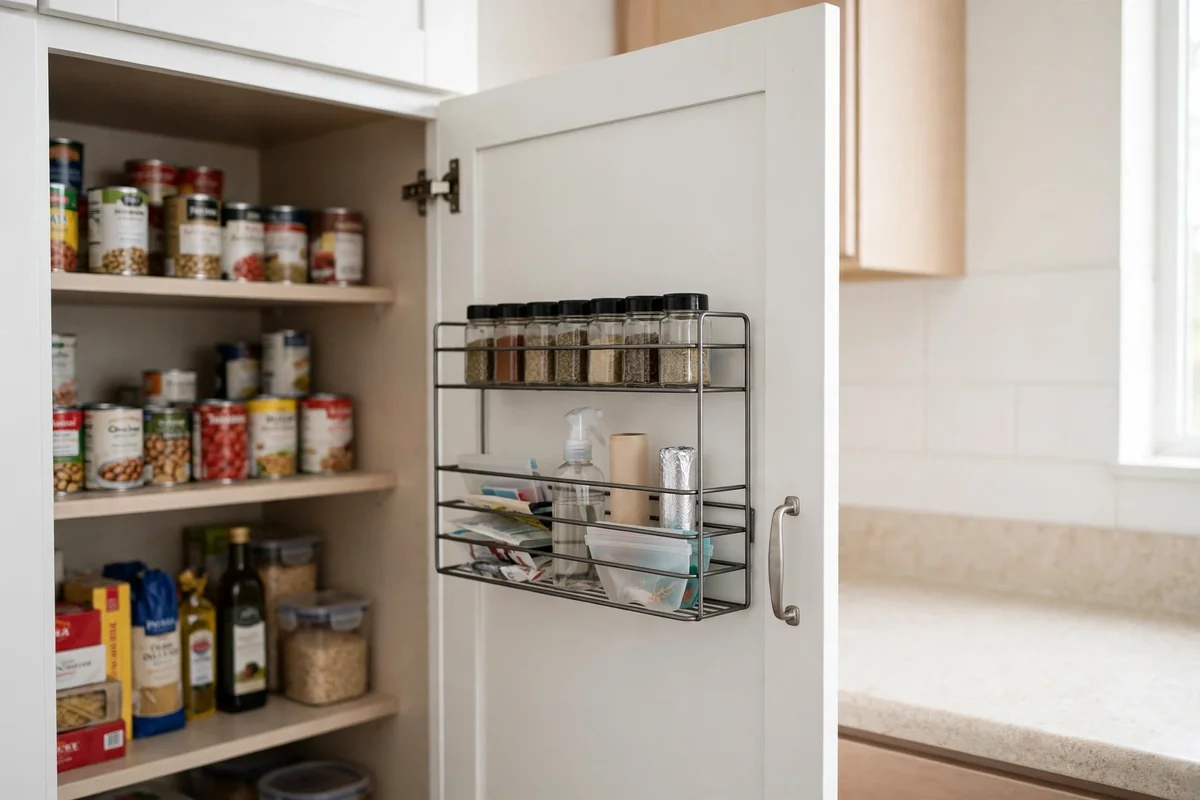
Slim rail and spice racks. Narrow single or double rails designed for spice jars and seasoning packets. They protrude least from the door, which makes them the best choice for shallow pantry shelves or closet doors where a deep basket would block closing. For a full pantry, they work as a supplement rather than the main organizer.
Quick comparison:
Wire basket racks: heaviest loads, adjustable tiers, best for cans and jars. Watch the door's weight tolerance.
Clear plastic baskets: see-through fronts, moderate weight, best for shared pantries. Baskets can be shallower.
Fabric pocket organizers: cheapest, lightest, folds flat for moves. Best for packets and wraps, not heavy cans.
Slim spice rails: thinnest profile, best where depth is tight. Too small to carry a whole pantry's load.
Measure Before You Buy
A rack that does not fit your door is a return trip, not a storage upgrade. Five measurements take less than five minutes and rule out most problems.
1. Door thickness. Measure the edge of the door. Most over-door hooks fit doors up to about 1.75 inches thick. Standard interior hollow-core doors are usually around 1.375 inches, which works; some solid or older doors run thicker.
2. The gap between door and frame. The hook needs to slip over the top of the door. A visible gap of even a couple of millimeters is usually enough, but if the door was painted shut or the frame was recently replaced, check that the hook actually slides on before you load the rack.
3. Clearance between the door and the pantry shelves. The baskets stick out from the door, and the door still has to swing shut. Most manufacturers recommend at least about 6.5 inches between the back of the door and the nearest shelf. Measure at the shelf nearest the door, not the average.
4. Door width, minus the handle. Full-width racks often need at least 20 inches of clear door surface. Narrow pantry or cabinet doors suit a single-rail or half-width rack instead.
5. Trim and molding depth. If the door has raised panels or decorative molding deeper than about half an inch, the rack can sit crooked. Flatter is easier.
What to Store on Each Tier
A door rack works best when heavy items sit low and daily items sit at arm height. Think of the rack as the pantry's front line: the things you grab every day, visible the moment the door opens.
Top tiers: spices, seasonings, and tea. Small jars and packets are light and benefit most from being visible. This is where a slim rail insert or narrow basket earns its keep. Group by use: everyday cooking spices in one tier, baking extracts and food coloring in another.
Upper-middle tiers: cooking oils, vinegar, and sauces. Tall bottles fit best in adjustable baskets set to their full height. Keep a paper towel or small tray under oil bottles; a slow leak on a door rack will run down every tier below.
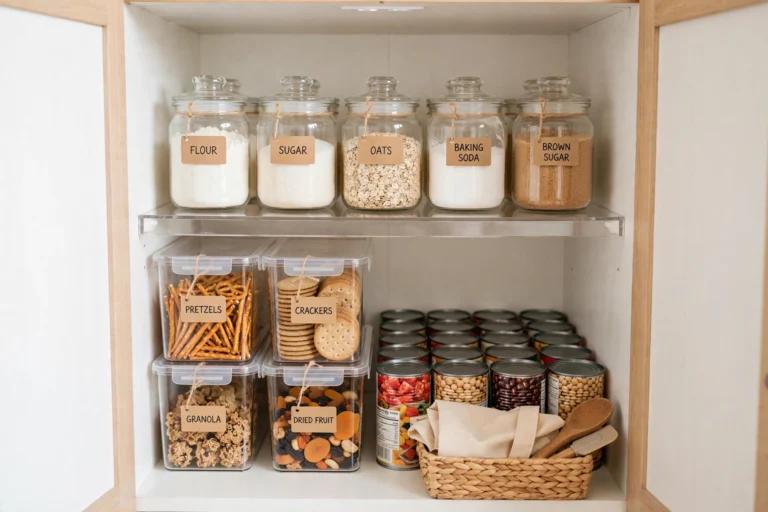
Lower-middle tiers: canned goods and jars. This is the weight zone. Cans are heavy, so keep them on the lower tiers where the door's hinges carry the load better and the weight sits closer to the floor. Check the rack's per-tier weight limit on the packaging and stay comfortably under it.
Bottom tiers: wraps, foils, and snack boxes. Bulky but light items fill the bottom nicely: plastic wrap, foil, parchment rolls, and the snack boxes that always slide around on shelves. If your rack came with deep baskets, the bottom tier is also the natural home for backup condiments.
Keep the very top tier for things you rarely touch but want visible: holiday sprinkles, the specialty vinegar, backup batteries for the smoke detector. If the top tier is hard to reach, do not store daily items there; you will stop using them.
This tier plan works even on a tight budget. Our guide to small pantry organization on a tight budget shows how to sort and group what you already own before buying anything new, so the rack holds categories instead of clutter.
How to Keep the Door Closing Properly
The most common complaint about door racks is not the storage, it is the door. A rack that keeps the door from latching, swings when you open it, or chips the door's top edge is a project that failed. All three are preventable.
Fit the hooks to the door, not the other way around. The hooks should hug the door's top edge with minimal play. If they wiggle, the whole rack will sway when you swing the door open. Foam-backed or padded hooks protect the finish and grip better than bare metal.
Respect the weight limit. Check the rated capacity per tier and for the rack overall, then load it lighter than the maximum. A rack loaded to its limit on day one only gets heavier as you add groceries. If the door starts to drag or the hinges creak, you have overloaded it; move cans back to the pantry shelves.
Stop the swing. Many racks include adhesive bumper pads or stabilizer stickers for the bottom of the frame. Use them. A rack that swings free when the door opens will eventually knock items out of the baskets and mark the door's face. The pads are removable, so they do not conflict with a renter-friendly setup.
Check the full swing. After installation, open and close the door slowly and watch every basket. The rack should clear the shelves, the door should latch, and nothing should shift. Test it with the heaviest realistic load, not empty: an empty rack behaves very differently from a loaded one.
Beyond the Pantry Door
The same rack families work on other doors in a rental, with a few adjustments.
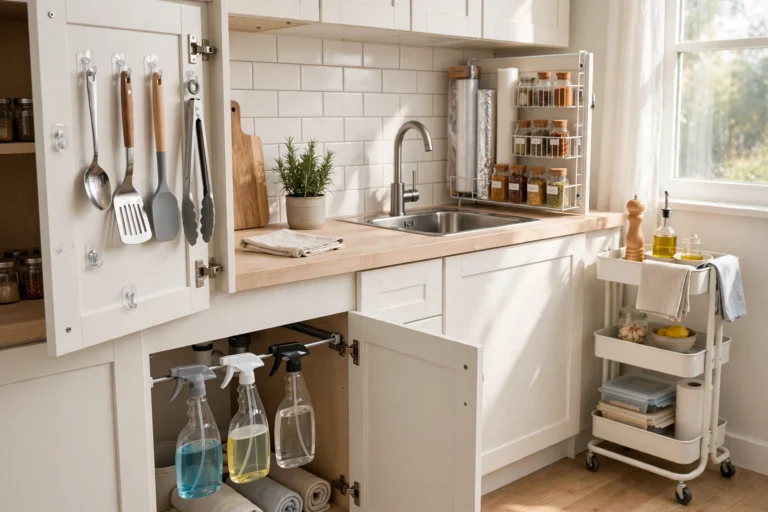
Cabinet doors: use half-width or slim rail racks. Full pantry racks are too wide and too deep for standard cabinet doors, and the weight can strain cabinet hinges, which are lighter than door hinges. Measure hinge capacity conservatively and favor light items: wraps, spices, cleaning spray bottles.
Closet doors: fabric pocket organizers shine here. A closet door rack holding hats, scarves, cleaning supplies, or wrapping paper turns dead door space into a supply closet. Fabric is light enough that even hollow-core closet doors carry it comfortably.
Bathroom and laundry doors: wire racks handle spray bottles, detergent pods, and toiletries. In humid bathrooms, look for coated or stainless steel rather than bare metal to resist rust.
Renter Notes: Off in Minutes on Moving Day
This is one of the most landlord-friendly upgrades you can make. The rack lifts straight off the door. The bumper pads peel away. There are no holes to fill, no anchors to patch, no touch-up paint. Our renter-friendly kitchen upgrades guide covers more no-drill ideas in the same spirit.
Before you move, check the top of the door for scuff marks where the hooks sat. A quick wipe or a small piece of felt padding when you reinstall prevents the marks entirely. Pack the rack flat between towels or hang it over a closet rod in the new place while you unpack; it is one of the first things worth setting up, since the kitchen gets organized first.
FAQ: Over-the-Door Pantry Organizer Questions
Will an over-door rack damage my pantry door?
Not with padded hooks and a sensible load. The hooks hang over the door's top edge, and the rack's weight presses the hooks against the door rather than against the wall. Foam-backed hooks prevent scuffing, and staying under the weight limit protects the hinges. Check the door's top edge and hinges after the first week, then monthly.
How much weight can a door rack hold?
It varies by design. Wire basket racks often rate around 10 pounds per tier, while fabric organizers hold much less. The rack's listing should state both a per-tier limit and an overall limit. Treat the overall limit as the real ceiling, keep heavy cans on the lower tiers, and reduce the load if the door drags or the hinges make noise.
What if my door is too thick for the hooks?
Measure the door's edge first. Most hooks fit doors up to about 1.75 inches thick. If yours is thicker, look for racks that also include a wall-mount option, or choose an adhesive-mounted slim rack for the door's face instead. Do not force hooks over a door they do not fit; the rack will sit crooked and can damage the door's top edge.
Can I use one on a cabinet door instead of the pantry door?
Yes, but size down. Use a slim rail or half-width rack and keep the load light, since cabinet hinges are not built for the same weight as door hinges. Spices, wraps, and cleaning sprays are ideal; a full load of canned goods is not.
Do over-door racks work with doors that have raised panels?
They work best on flat doors. Raised panels deeper than about half an inch can push the rack away from the door, making it lean or swing. If your door has deep molding, choose a fabric organizer or a slim rail, which tolerate an uneven surface better than a rigid wire frame.
Your Next Step
Measure your door today: thickness, the gap at the frame, and the clearance to the nearest shelf. With those three numbers you can pick the right rack family in one shopping trip, hang it in ten minutes, and start loading the tiers from the plan above.
For the full kitchen system this rack fits into, read our complete guide to organizing a small kitchen, and for more no-drill ideas see our renter-friendly kitchen upgrades guide. You can also browse more ideas in the kitchen organization hub.