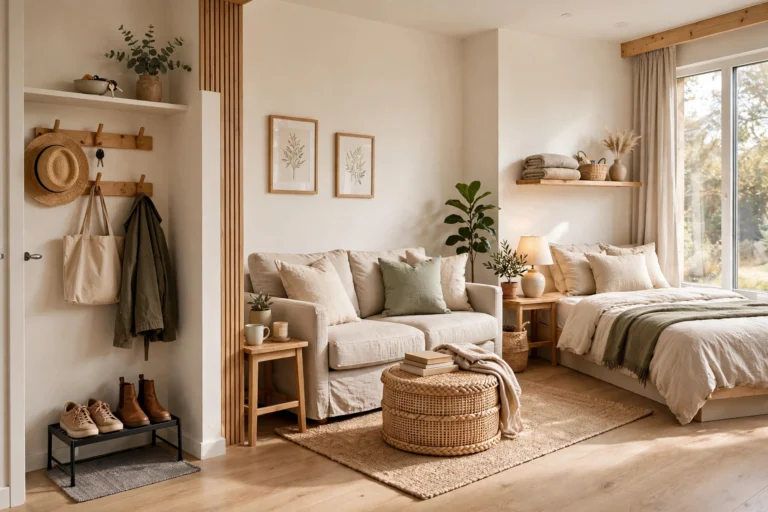
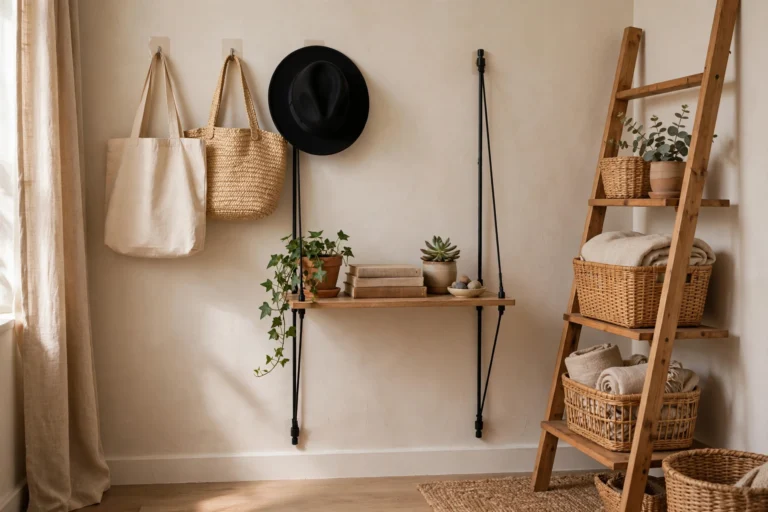
Entryway Organization Ideas for Apartments With No Foyer
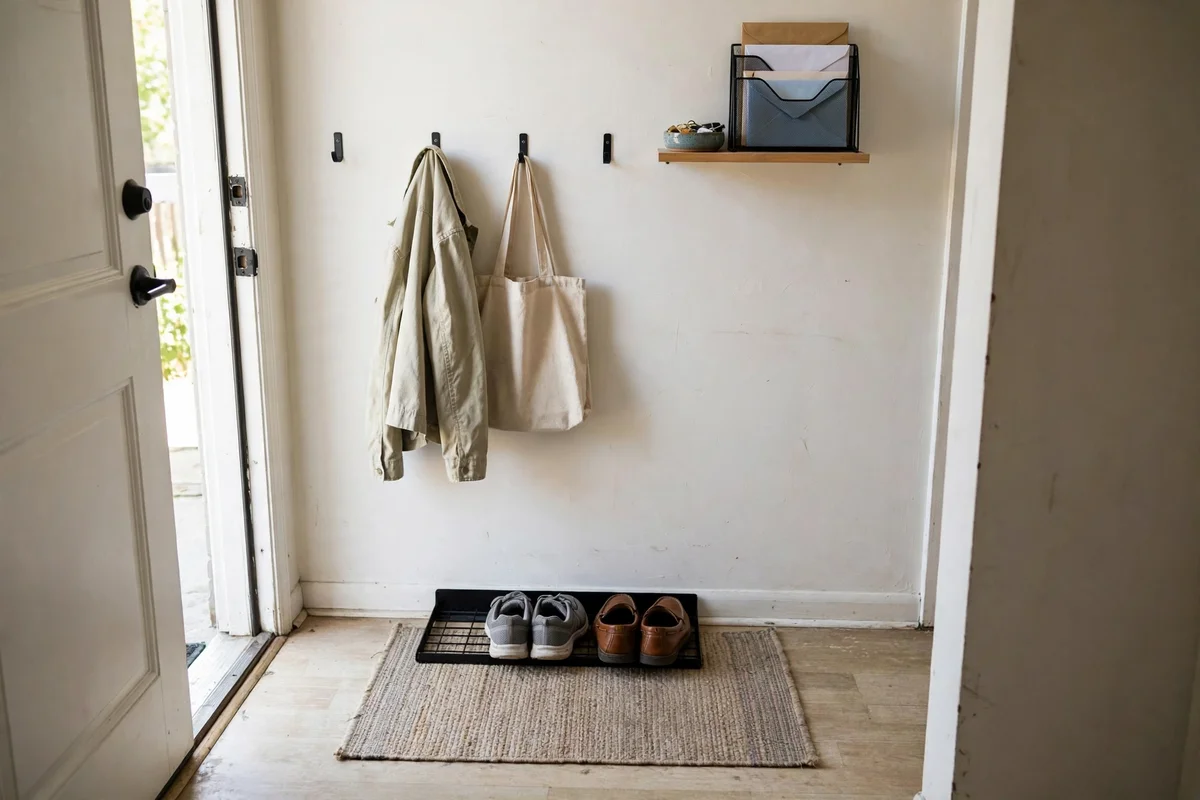
Your front door opens and you are standing in your living room. There is no foyer, no entry closet, and nowhere obvious for your shoes, coat, or keys. So they land wherever they land: shoes by the couch, keys on the kitchen counter, your bag on a dining chair.
You do not need a separate room to fix this. You need a landing zone: one defined spot beside the door that handles four small jobs. Shoes stay contained. Coats and bags have hooks. Keys and mail have one home. And a visual boundary tells your brain, and your guests, where the entry ends and the living space begins. Everything below builds that zone, piece by piece, without drilling into anything you do not own.
Define the Zone Before You Buy Anything
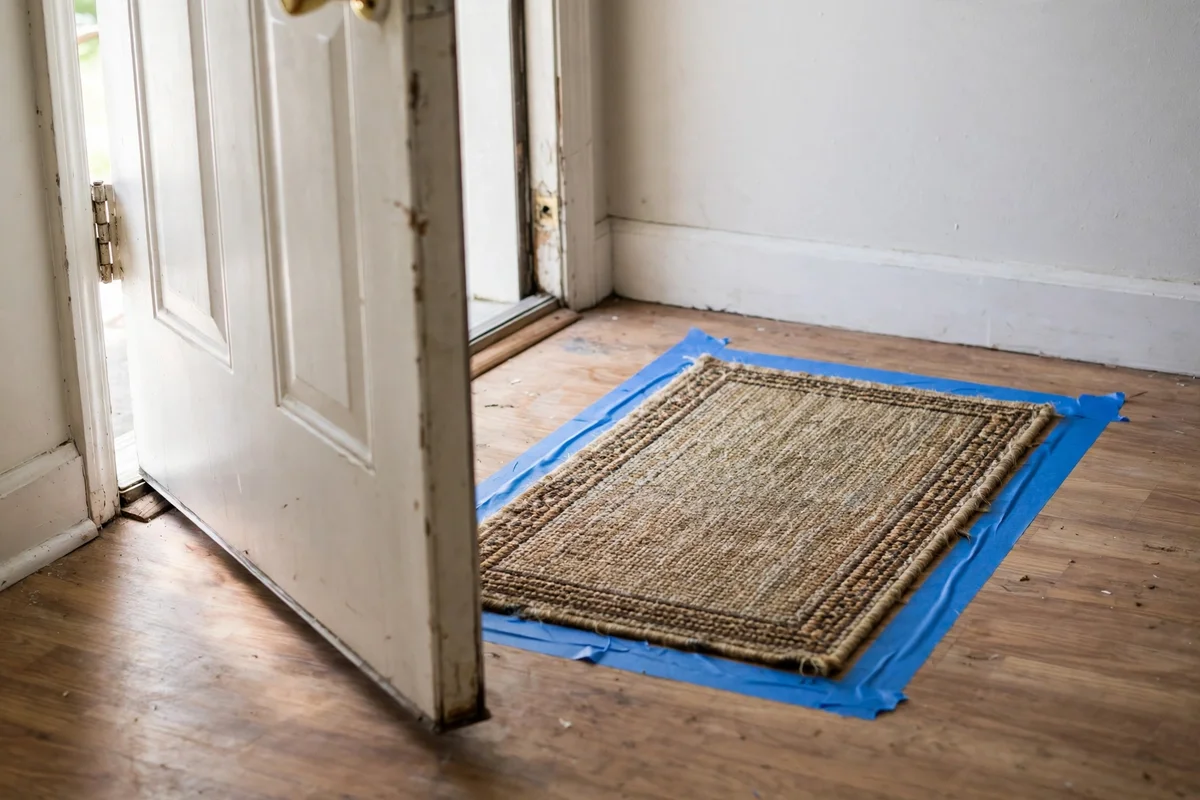
The cheapest and most effective change is a boundary. A small rug or mat beside the door marks where the entryway is, even when it is only a few square feet. A 2 by 3 foot mat fits beside most apartment doors and is large enough to stand on while you take off your shoes.
Before you buy, test the footprint. Mark the area with painter’s tape, then open the door fully and walk through carrying your shoes and bag. If the rug would catch under the door or force you to squeeze past, go smaller or skip the rug and let the wall do the defining instead. A rug that fights the door swing will annoy you every single day.
This one decision makes everything else look intentional. A hook on a bare wall looks like clutter. The same hook above a defined mat looks like an entryway.
Contain the Shoes
Shoes spread across the floor because they have no assigned home. Give them one, sized to the space you actually have.
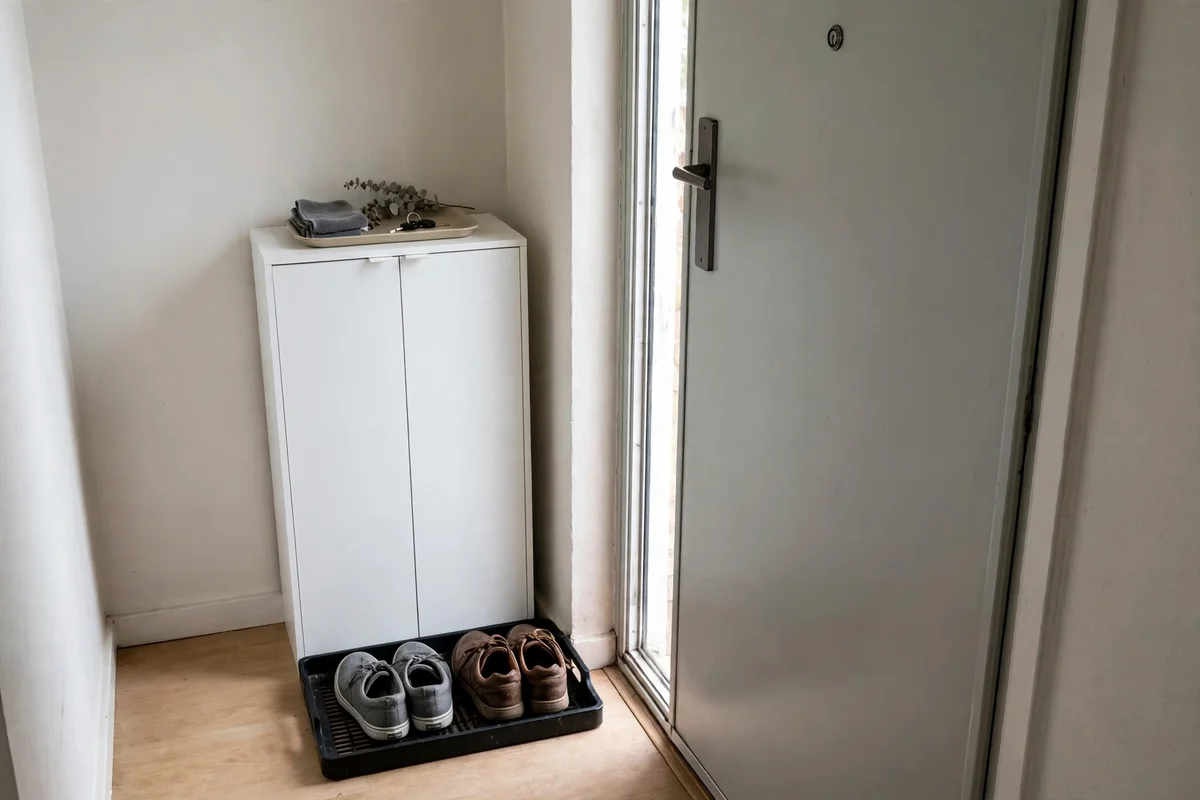
A shoe tray is the simplest start. One tray by the door contains dirt and water and silently declares that shoes live here, not three feet into the living room. Measure your spot first. Trays come in single and double widths, and a tray that sticks out into the walkway will get kicked daily.
A slim closed shoe cabinet hides the pile. Cabinets around 6 to 8 inches deep hold several pairs behind closed doors, and the top surface doubles as a drop spot for keys or mail. Before you commit, check two things: the cabinet doors must open fully, and a comfortable walking path must remain. In a narrow hallway there may not be room, and the tray is the better answer.
One basket for the pairs in rotation. If a cabinet is too much furniture, a low basket or bin under a bench or shelf holds the two or three pairs you actually wear this week. Set a hard limit: what does not fit goes to the closet. Without a limit, the basket becomes a shoe landfill.
Watch the door swing. If the door opens inward across your only stretch of wall, keep shoes on the hinge side where the open door does not reach, or use the back of the door itself.
Hang Coats and Bags Without Damaging the Walls
Without an entry closet, coats need wall space. Renters have good options, each with a real limit worth knowing.
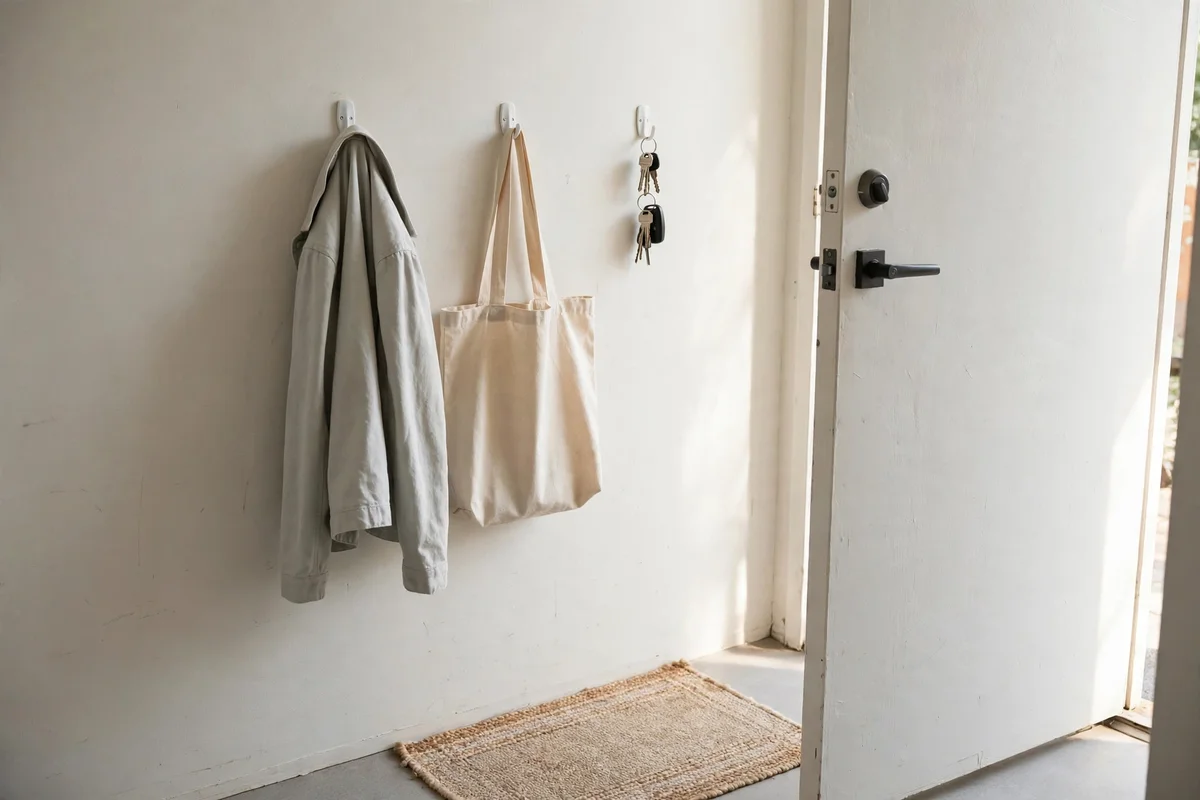
Adhesive hooks handle the light stuff well. Keys, a tote bag, a cap, or a light jacket are all fine on a quality adhesive hook. Read the product’s stated weight limit and surface guidance before you hang a heavy winter coat. Adhesive mounting avoids drilling, but it is not a promise of zero marks on the wall. Check your lease and the product’s removal instructions first, and test one hook in a hidden spot if you are unsure about your paint.
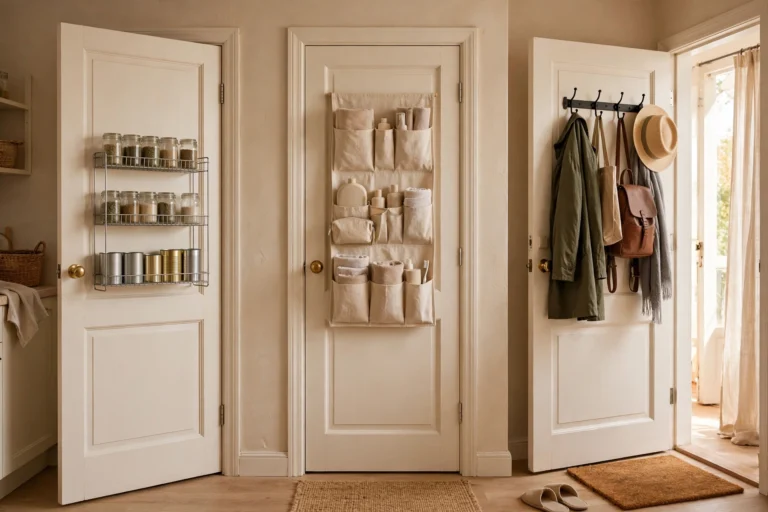
Over-door hooks put the door to work. The back of the front door can carry coats or bags without touching a wall at all. Confirm the door still closes and locks fully with the hooks in place, and check that they do not rattle against the frame or scratch the paint every time the door moves.
A freestanding coat rack needs no wall contact. This is the safest rental option of all. Choose one with a narrow, stable base, and measure your walking path first. In a tight entry a rack becomes an obstacle you bump into twice a day, which defeats the purpose.
A peg rail groups everything in one strip. One rail with several pegs can hold coats, bags, and hats together. Traditional peg rails mount with screws, so they suit renters whose lease allows small wall anchors. Freestanding and leaning versions exist if yours does not.
A useful rule: one hook per person for the coat worn daily, plus one for the bag grabbed every morning. Off-season coats belong in the closet, not competing for hooks by the door.
Give Keys, Mail, and Small Things One Home
Lost keys are an entryway problem. The fix is one consistent landing spot, used every time.
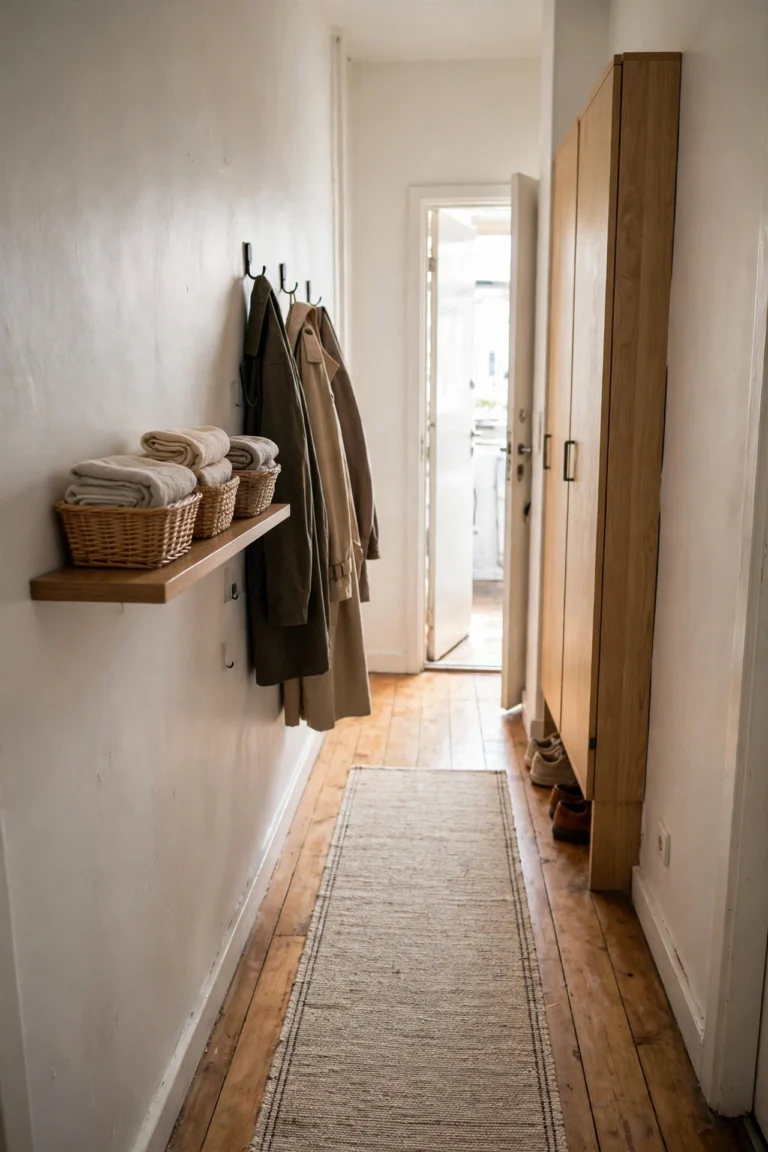
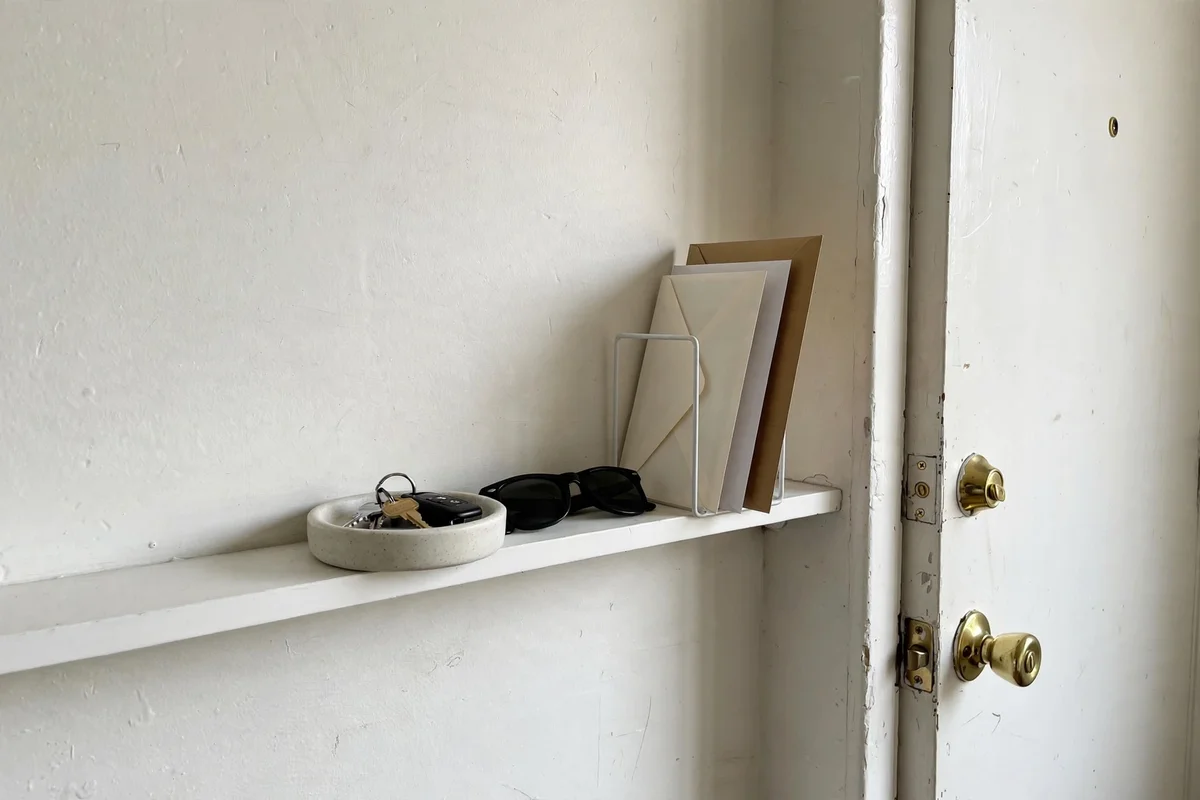
A narrow wall shelf at chest height (about 6 to 8 inches deep) holds a small dish or tray for keys, sunglasses, and earbuds. Keep it shallow on purpose. A deep shelf quietly becomes a second countertop that collects clutter instead of preventing it.
A tray on any nearby surface works the same way. If you cannot mount a shelf, a small dish on top of the shoe cabinet does the job. The container matters less than the habit: keys land there the moment you walk in, not after you have already set them somewhere random.
Sort mail vertically. A slim upright sorter or file keeps envelopes visible and stops the flat pile that grows on every horizontal surface. Recycle junk mail the day it arrives. A sorter is a processing station, not storage, and it only works if paper keeps moving through it.
What about charging?
If your keys, wallet, and phone all land in the same spot, add a small charging cable there. One cable, routed neatly, keeps the phone off the kitchen counter overnight. Keep cables contained so they do not turn the tidy tray into a tangle.
Make It Feel Like an Entryway
Function comes first, but a few visual moves make the zone feel like a real foyer instead of a storage corner.
A low bookshelf can build a wall where none exists. Placed perpendicular to the wall beside the door, an open shelving unit creates a visual divider between the entry and the living area. It reads as a foyer boundary and adds storage for baskets or shoes. Keep it low enough to preserve light and sightlines, especially in a studio where a tall divider makes the whole space feel boxed in.
A mirror above the drop zone does double duty. It bounces light into a dim corner and gives you a last check before heading out. A leaned floor mirror needs no mounting at all. Just make sure the base is secure and cannot slide on your flooring.
One warm light source finishes the corner. A small plug-in lamp or battery sconce on the shelf makes the entry feel welcoming after dark. This is also the spot for the one scent or plant that makes the apartment smell like home when you walk in.
Limit decoration to one focal point. In a space this small, three competing decorations read as clutter, not style. The mirror, the lamp, or one piece of art: pick one and let it carry the corner.
The Two-Minute Evening Reset
No entryway stays organized on furniture alone. The system works because of a short nightly habit.
- Shoes go back on the tray or in the cabinet, not where you kicked them off.
- Coats and bags return to their hooks.
- Mail gets sorted: recycle, file, or act. Nothing sits in the sorter longer than a day or two.
- Keys land in the dish. Every time, no exceptions.
Start Tonight
You do not need to buy everything at once. Tonight, tape out your zone and set one tray and one hook by the door. That alone handles the worst of the clutter: shoes contained, keys findable, and a visible boundary where the entry begins.
Add the shelf, the sorter, and the mirror over the next week or two as you notice what you actually reach for. An entryway built around your real routine will always beat one copied from a photo.
For more small-apartment storage ideas beyond the front door, see 45 Renter-Friendly Storage Ideas for Small Apartments.