Narrow Hallway Storage Ideas That Don’t Block the Path
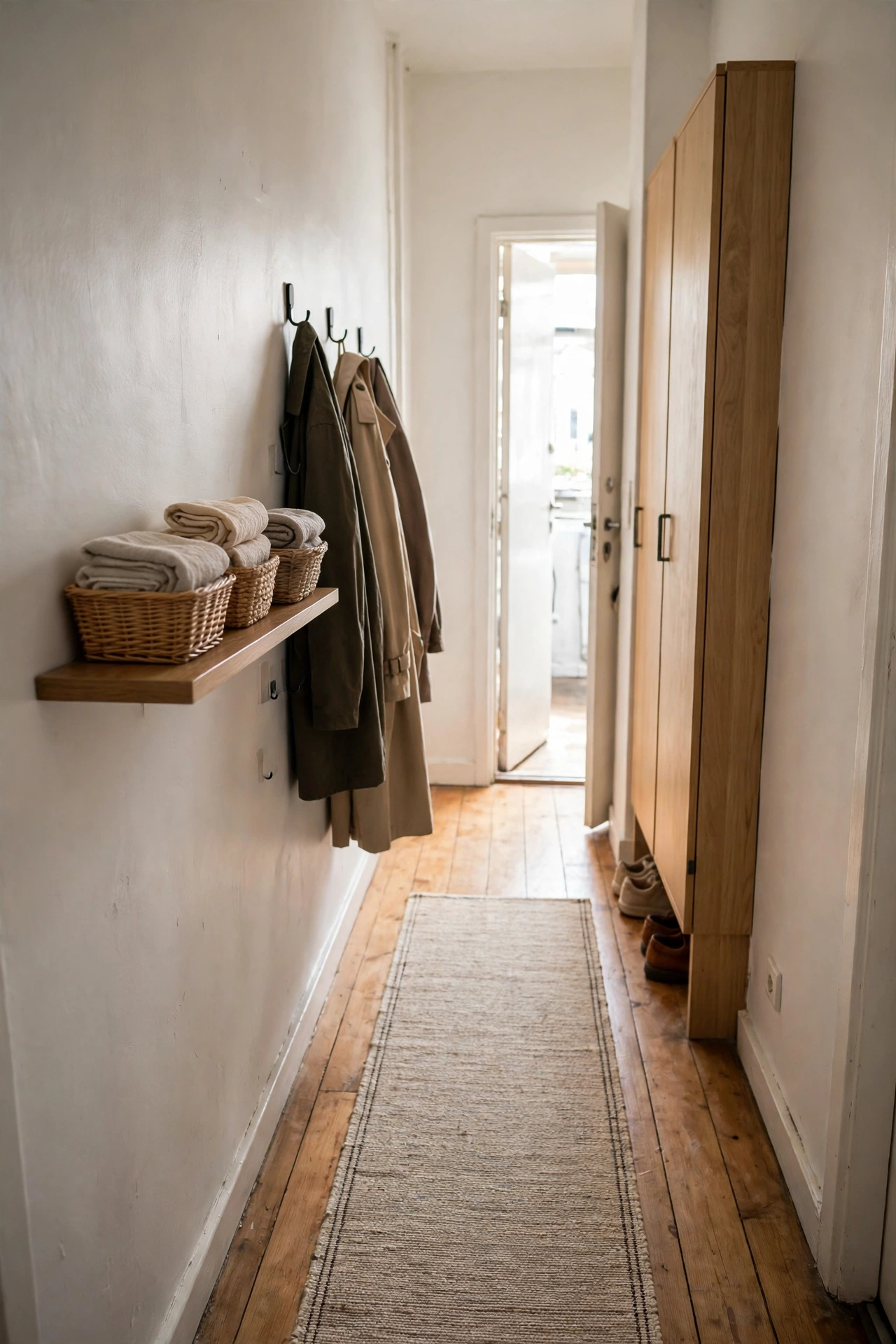
A hallway is usually the most wasted square footage in a small apartment. It connects every room, you walk through it a dozen times a day, and it holds exactly nothing, because anything you put there blocks the path. The fix is not bigger furniture. It is slim-profile storage that hugs the wall: six-inch-deep shelves, hooks, and consoles so narrow they barely register, each placed so the walkway stays clear. This guide gives you 12 ideas with real depth numbers, where each one goes, and how much walking room it leaves.
If the hallway is part of a bigger small-space puzzle, start with our complete guide to small apartment organization and the 45 renter-friendly storage ideas. In a studio where the hallway doubles as the entry, the studio layout guide shows how to zone it without walls.
Start With the Walkway Rule
Before buying anything, measure your hallway width with a tape measure, wall to wall. The goal is to keep about 36 inches of clear walking space from one end to the other. That number is the standard used in residential design for a comfortable single-file walkway, and it matters most near exits. Hallways are escape routes, so nothing you add should narrow the path to a door, block a door swing, or sit on the floor where someone could trip in the dark.
One thing people forget: wall storage still takes space at body height. A row of coat hooks only sticks out 2 inches, but the coats on them puff out 8 to 10 inches. Measure from the front of the bulkiest thing you will hang, not from the wall. In a hallway under 44 inches wide, keep all storage on one wall only. Putting slim pieces on both sides of a 42-inch hallway leaves under 36 inches once coats and baskets are factored in, and the corridor starts feeling like an obstacle course.
Slim Wall Storage: Storage With Zero Floor Space
Wall-mounted pieces are the best first move in a narrow hallway because they take zero floor space. Mount them high enough that shoulders and bags pass underneath, and every inch of the floor stays open.
1. Six-Inch-Deep Floating Shelves
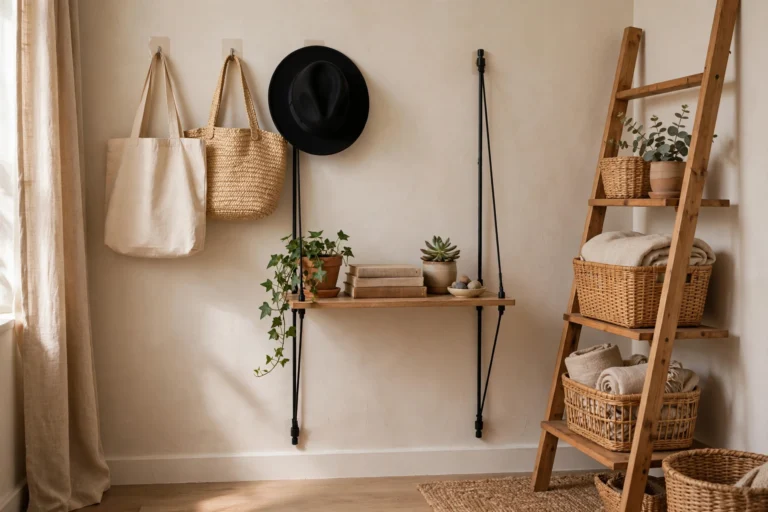
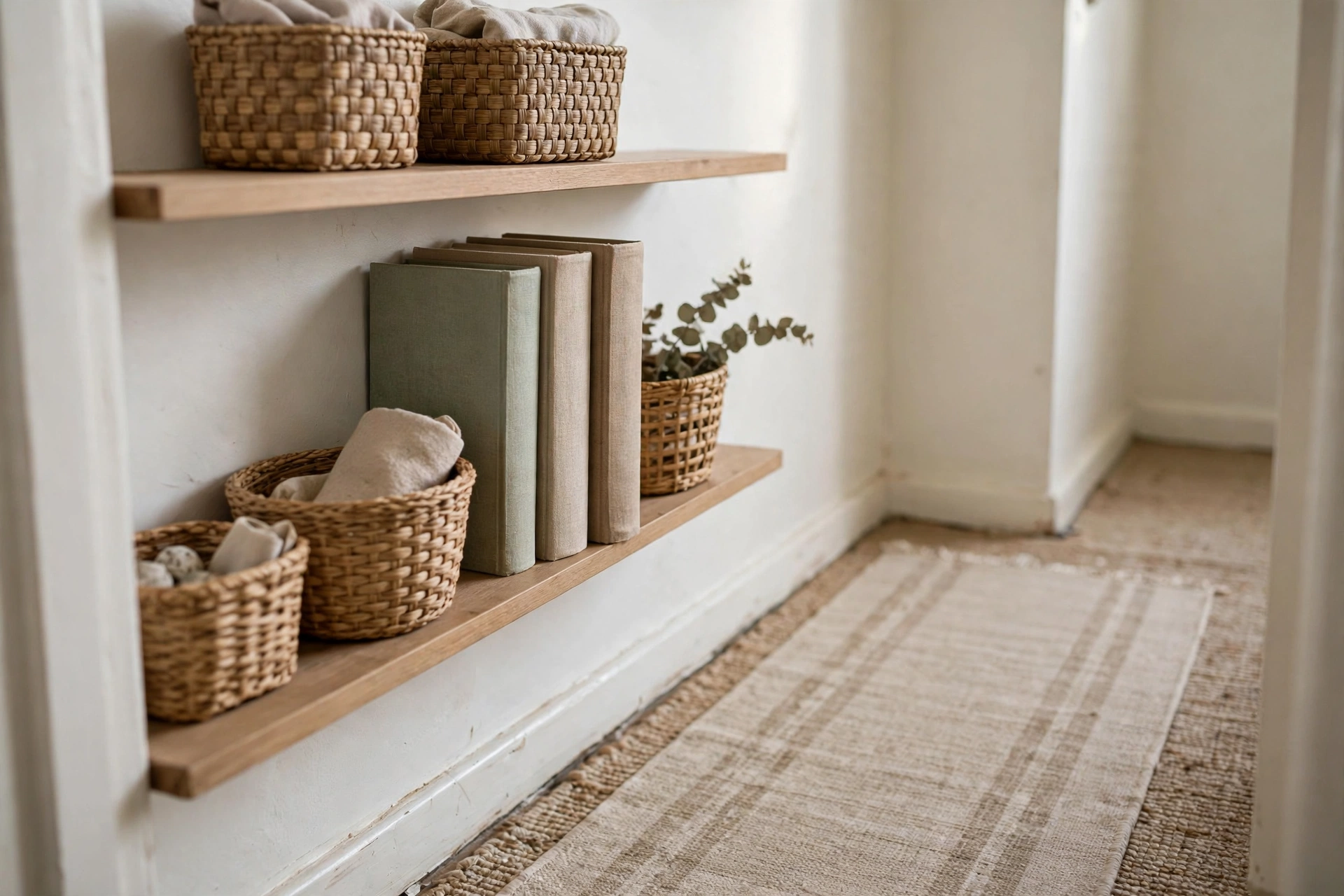
A 6-inch-deep shelf is the sweet spot for hallways: deep enough for small baskets, folded linens, books, and sunscreen, shallow enough that you never clip it with your shoulder. Mount one or two shelves at about 60 inches high along the longest uninterrupted run of wall, keeping them clear of door swings. Small woven baskets on the shelf hide clutter and slide off easily for grabbing. For renters, mount with heavy-duty removable adhesive strips or brackets rated for the load, and check the weight rating before loading baskets. A shelf this shallow on a 42-inch-wide hallway leaves the full walking lane untouched.
2. Adhesive Wall Hooks for Coats and Bags
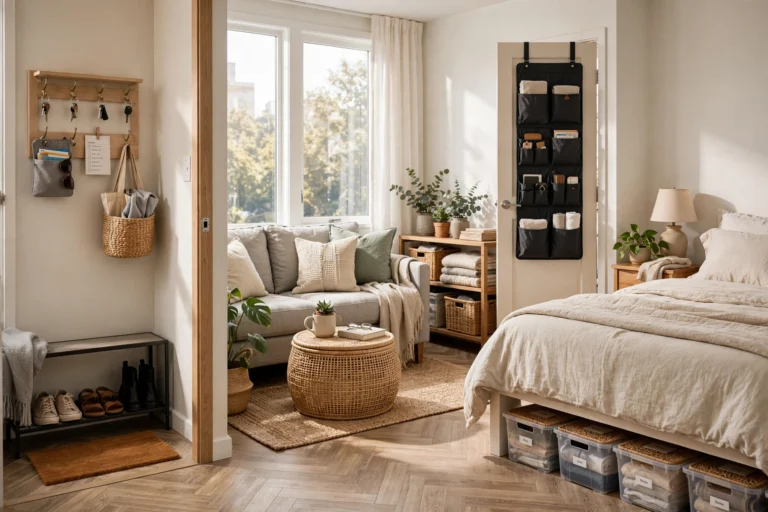
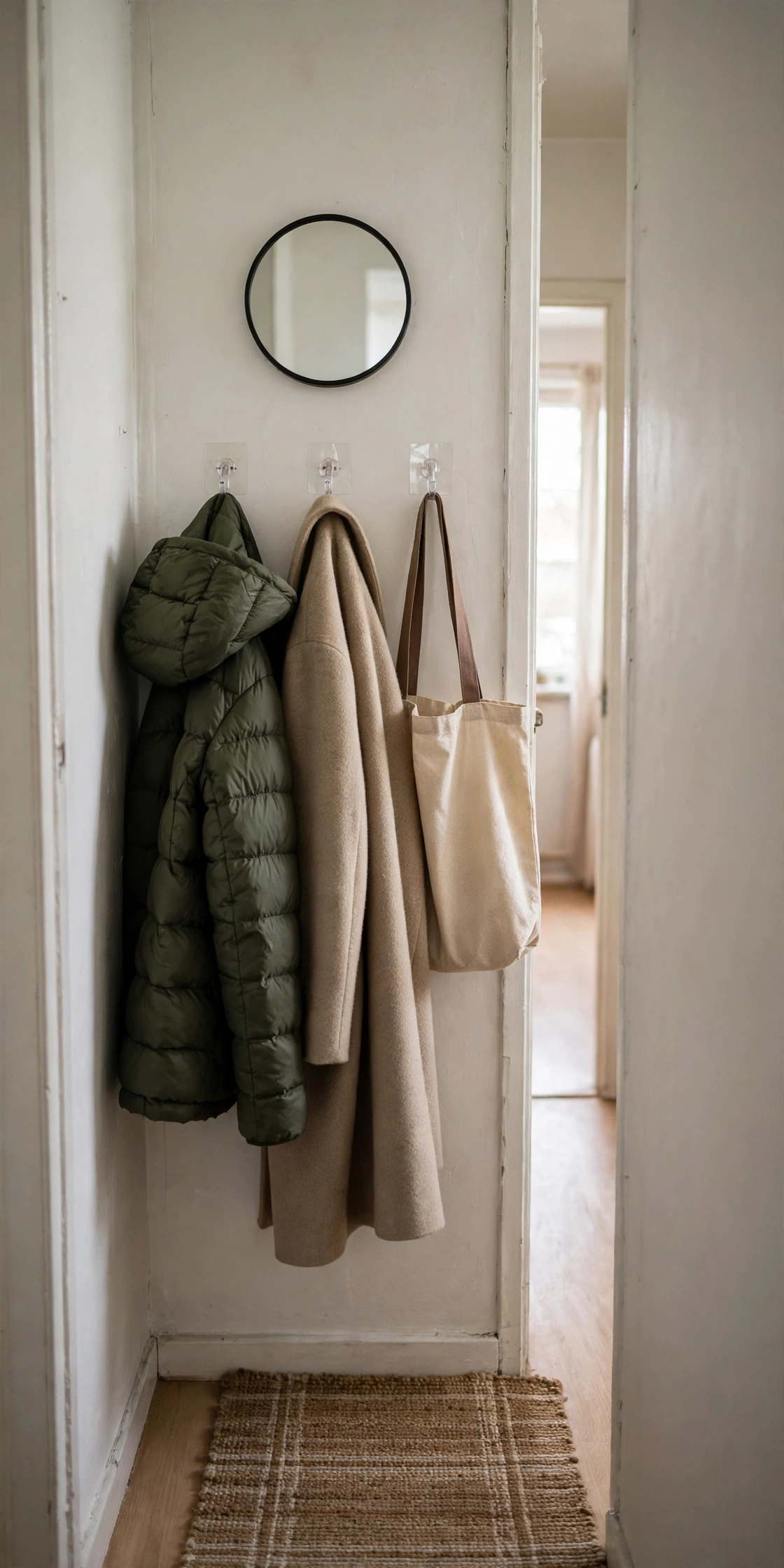
Hooks are the highest-impact hallway storage per inch of wall. A row of 3 to 5 adhesive hooks at about 60 inches high holds the daily coat, a tote bag, and the dog leash right where you need them on the way out. Because there is no drilling, this is a renter-safe method: clean the wall with rubbing alcohol, press each hook firmly for 30 seconds, and wait the full curing time on the package before hanging anything. Place the row on the same wall as your shelves, never on the opposite wall, so coats bulk out over storage rather than into the walking lane.
3. A Shallow Picture Ledge for Keys and Mail
A picture ledge is only 3 to 4 inches deep, which makes it the slimmest shelf you can buy. Mount one at 48 to 54 inches high near the front door and it becomes the landing strip: keys, sunglasses, mail, and a small tray for the things that used to pile on the floor. Because it is so shallow, it works even in hallways under 40 inches wide, where a 6-inch shelf would feel tight at hip height. It also doubles as a display spot for one or two small frames, which makes the entry feel intentional instead of improvised.
4. A Fold-Down Wall Shelf
A fold-down shelf gives you a surface only when you need it. Open, it is about 8 to 10 inches deep, enough to set down grocery bags or a package while you unlock the door. Closed, it folds flat against the wall and takes up barely an inch. Mount it just inside the front door at counter height, around 36 inches, where it works as a package-drop zone. For rentals, choose one that mounts with strong removable brackets and keep the load light; check the bracket weight rating and fold it up after every use so the lane stays clear.
5. An Above-Door-Frame Shelf
The wall above a door frame is dead space in almost every hallway. A shelf 8 to 10 inches deep, mounted above the trim at about 7 feet, holds labeled bins of off-season items: extra linens, gift wrap, the spare light bulbs. Because it sits above head height, it takes zero space from the walkway. Two cautions: pick a door whose swing never reaches the shelf, and store only things you need a few times a year, since you will need a step stool. In a rental, removable adhesive mounting works here for light bins; check the rating and keep the total load modest.
Slim Floor Solutions: Furniture That Hugs the Wall
Sometimes you need an actual piece of furniture, for shoes, for a catch-all surface, for the things hooks cannot hold. The rule for hallway furniture is strict: nothing deeper than about 11 inches, pushed flat against one wall, with the walking lane measured after it is in place.
6. A 9-to-11-Inch-Deep Console Table
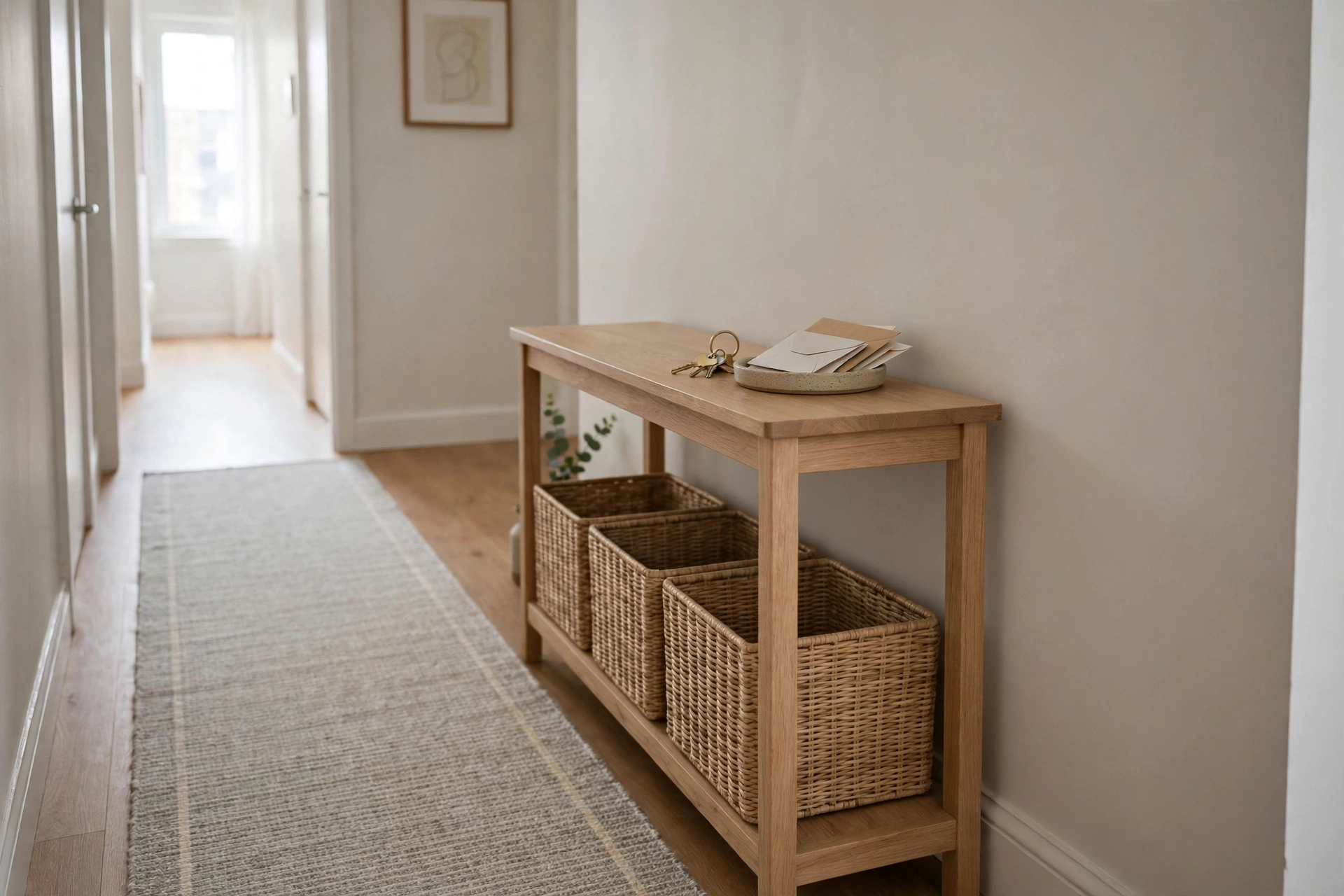
A console table 9 to 11 inches deep is the hallway workhorse. Set it against the longest wall, put a tray on top for keys and mail, and slide two or three low baskets underneath for shoes, umbrellas, or cleaning supplies. In a 46-inch-wide hallway, a 10-inch console leaves the full 36 inches of walkway. Choose one with an open lower shelf rather than closed doors, so you can see the baskets and pull them out without crouching. Keep the top styled to one tray and one small item; a console top becomes a clutter magnet fast if it has no boundary.
7. A Slim Tilt-Out Shoe Cabinet
A tilt-out shoe cabinet is about 9 inches deep and stores shoes vertically, so three pairs fit in the footprint of one shoebox row. Place it near the entry end of the hallway where shoes actually come off, on the same wall as your other storage. The catch is the tilt: the compartments swing outward, so leave about 12 inches of swing clearance in front and never put it opposite the console table. One cabinet holds the daily rotation; out-of-season shoes belong in a closet or under the bed, not in the hallway.
8. A Narrow Bookcase in a Dead End or Alcove
Many hallways end in a dead end or have a shallow alcove where a doorway used to be. That is the one spot where floor furniture does not narrow the walking lane at all. A bookcase 6 to 8 inches deep fits a dead-end wall perfectly and turns wasted space into a mini library, a linen stack, or a home for labeled bins. Measure the alcove before shopping, since these nooks are rarely a standard width, and keep the top of the bookcase below 48 inches if it sits where someone turns a corner, so it never blocks sightlines.
9. A Slim Rolling Cart in a Doorway Recess
A rolling cart about 6 inches wide tucks into a recessed doorway, the gap beside a door frame, or the dead corner where the hallway meets the living room. Use it for the things that migrate around a small apartment: cleaning supplies, pet gear, the reusable grocery bags. Because it rolls, you can pull it out to load it and park it back flush against the wall when you are done. The parking spot matters more than the cart: choose a recess where the cart sits fully out of the 36-inch walking lane, not just mostly out of it.
Finishing Touches That Keep It Feeling Open
10. A Mirror to Bounce Light
A narrow hallway feels twice as wide with a mirror on the wall. Mount a round mirror, about 18 to 24 inches across, above the hook row or the console table using a removable adhesive mount. It bounces daylight down the corridor and gives you a last look before leaving. Keep it on the same wall as your other storage so the opposite wall stays completely bare, which is what keeps the hallway feeling open.
11. Over-Door Hooks on Hallway Doors
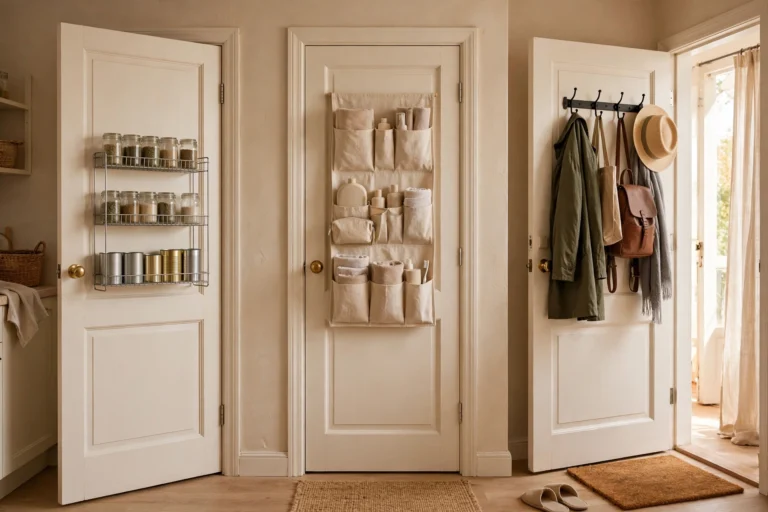
The backs of the bedroom and bathroom doors that open onto the hallway are free storage with zero wall damage and zero floor footprint. Slip over-door hooks over the top of a door for bathrobes, towels, or tomorrow’s outfit. Check that the hooks are slim enough for the door to close fully, and hang them on doors you do not slam, since swinging hooks can mark the frame. This is the easiest win on the list: it takes two minutes and adds no depth to the hallway at all.
12. Under-Shelf Baskets That Double Your Shelves
Wire baskets that slide onto the front edge of a floating shelf hang underneath it, doubling that shelf’s storage without adding a single inch of depth. Use them under the 6-inch shelves from idea 1 for gloves, scarves, spare batteries, and the small things that otherwise scatter. They lift off for cleaning and leave no marks, which keeps the whole setup renter-friendly. Just keep them shallow enough that they do not hang into head or shoulder space where people pass.
What to Skip in a Narrow Hallway
A few common choices quietly ruin a narrow hallway. Skip any furniture deeper than 12 inches; a standard 14-inch bookcase in a 44-inch hallway leaves only 30 inches of walkway, below the comfort line. Skip freestanding coat racks, which wobble into the path and take more floor space than the same coats on wall hooks. Skip baskets and bins sitting on the floor of the walking lane, even temporarily, because a hallway is an escape route and anything on the floor is a trip hazard. And skip protruding handles and knobs on the walking side of any cabinet; flat-front or push-to-open fronts keep the lane smooth.
Your Next Step
This weekend, measure your hallway wall to wall and pick one wall-mounted idea to start: the 6-inch shelves or the adhesive hook row. One wall, one afternoon, and the hallway starts working instead of just connecting rooms. Once that is in place, the 45 renter-friendly storage ideas will give you the next project for the rooms on either side of it.