Under-Bed Shoe and Clothing Storage Ideas
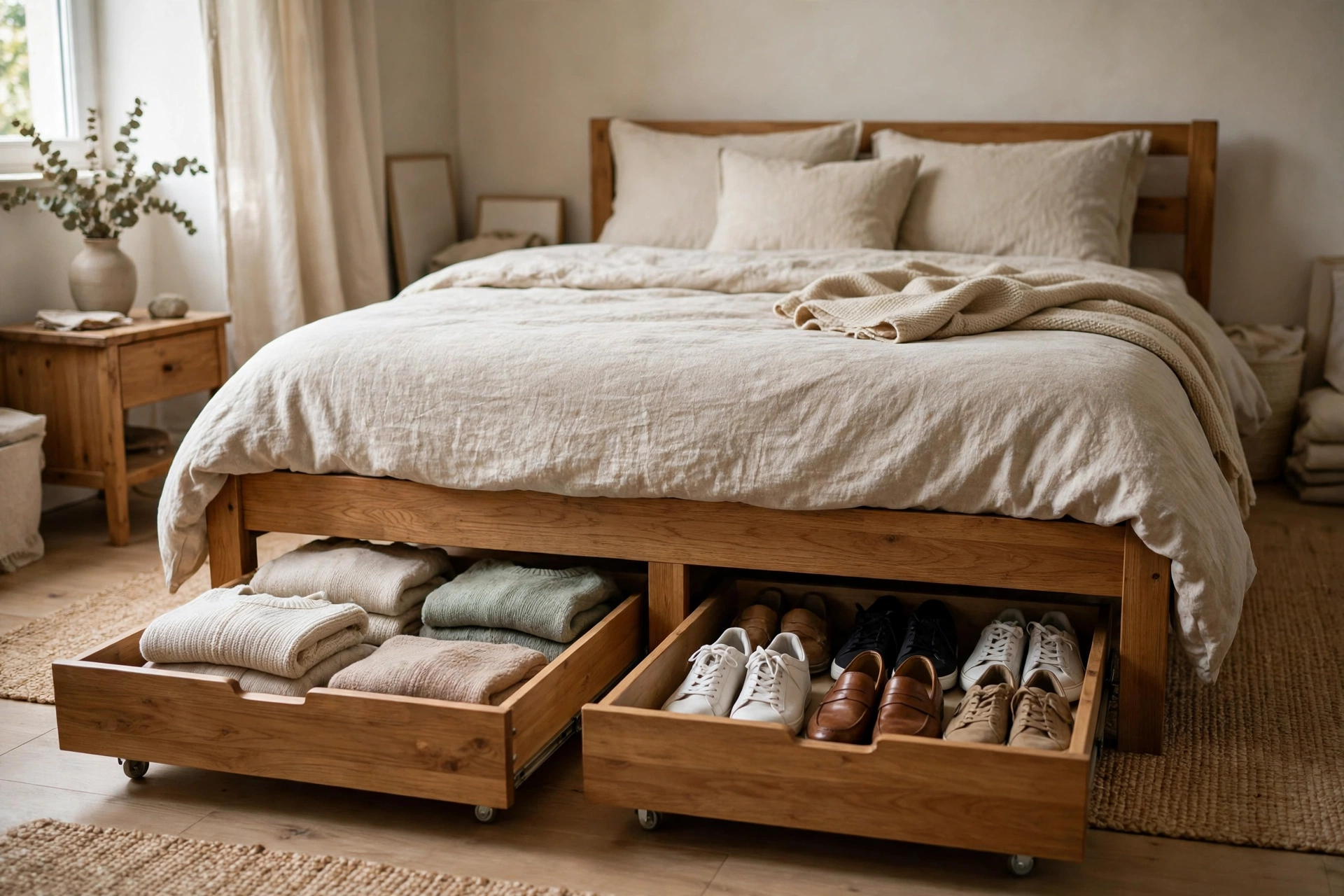
The space under your bed is one of the biggest storage spots in a small bedroom, and also the one most people waste. Shoes pile up in a jumble, sweaters get shoved into grocery bags, and half of it never gets used because nobody measured whether the bins actually fit under the frame. This guide starts with the step everyone skips (measuring your bed’s floor clearance), then covers the best rolling drawers, flat bins, zippered bags, and shoe-specific organizers for shoes and clothes, plus an honest look at bed risers. Every idea below includes the fit and placement details that make it actually work.
If your whole bedroom needs a system, start with our complete guide to small bedroom organization and the 35 small bedroom storage ideas that pair well with under-bed storage.
Measure Your Bed Clearance First
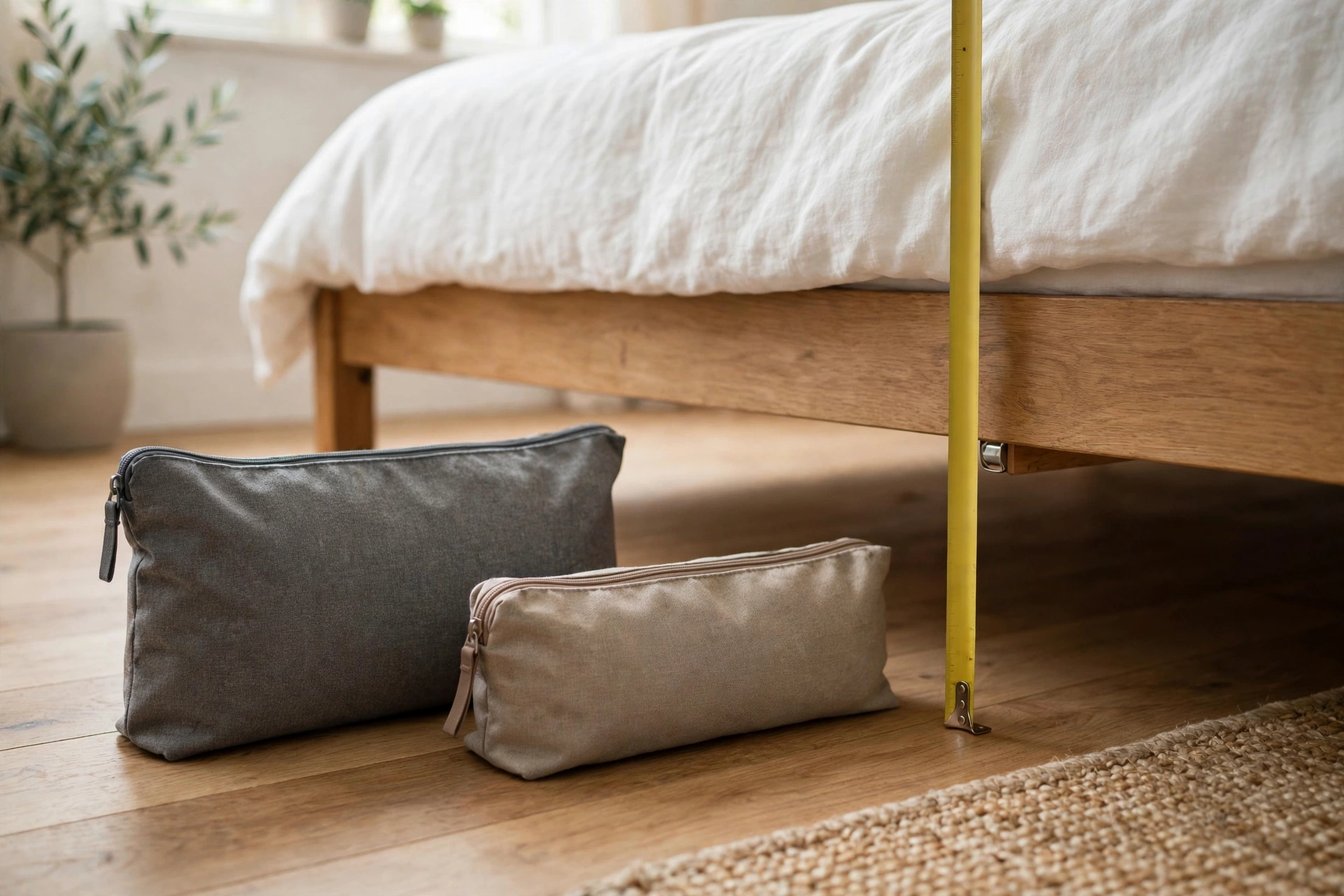
Before you buy a single bin, grab a tape measure and check the distance from the floor to the bottom of your bed frame or slats. Most beds give you somewhere between 6 and 14 inches of clearance, and the number varies a lot by frame type: low platform frames can sit almost on the floor, while taller four-posters and some upholstered frames offer over a foot. Write the number down in inches.
Then subtract about an inch from that number. That is your working bin height: the tallest container you can slide in and out without it catching on the frame. A bin that is exactly as tall as your clearance will wedge or scrape every time you pull it out. For shoes, measure your tallest pair too, since boots standing upright may need more height than flats in a row.
Also measure the full length and width of the space under the bed. Most beds can fit two or three bins per side on a queen or king, and one row of two on a twin. Knowing the usable footprint keeps you from buying bins that stick out past the bed skirt or block the legs.
Storage That Fits: Bins, Bags, and Drawers
1. Rolling Under-Bed Drawers
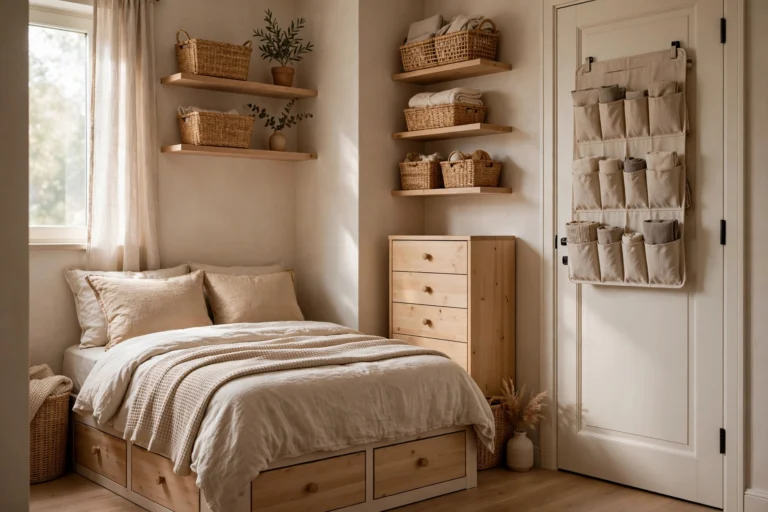
Rolling drawers are the easiest under-bed storage to live with day to day. The wheels mean you can pull the whole drawer out to the middle of the room, grab what you need, and roll it back without dragging anything across the floor. Look for drawers with locking wheels or at least brakes on carpet, and check that the drawer height is at least an inch under your clearance number. Wooden drawer units hold up to heavier loads like stacked denim, while lightweight plastic ones are fine for shoes and sweaters.
2. Low-Profile Flat Storage Bins With Lids
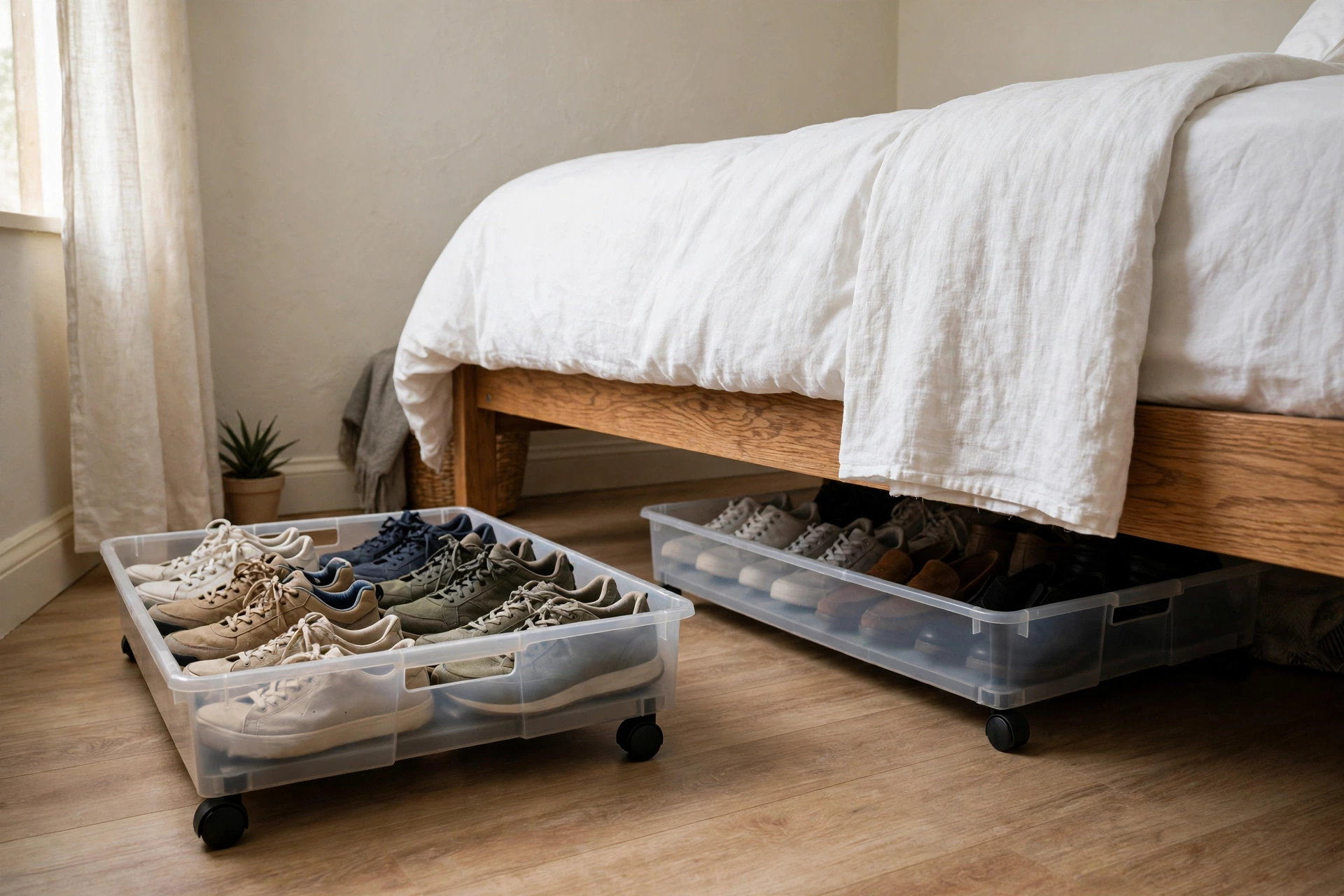
For clearances under 8 inches, flat bins with snap-on lids are the reliable workhorse. The lids keep dust off clothes and keep shoes from collecting whatever lives under the bed. Without wheels they sit directly on the floor, so pick bins with smooth bottoms or add felt pads if your floors are hardwood. Stack folded sweaters and jeans in these, or lay flat shoes in a single layer so nothing gets crushed.
3. Zippered Fabric Bags
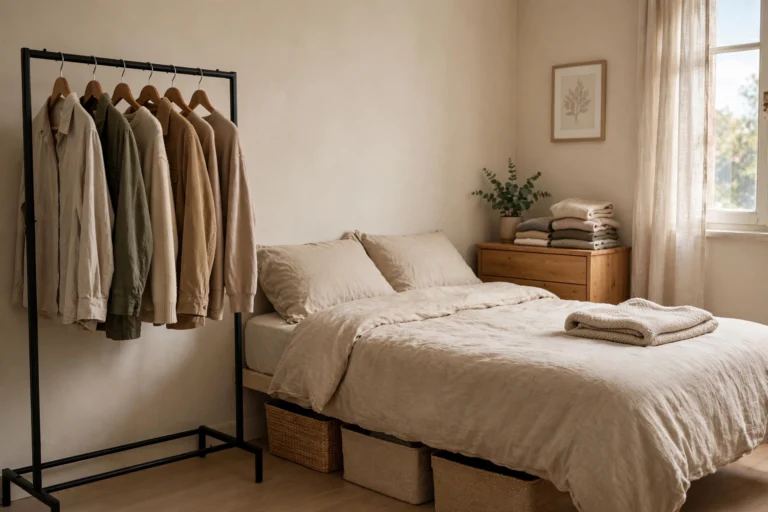
Flat zippered bags made from canvas or non-woven fabric are the cheapest way to fill the space, and the zipper keeps dust and pet hair off better than an open bin. They are soft, so they squeeze into slightly tight spots without scraping the floor. Use them for off-season clothes, guest linens, and rarely worn shoes. One weakness: they collapse when empty, so they work best when filled at least halfway.
4. Clear Bins for Easy Visibility
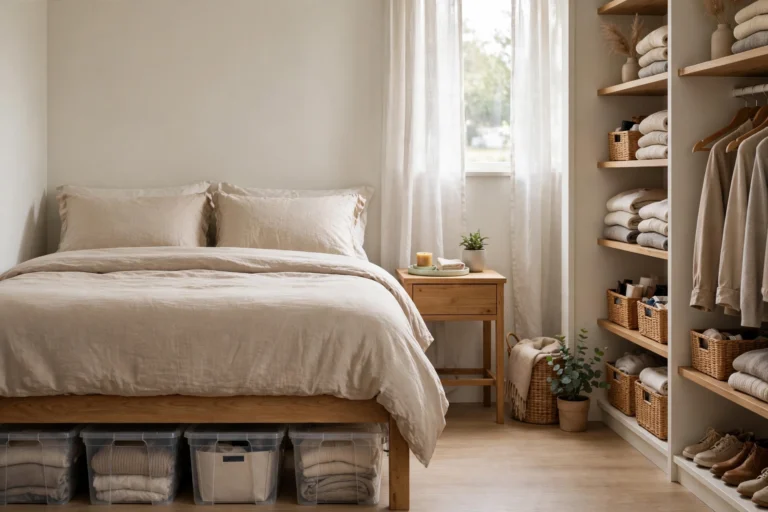
If you store more than two or three containers under the bed, clear plastic bins save you from the pull-out-and-check routine. Being able to see the contents through the side of the bin means you only touch the one you need. This matters most for shoes and seasonal clothes that you reach for infrequently. Line up matching clear bins along one side of the bed for a row that reads like a labeled drawer.
5. Drawer Dividers and Box Inserts
A deep under-bed bin becomes a jumble fast without dividers. Simple box inserts or adjustable dividers turn one big bin into sections: rolled tees in one, socks in another, belts along the side. For shoes, low cardboard or plastic dividers keep pairs together so you are not fishing for the left sneaker. This is the cheapest upgrade of the whole list and the one that keeps the other containers working long term.
Shoe-Specific Under-Bed Organizers
6. Flat Rolling Shoe Bins With Open Rows
Shoes work best in wide, shallow bins where pairs sit in rows you can see at a glance. Look for bins under 6 inches tall with a wide handle on one side so you can slide them out from beside the bed without crawling under it. Arrange pairs heel to toe in rows to fit four to six pairs per bin on a queen. Skip tall bins for shoes: the pairs at the bottom get crushed and forgotten.
7. Compartment Shoe Organizers
Under-bed organizers with fixed compartments (often sold as 16 or 24 slot boxes) keep each pair in its own cell. This is the best option if your shoes end up mixed and unmatched in a shared bin. Measure carefully: compartments sized for men’s boots take more vertical room than ones built for flats. Slide these in from the foot of the bed, where they are easy to pull out straight.
8. Fabric Shoe Bags for Dust Protection
Leather shoes and dress heels pick up dust and scratches in open bins. Individual fabric shoe bags or a fabric roll-up organizer protect them, and they fold flat when empty. Place them inside a flat bin rather than loose under the bed, so they stay in one row instead of scattering. Reserve this level of protection for shoes you wear weekly; daily sneakers do fine in an open rolling bin.
9. Bed Risers: Are They Worth It?
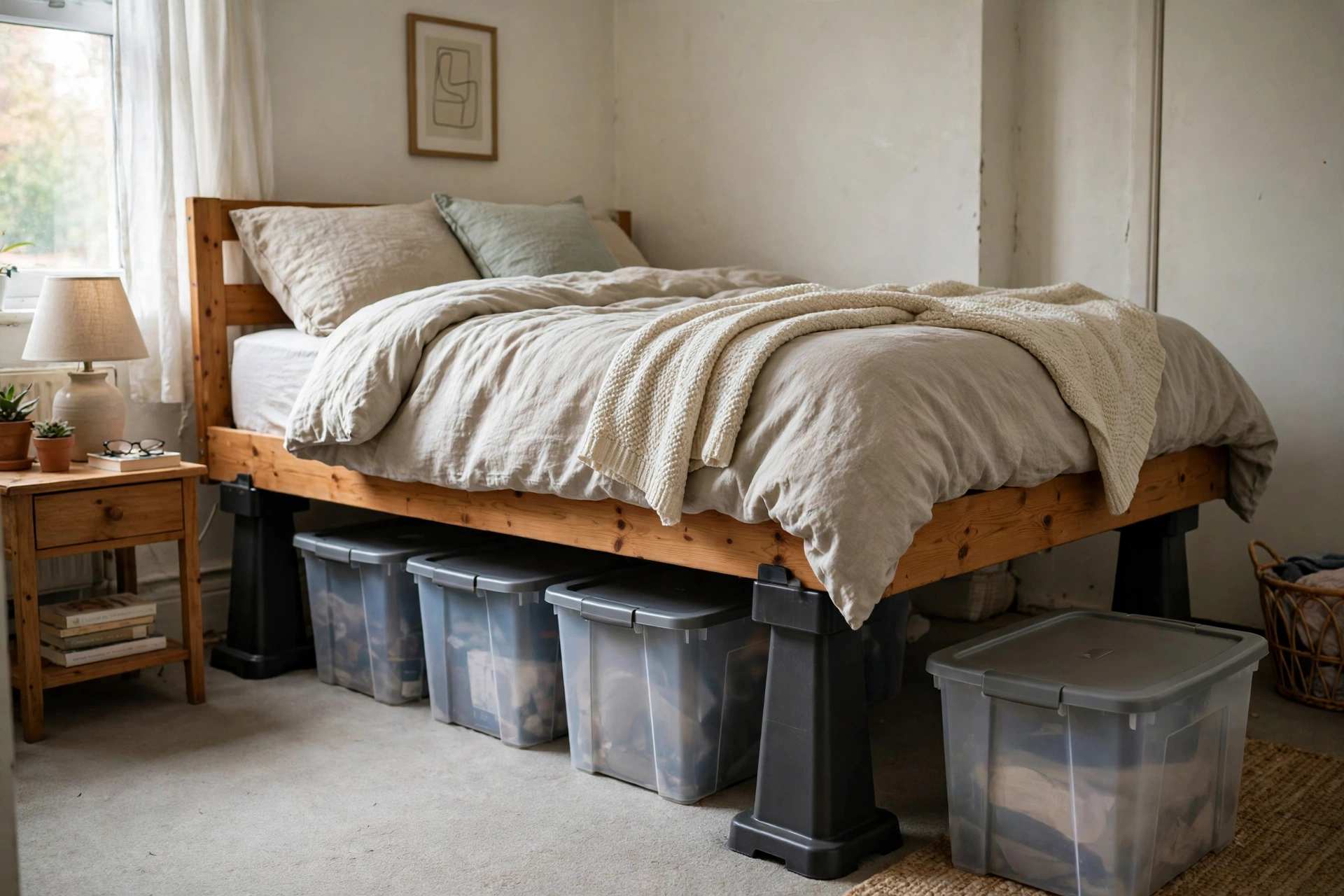
Bed risers are chunky blocks that lift each leg of the bed, usually adding 3 to 7 inches of under-bed clearance. The upside is real: going from 6 inches to 10 or 12 inches of clearance opens up taller bins and real rolling drawers, turning a useless strip into the equivalent of an extra dresser. For a bed on a tall frame they are the single biggest under-bed storage upgrade available.
But they do not fit every bed, and the failures are annoying. Risers need legs they can grip: round or square legs that sit securely in the riser’s cup. Slatted platform frames, beds with curved or splayed legs, and frames where the legs are part of a rail system often do not work with risers. Check the riser’s weight rating against the combined weight of your mattress, sleeper, and frame, and put felt pads or carpet squares under risers on hard floors so they do not scratch.
Raising the bed also raises your mattress, which changes the room. If you are tall, the extra height is a bonus; if the bed becomes hard to climb into or your nightstand is suddenly too low, the storage gain may not feel worth it. Try this before buying bins: raise the bed with books or blocks of wood for a night to feel the new height. If the height works, buy the risers first, measure the new clearance, then buy bins to fit.
10. What to Store Under the Bed
The space under the bed works best for things that are flat, bulky, or needed seasonally. Off-season clothes (winter coats, heavy sweaters, summer dresses in winter) are the classic choice. Shoes you rotate by season, guest sheets, and spare blankets also belong here. Rolled posters, wrapping paper, and board games in flat boxes fit the space well too.
11. What to Skip
Do not store anything moisture-sensitive directly on the floor under the bed: important documents, electronics, or anything paper that cannot be replaced. The floor line gets the most dust and the most humidity of any spot in the bedroom, and a forgotten leak from a wall or window shows up there first. Skip shoes you wear daily, since digging them out each morning gets old fast, and skip anything with no lid or zipper if you have pets, since pet hair finds under-bed storage first.
12. Keep Dust Out With Simple Maintenance
Under-bed storage only stays useful if it stays clean. The area under the bed collects more dust than any other spot in the bedroom, so commit to pulling every bin out and vacuuming underneath once a month. Prefer lidded bins and zippered bags over open ones; the five seconds a lid costs is worth the dust it blocks. If you rent, a quick wipe of the bin bottoms before moving out keeps them ready for the next apartment.
Your Next Step
Do the ten-minute version today: tape-measure your bed’s clearance, write down the working bin height (clearance minus one inch), and count how many bins fit along one side. That single number turns every later purchase into a sure thing instead of a guess. Then read our small bedroom closet organization guide to connect your under-bed system to the closet beside it, so the two work as one storage plan instead of two random piles.