The Complete Small Bedroom Organization Guide
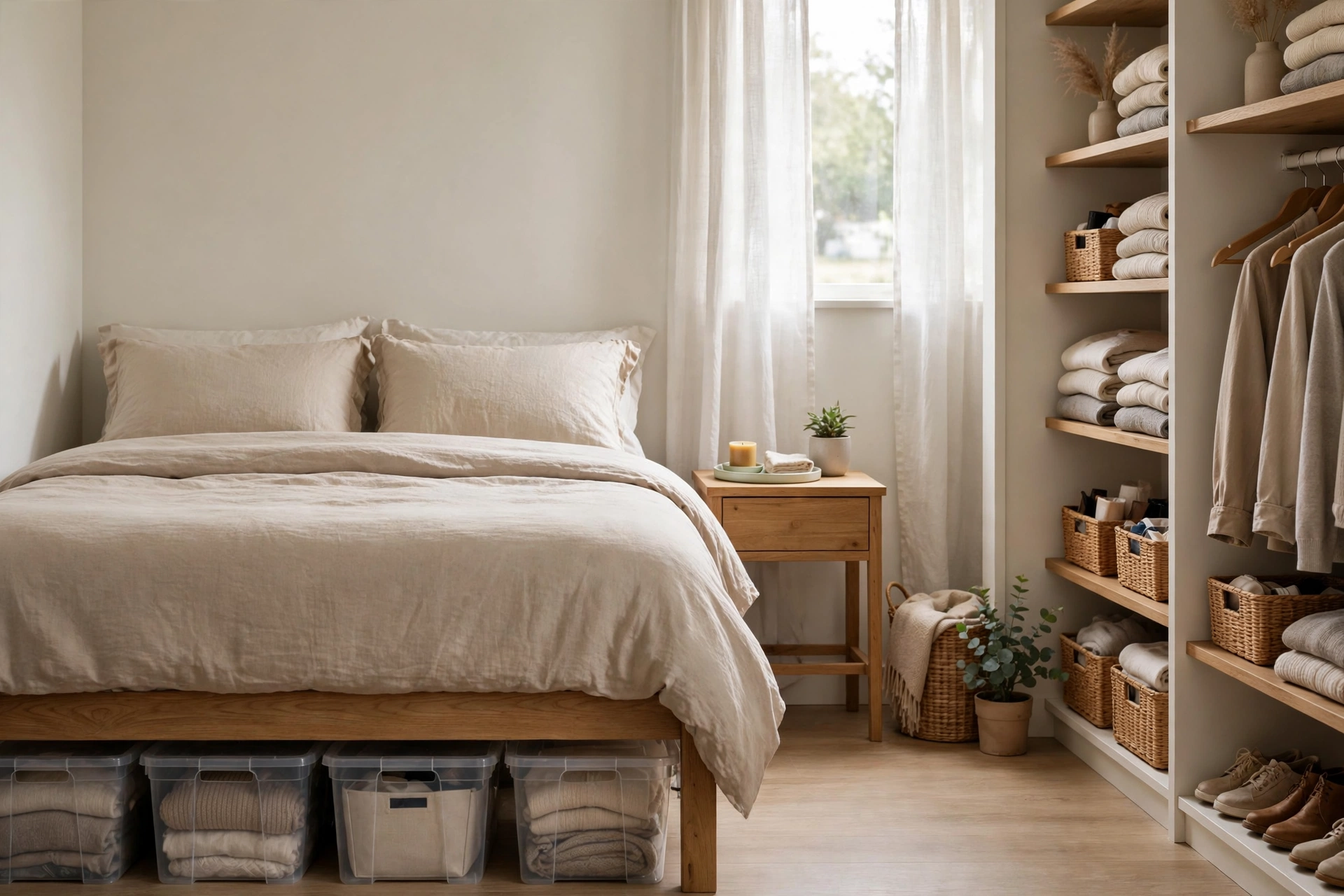
A small bedroom asks one question over and over: where is everything supposed to go? The bed fills most of the floor, the closet is barely a closet, and every surface collects a little more until the whole room feels like one big junk drawer. These small bedroom organization ideas answer that question room-wide, zone by zone, so a cramped bedroom turns into a calm place you can actually relax in.
This is a full room reset guide, and it is designed for renters: every fix below is no-drill, removable, and deposit-safe. We will work through the four areas that make or break a small bedroom, in order: the layout, the closet, the under-bed space, and the surfaces. Do it in this order and each step makes the next one easier.
Start With the Layout, Not Storage Bins
Storage products cannot fix a layout that fights you. Before buying a single bin, spend ten minutes looking at how the room flows. The single biggest change is bed placement: keep at least one long side of the bed fully accessible, pulled away from the wall if you can. A bed pushed into a corner looks efficient, but it turns the far half of the bed into dead space you avoid, which means that side never gets made and anything under it becomes unreachable.
Next, protect the walking paths. Aim for about two feet of clear space around the bed and between furniture wherever possible. When the path is clear, the room reads as open instead of cramped, even if the square footage never changes. This usually means one honest edit: a small bedroom almost always has one piece of furniture that is doing nothing. The chair that holds clean clothes, the extra side table, the ottoman you walk around. Move it out and the room breathes.
Choose furniture that goes up instead of out. In a tight bedroom, one tall, narrow dresser almost always beats two short, wide ones: it stores roughly the same amount while freeing up a stretch of floor along the wall. This vertical thinking pairs well with the zone approach in our studio apartment layout guide: treat the bed, the closet, and the dresser wall as separate zones, each with one job, and the room stops feeling like a pile of competing furniture.
Finally, use light to open the room. A mirror placed across from a window bounces daylight into corners and makes the whole room feel wider; it is one of the cheapest visual expansions available. For lighting, consider a wall-mounted sconce or a slim floor lamp instead of a table lamp on the nightstand. That one swap gives you back nearly a square foot of surface on the smallest table in the room.
Make the Closet Work Twice as Hard
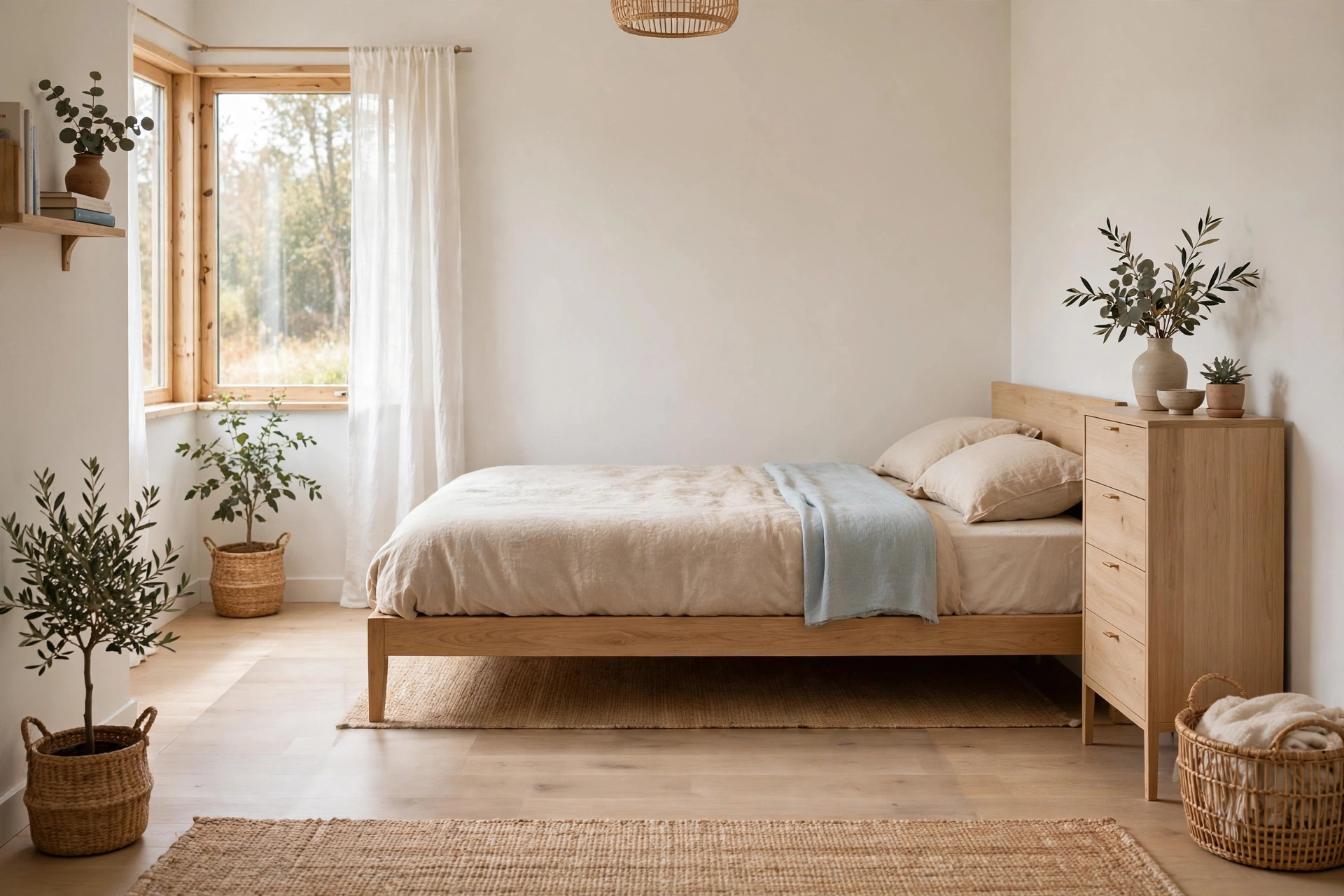
The typical rental closet wastes about half of its volume. There is one rod near the top, a shelf above it, and a huge stretch of empty air below the hanging clothes. Reclaiming that air is the fastest win in the room, and none of it requires drilling.
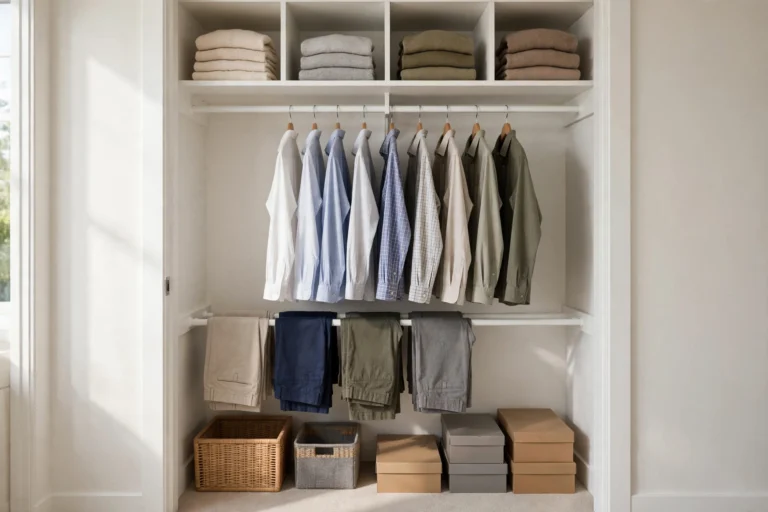
Add a second hanging rod. This is the single most transformative closet fix for a small bedroom. An adjustable rod extender hooks over the existing rod in seconds, no tools needed, and instantly creates a lower level for shirts, pants, and folded jeans. Shirts go up top, pants and shorter items below, and you have effectively doubled the closet’s hanging capacity for the price of a lunch.
Switch to slim hangers. Thick plastic and wooden hangers eat rod space. Slim velvet hangers are a fraction of the width, grip clothing so it does not slide off, and matching hangers alone make a closet look dramatically calmer. One full rod of slim hangers takes noticeably less space than the same clothes on bulky ones.
Divide the top shelf. Deep closet shelves become cliffs where folded clothes tumble and stack unevenly. Shelf dividers stand upright on the shelf and split it into neat columns for jeans, sweaters, and tees, so each pile stays contained instead of slumping into its neighbor. Folded clothes stay put, and you can see everything at a glance.
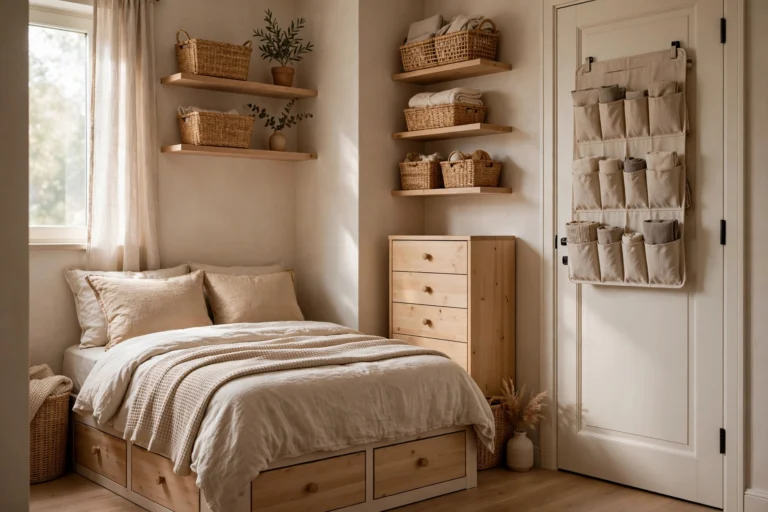
Use the door back. The inside of the closet door is free storage. A set of adhesive or over-door hooks holds tomorrow’s outfit, a robe, or bags you grab daily. In closets with sliding doors, the wall section beside the opening takes small adhesive hooks just as well. Whatever you hang here, keep it to daily-use items so the door stays functional.
Hang a fabric organizer for everything small. A hanging fabric organizer with shelves or cubbies drops onto the closet rod and turns vertical air into cubby storage for shoes, folded accessories, or rolled scarves. It works especially well in the side column of a reach-in closet, where short space otherwise goes unused. Our 45 renter-friendly storage ideas has more ways to use this kind of soft, removable storage around a small apartment.
Put the Under-Bed Space to Work
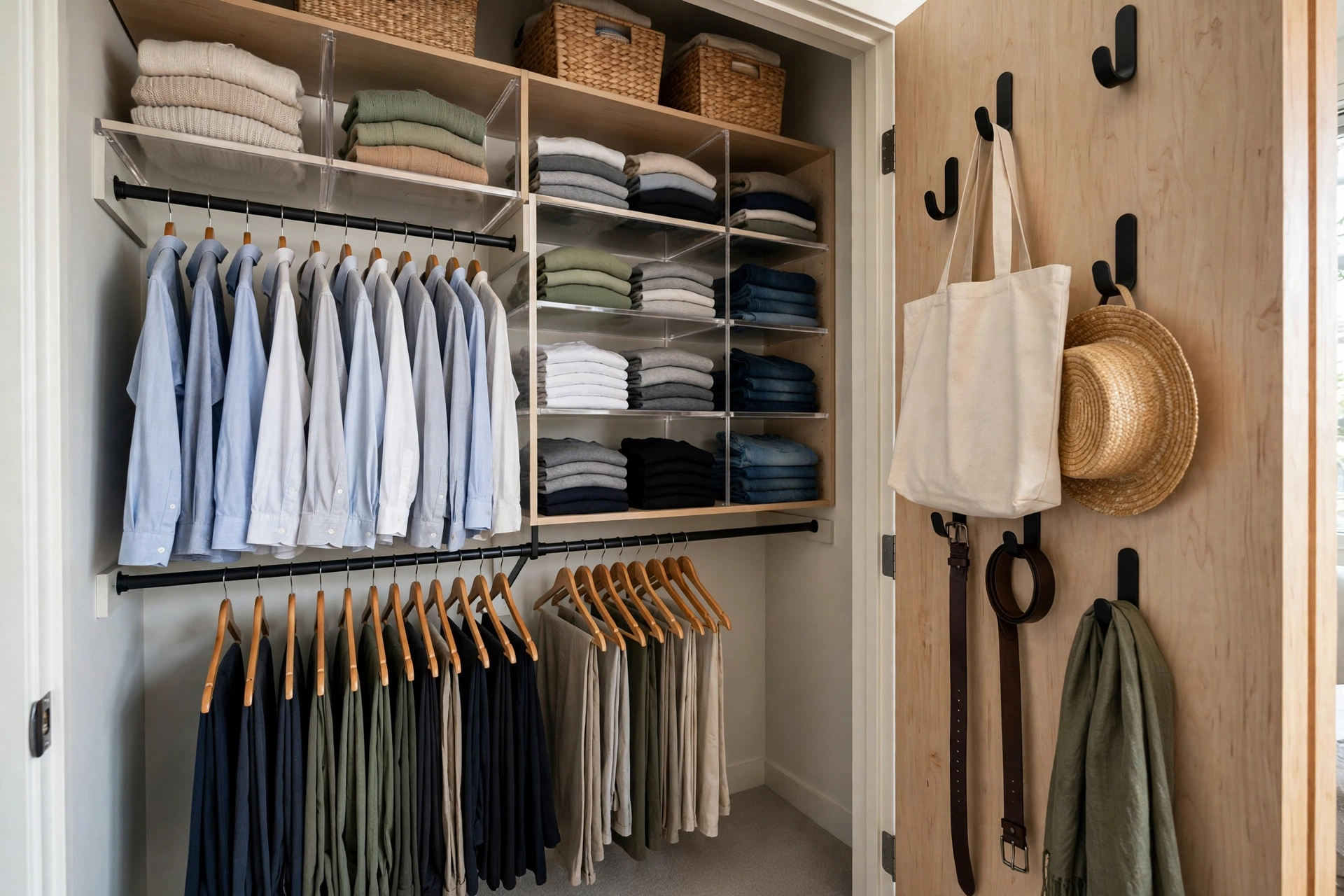
The bed is the biggest object in the room, and the space under it is often the biggest storage area you are not using. It can hold a whole season of clothes, all of your spare bedding, and the luggage that has nowhere else to live. Getting this zone right starts with one number.
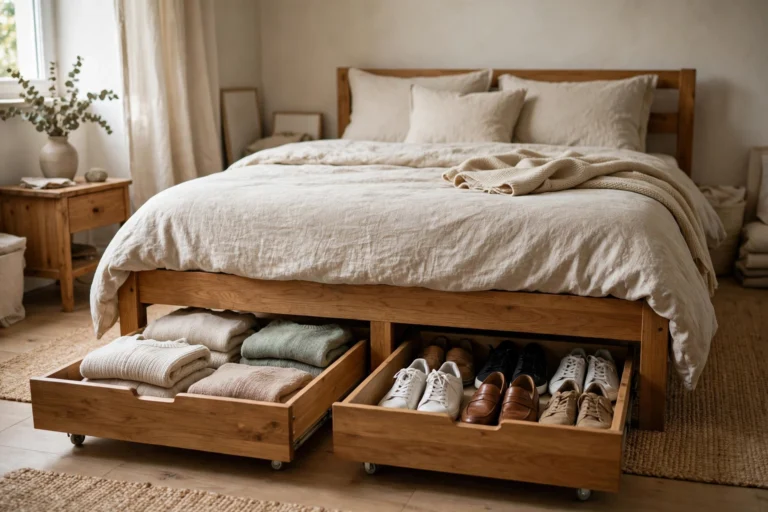
Measure your clearance first. Kneel with a tape measure and check the gap between the floor and the lowest point of the frame, checking the middle as well as the corners (center support bars often sit lower). Under 4 inches fits only soft zip bags. Around 6 to 7 inches fits low-profile rolling bins. Around 8 inches or more opens up lidded bins with real capacity. If you are just short, a set of bed risers cups under the legs and adds a few inches in minutes, no tools needed.
Match the container to the job. Rolling drawers with casters are best for things you grab weekly, like spare towels or workout clothes. Lidded bins are best for seasonal clothes and bedding, since the lid keeps out dust. Vacuum-seal bags shrink bulky winter coats and comforters to a fraction of their size, and the flat sealed packages slide neatly into a bin or lie directly on the floor under the frame. On hardwood or tile, choose containers with wheels or add felt pads so nothing scrapes.
Store by category and label everything. Group by category, not by convenience: all winter clothes in one bin, all spare bedding in another, shoes together. Clear bins help, but a strip of painter’s tape and a marker work just as well. The difference between storage and a black hole is knowing what is inside without pulling everything out. Keep the lids closed and wipe the bins out during your twice-a-year seasonal swap.
Reclaim Every Surface
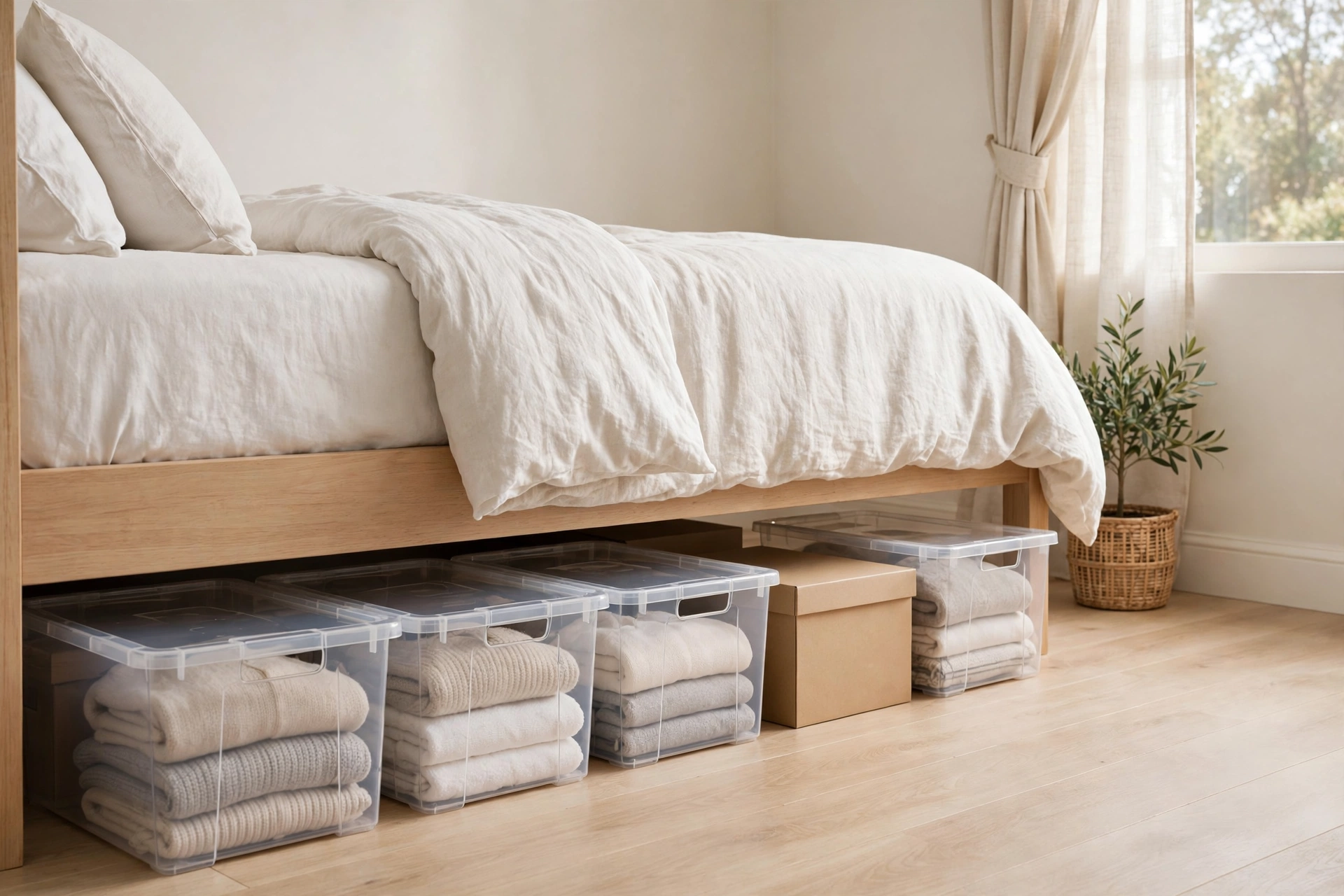
Cluttered surfaces make a bedroom feel chaotic no matter how organized the closet is. The nightstand and dresser top are small, so they need strict rules. The goal is not empty: it is deliberate. Every item on a surface should earn its place daily.
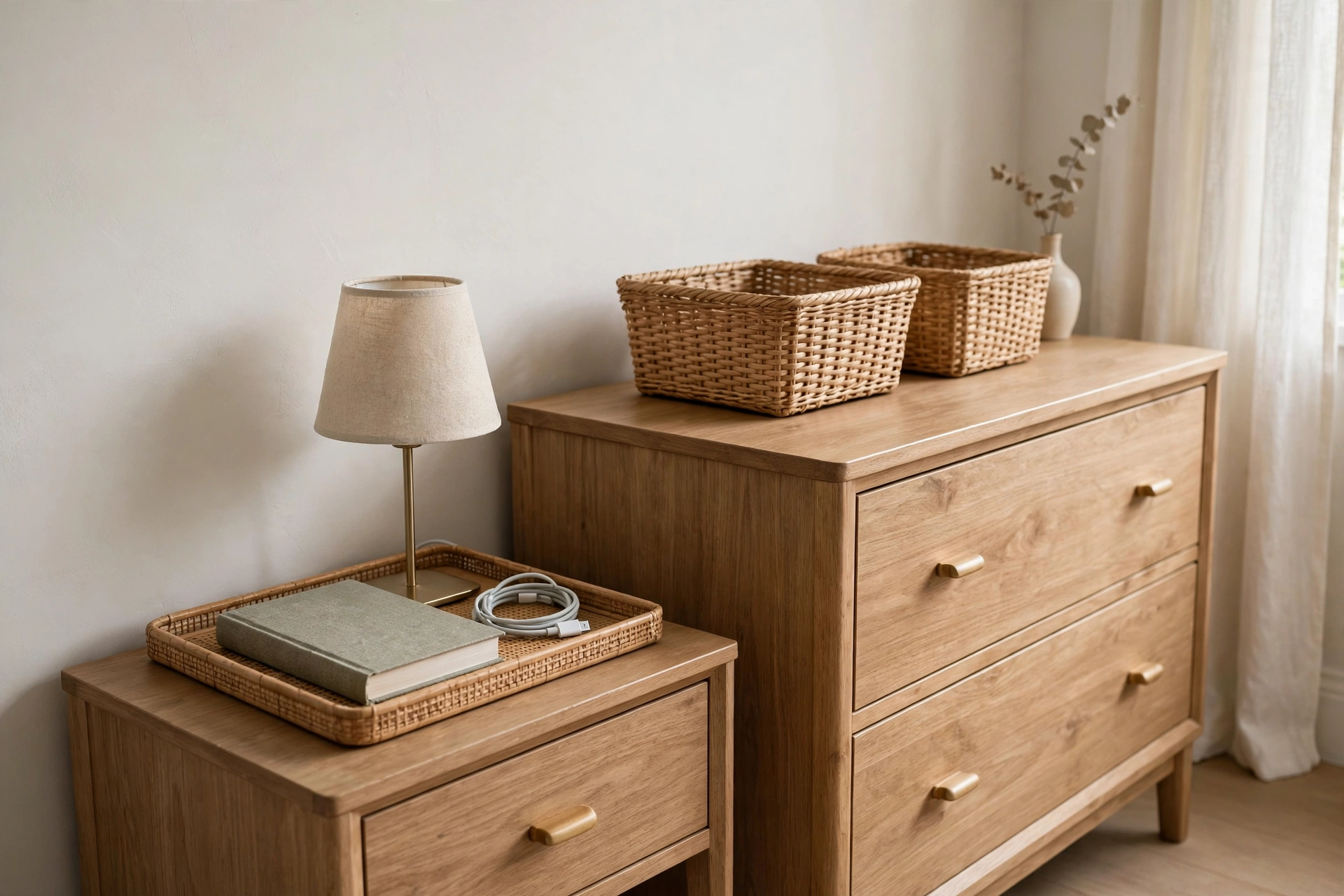
Give the nightstand a job description. The top holds only what you use every night: a lamp (or nothing, if you moved to a sconce), a water glass, one book, and a small tray. The tray is the secret: glasses, rings, and lip balm land in the tray instead of scattering, so the surface resets in five seconds. Everything else goes in the drawer: chargers, earbuds, medications, the book you are currently reading. A cheap drawer divider or two keeps the drawer from becoming a second junk pile. If the drawer is deep enough, run a short power strip inside it so phones charge out of sight.
Corral the dresser top with containers. Bare dresser tops collect keys, mail, and everything you carried in. Fight back with one or two trays, boxes, or small baskets: one near the door for wallet, keys, and sunglasses, one for daily jewelry. The container rule does the organizing for you, because items land in their zone instead of drifting. On a very small dresser, a single narrow tray running along the back edge does the job.
Keep daily-use items near their zones. The reason surfaces overflow is that items with no home migrate there. Today’s laundry goes in a slim hamper in the closet, not draped on the bed. Bags hang on a hook by the door instead of on the dresser corner. This is the same zone thinking from our complete guide to small apartment organization: when every category has a landing spot, flat surfaces stay clear almost by themselves.
Keep It Calm: A Maintenance Routine That Takes Minutes
An organized small bedroom is not a finished project; it is a five-minute habit. A weekly reset keeps the system honest: put the stray items back in their zones, refold anything that slumped, and clear the nightstand tray. Once a season, do the bigger pass. Swap seasonal clothes in the under-bed bins, wipe the bins, vacuum the floor underneath, and donate whatever you have not touched in a year.
Adopt a one-in, one-out rule for clothes and accessories. Small rooms have no slack, so every new item should replace an old one, or the room quietly fills back up. And keep a small laundry basket in the closet: it is remarkable how many bedroom messes are simply clean clothes with nowhere to land.
Small Bedroom Questions, Answered
My bedroom has no closet. What do I do?
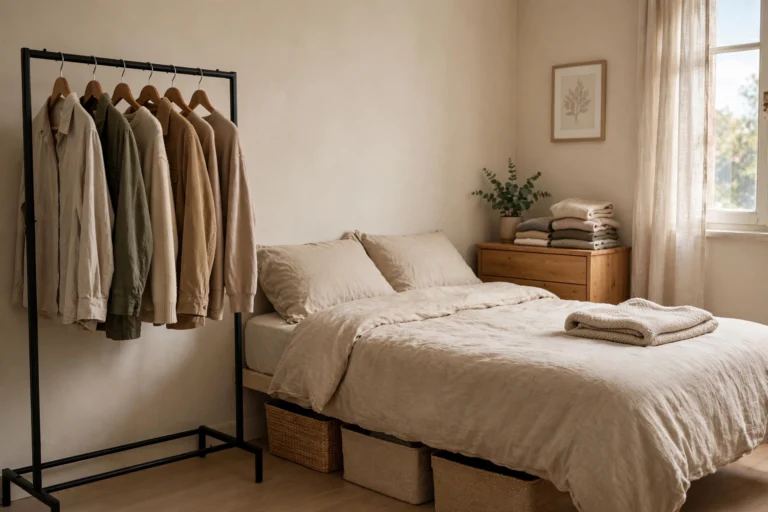
Build a closet out of the room’s other zones. A freestanding garment rack handles hanging clothes, under-bed bins take folded and seasonal items, and a tall narrow dresser covers the rest. Together they cover almost everything a small reach-in closet would hold, and all of it moves with you at the next apartment.
How do I organize a small bedroom without drilling anything?
Everything in this guide is drill-free by design: tension and hook-over rods, adhesive hooks, freestanding shelves, rolling bins, and over-door organizers. For heavier items on walls, adhesive hooks rated for the weight hold well on smooth surfaces, and they peel off cleanly at move-out.
What should actually live on my nightstand?
Less than you think. The top of the nightstand works best with four things: light, water, one book, and a small tray for glasses or jewelry. Everything else (chargers, earbuds, medications, tomorrow’s outfit plan) lives in the drawer. If an item sits on the top untouched for a week, it belongs somewhere else.
Your Next Step
You do not need to do this all in one day. Start where the pain is loudest. If the closet is the morning bottleneck, add the second rod this weekend. If the floor is the problem, measure your bed clearance and order two bins. If the surfaces drive you crazy, set out a tray tonight and put everything else in the drawer.
For the room-by-room system this guide fits into, read our complete guide to small apartment organization, and for more deposit-safe fixes see our 45 renter-friendly storage ideas. You can also browse more ideas in the bedroom hub.
4 Comments