No-Drill Wall Storage Ideas Renters Swear By
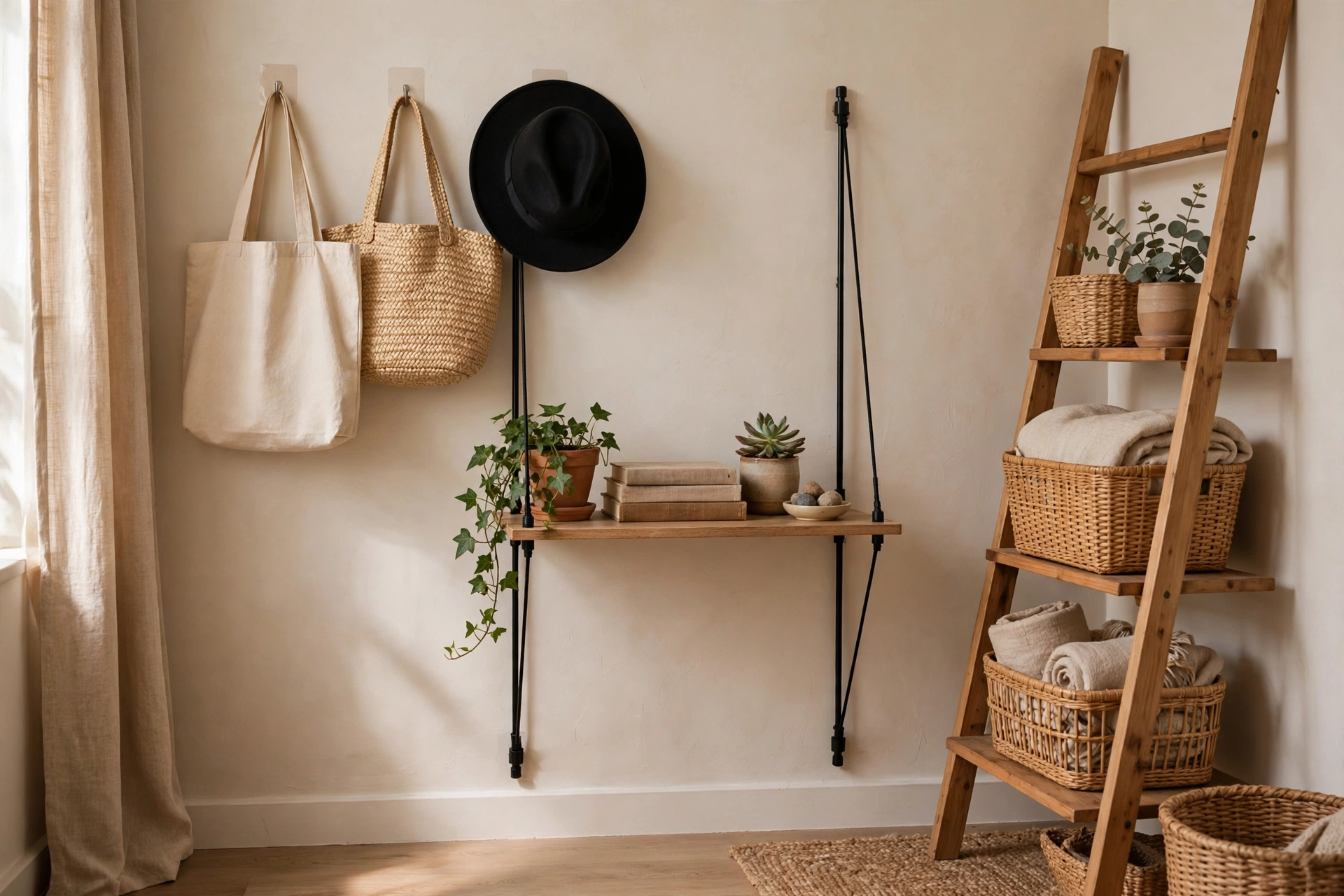
Walls are the biggest storage surface in a rental, and the one you are usually told not to touch. No nails, no screws, no holes to patch at move-out. The good news: there are three storage systems that put real weight on your walls without a single hole, and renters have been quietly relying on them for years. This guide covers all three, with the part most articles skip: honest weight limits for each method, so you know exactly what can go up and what will come crashing down.
That honesty matters. A storage idea is only deposit-safe if it actually holds. Below you will find adhesive hooks, tension-mounted shelves, and leaning storage, each with typical load ratings, the conditions those ratings assume, and the real-world margin you should keep. Everything here is removable and renter-first, with no drilling and no affiliate links: just what works, and where it stops working.
1. Adhesive Hooks: Small, Cheap, and Surprisingly Strong
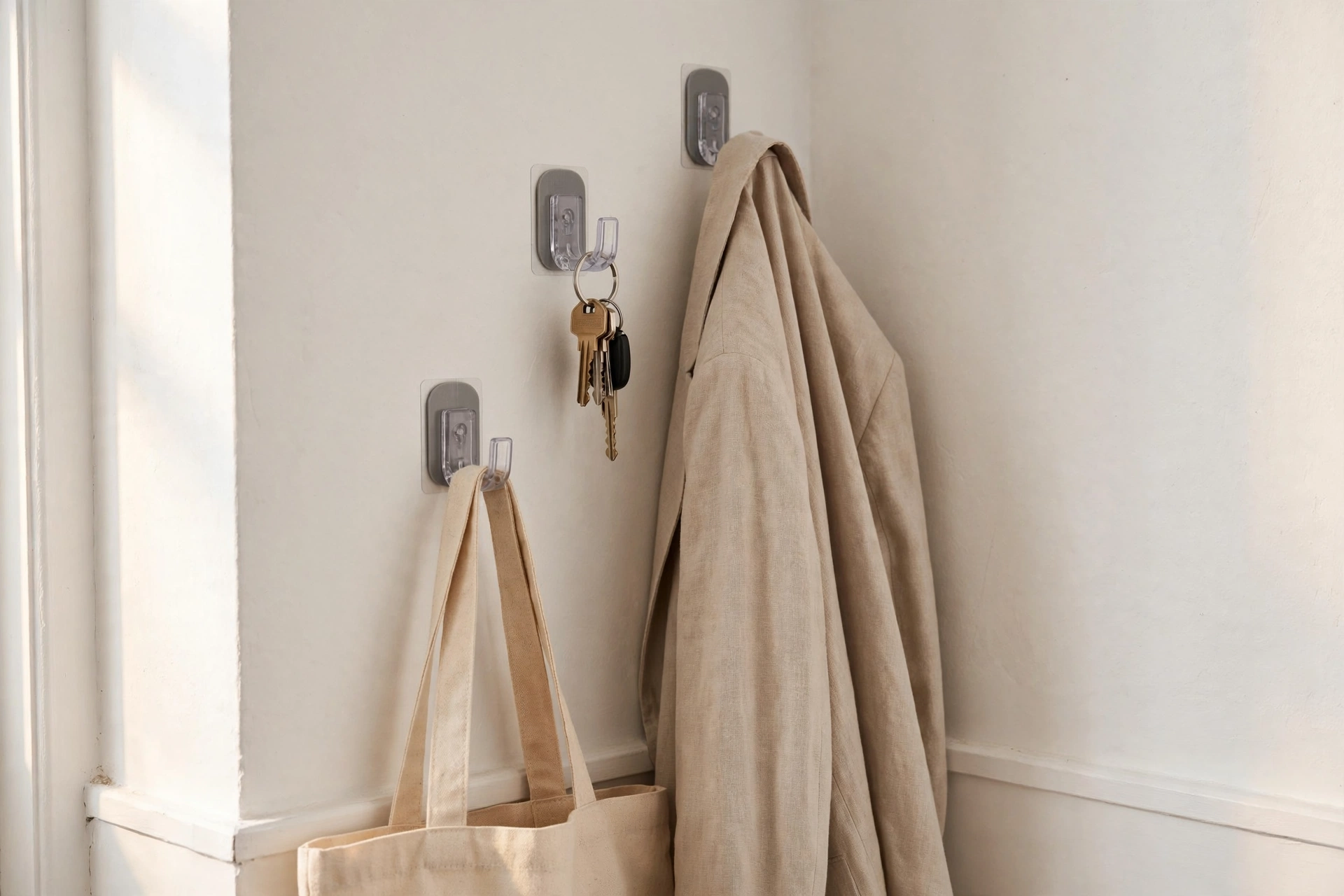
Adhesive hooks are the backbone of renter wall storage, and they work better than most people expect, because most people skip the setup. The weight ratings are real, but they assume near-ideal conditions: a smooth, clean, fully cured painted surface, the hook pressed firmly for about thirty seconds, and a wait of at least an hour before anything hangs. Wipe the spot with rubbing alcohol first, press hard, and let the strip bond before loading it. Skip any of these steps and the rating is fiction.
The common sizes and their manufacturer ratings go like this: mini hooks hold about 0.5 pounds (keys, cables, fairy lights), small hooks about 1 pound, medium hooks about 3 pounds (a light jacket, a tote bag), and large hooks about 5 pounds (a backpack, a broom, a hanging basket). Picture hanging strips go further, up to about 16 pounds for a large frame using four pairs of strips. In the real world, older paint, humidity, and textured walls all shave off capacity, so treat the rating as the ceiling, not the target. For anything you grab and yank daily, like a bag by the door, aim well under the rated maximum.
They also have clear no-go zones. Adhesive hooks do not work on wallpaper, brick, or rough textured walls. Let fresh paint cure for at least a week before sticking anything to it. Do not hang glass, anything valuable, or anything heavy directly over a bed. And remove them the right way at move-out: pull the strip straight down toward the floor, slowly, never outward. That is the whole trick, and it is why these hooks come off cleanly when the strip is handled correctly.
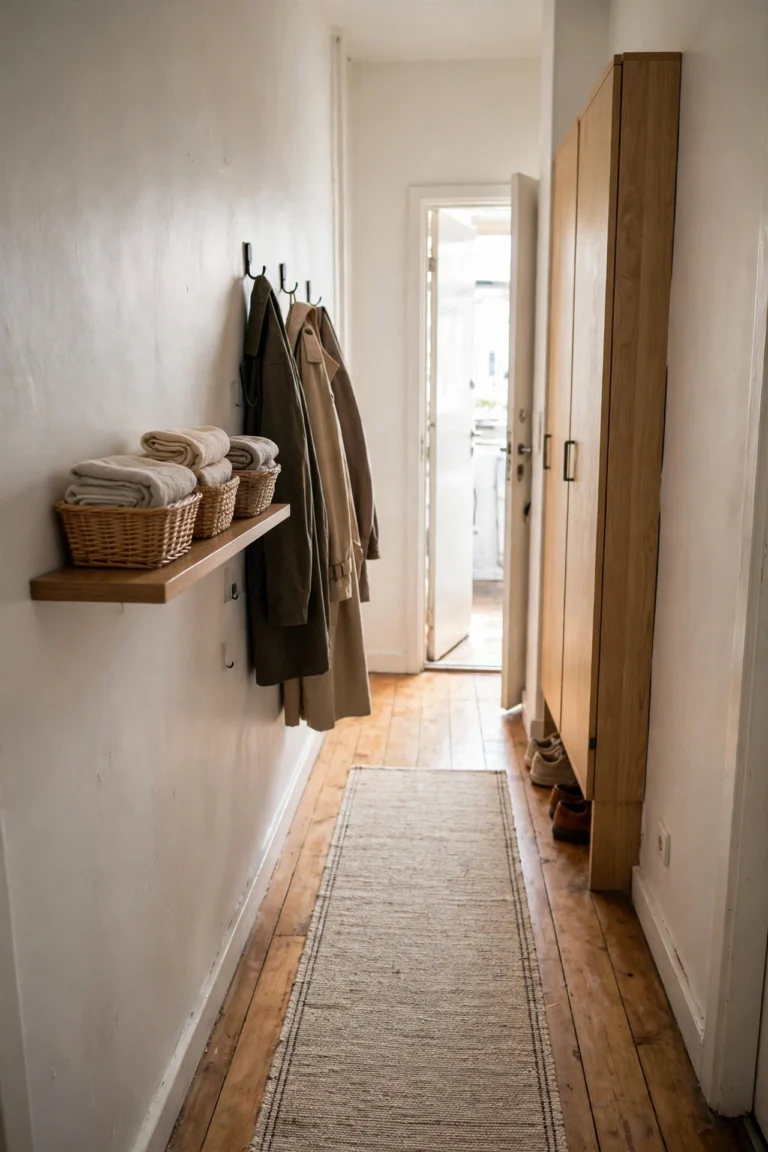
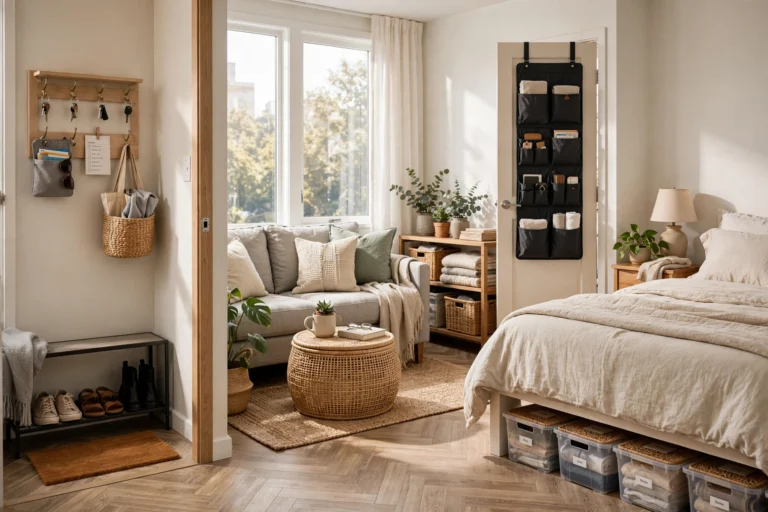
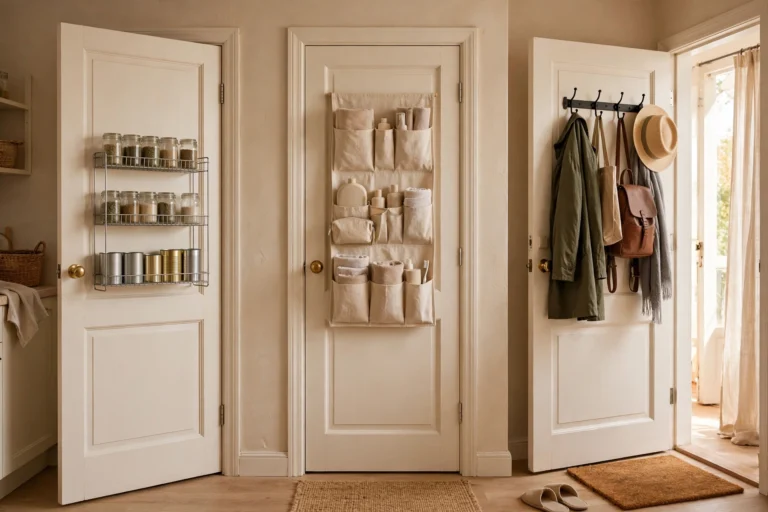
Where they earn their place: a row of medium hooks by the door for keys, leashes, and caps; large hooks inside a closet for bags and robes; small clear hooks for cable runs and fairy lights; picture strips for lightweight frames. Used this way, a handful of hooks replaces a whole coat rack and frees up a corner of the room. For more entryway-specific fixes, our 45 renter-friendly storage ideas covers how to pair hooks with trays and slim furniture.
2. Tension-Mounted Shelves: Actual Shelves, Zero Holes
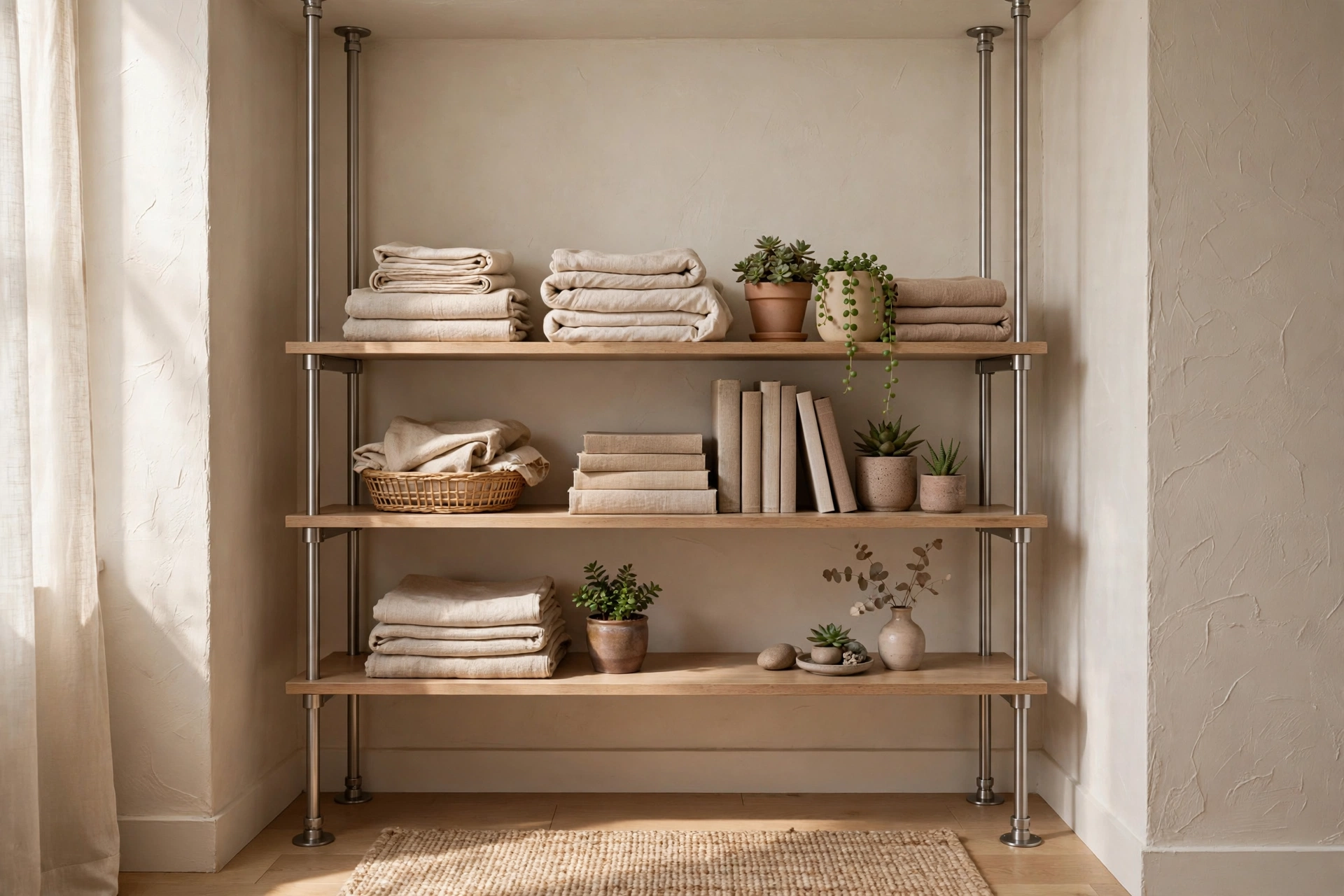
Tension is the renter’s closest thing to a drilled shelf. A standard tension rod holds roughly 10 to 20 pounds depending on its diameter and the span, with heavy-duty rods reaching about 30 pounds. Dedicated tension shelf systems go further: closet-style tension shelf rods support around 40 pounds, and floor-to-ceiling tension pole shelving can carry 60 or more pounds of distributed load across its shelves. These are real numbers from manufacturer ratings, and like adhesive hooks, they assume the product is installed correctly: clean end caps, a level fit, and the rod extended slightly beyond the opening so it presses firmly into both surfaces.
The best use is spanning a gap you already have. Two tension rods inside a kitchen cabinet create a spice and bottle tier for about 10 pounds of small items. A tension shelf between two walls in a bathroom alcove holds folded towels and toiletries. Tension pole shelving wedged floor-to-ceiling in a corner becomes a full storage tower for linens, plants, and baskets, with roughly 10 pounds per basket on shower-style caddies. The rule is simple: the wider the span, the lower the real capacity, so keep spans tight and center the load.
The honest limits: tension rods are not for a full collection of hardcover books, a row of heavy cookware, or anything that would be dangerous if it slipped. They are designed for static, downward loads, so items you grab and shove daily belong on a more forgiving system. If a rod keeps falling, the cause is almost always insufficient tension, a span that is too long for the weight, or slippery end caps, not bad luck. Shorten the span, extend the rod a little more, clean the caps, and try again.
3. Leaning Storage: Furniture That Works Like Wall Storage
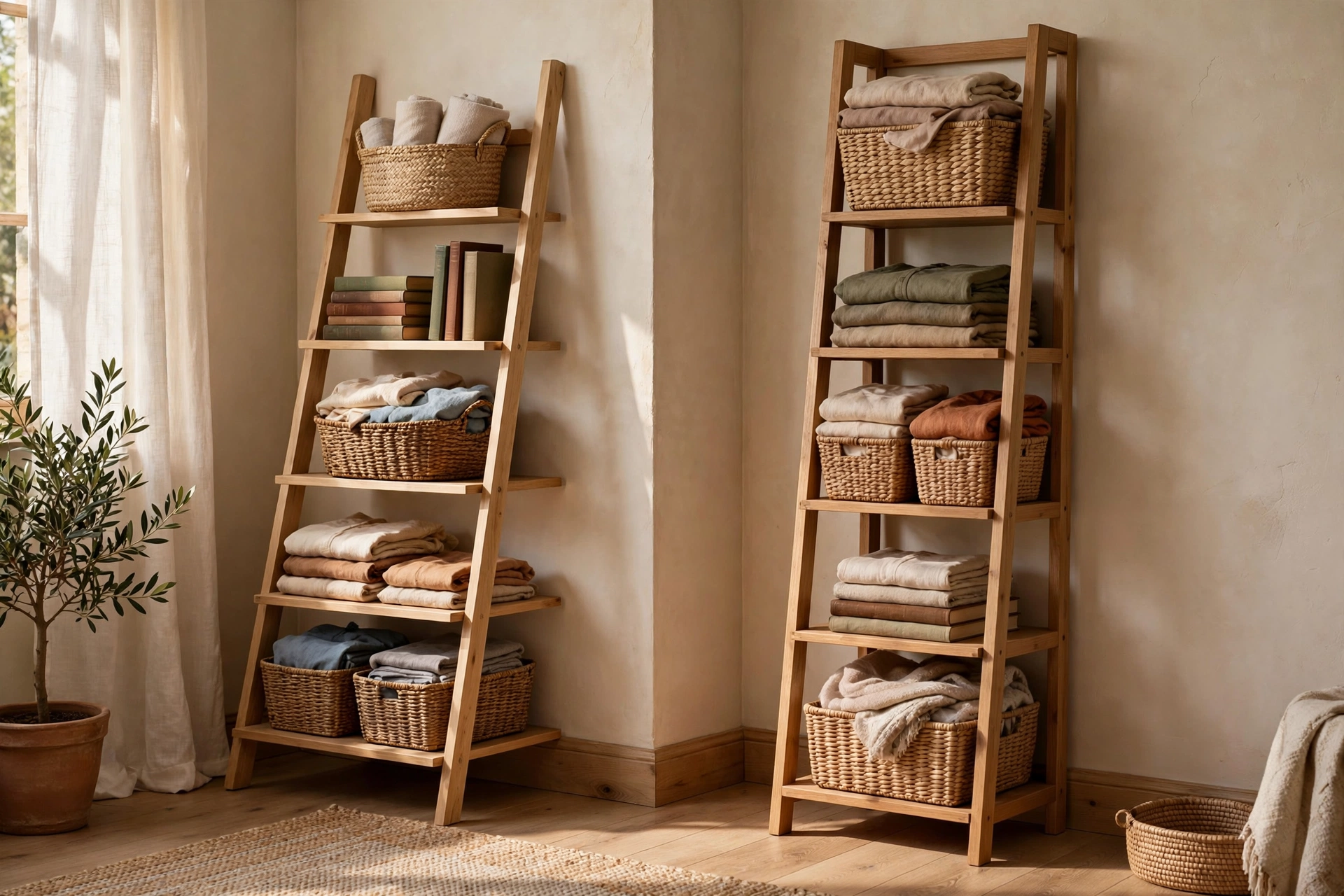
Leaning shelves and leaning ladder units are freestanding furniture that borrows the wall for stability and gives you back the wall’s storage footprint. A typical ladder shelf carries roughly 25 to 50 pounds per shelf on sturdy models, with capacity rising as you go down, so always check the per-shelf rating on the specific product. Because the weight leans back onto the wall through rubber pads, there are no holes and nothing to patch, and the unit comes apart and moves with you.
Placement is what makes leaning storage safe. Put heavy items on the lower shelves and light items up high, and never let the unit lean on a wall you cannot inspect, like crumbling plaster. If the manufacturer includes an anti-tip strap or anchor, follow their instructions: some leaning designs are engineered to be stable without anchors, others are not, and skipping required hardware to protect the no-drill story is never worth it. In homes with small children or climbing pets, keep it in a low-traffic corner and weight the bottom.
Where it shines: a ladder shelf in a bedroom corner for folded clothes, plants, and baskets; a narrow leaning unit in the bathroom for towels and toiletries; a leaning desk against a living room wall. Pair it with the zone approach from our studio apartment layout guide: give the leaning unit one clear job, like a reading corner or a bathroom station, and it reads as furniture, not clutter.
The Honest Weight-Limit Cheat Sheet
Clip this mental table before you shop. These are typical manufacturer ratings under good conditions, with the real-world note that actually matters:
Mini adhesive hook (0.5 lb): best for keys, cables, fairy lights. Skip for anything you will grab daily with force.
Medium adhesive hook (3 lb): best for jackets, tote bags, small mirrors. Keep daily-use items well under the rating on older paint.
Large adhesive hook (5 lb): best for backpacks, brooms, hanging baskets. Skip for anything heavy over a bed or seating.
Picture strips (up to 16 lb per frame): best for lightweight frames and small mirrors. Use an acrylic front instead of glass to be safer.
Tension rod (10 to 20 lb): best for light shelves between cabinets or walls, spices, small bottles. Skip for books, heavy pans, or wide spans.
Tension pole shelving (up to 60+ lb distributed): best for linens, baskets, plants in a corner tower. Check each shelf and basket rating individually.
Leaning ladder shelf (25 to 50 lb per shelf): best for folded clothes, towels, baskets, plants. Load heavy low, light high, and follow the manufacturer’s anchoring guidance.
Renter Wall Storage Questions, Answered
Will adhesive hooks damage my walls?
On smooth, fully cured paint, no: that is what the removable strip system is designed for. Damage usually comes from skipping prep, sticking to fresh paint, using them on wallpaper or textured walls, or ripping the strip outward at removal. Pull slowly, straight down toward the floor, and old strips almost always release cleanly.
Can tension shelves hold books?
A short run of paperbacks, maybe; a full shelf of hardcovers, no. Books are dense, and their weight concentrates on one spot of the rod. A heavy-duty tension shelf rod rated around 40 pounds handles a modest row, but if books are the goal, a leaning ladder shelf with a published per-shelf rating is the safer no-drill choice.
What should I never hang with adhesive hooks?
Glass, anything valuable or irreplaceable, anything heavy directly over a bed or seating, and anything at or above the rated weight. Adhesive strength is static and time-sensitive: it slowly declines with heat, humidity, and age, so nothing you would cry over losing belongs on a hook rated near its limit.
My walls are textured. What still works?
Skip adhesive products entirely: they fail unpredictably on textured surfaces. Tension-mounted shelves and leaning storage are your answers, since neither depends on surface bonding. A freestanding or leaning unit gives you wall storage without needing the wall to cooperate at all.
Your Next Step
Start with the cheapest win: a pack of medium adhesive hooks by the door, installed tonight with proper prep. Then graduate to one bigger system where the pain is worst: a tension shelf in the bathroom alcove, a leaning ladder shelf in the bedroom corner, or a tension pole tower in the laundry area. Each one takes minutes to install and removes without a trace.
To fit these ideas into a whole-room plan, read our complete guide to small apartment organization and our 45 renter-friendly storage ideas. You can also browse more ideas in the small apartment hub.


One Comment