How to Declutter Kitchen Counters for Good This Weekend
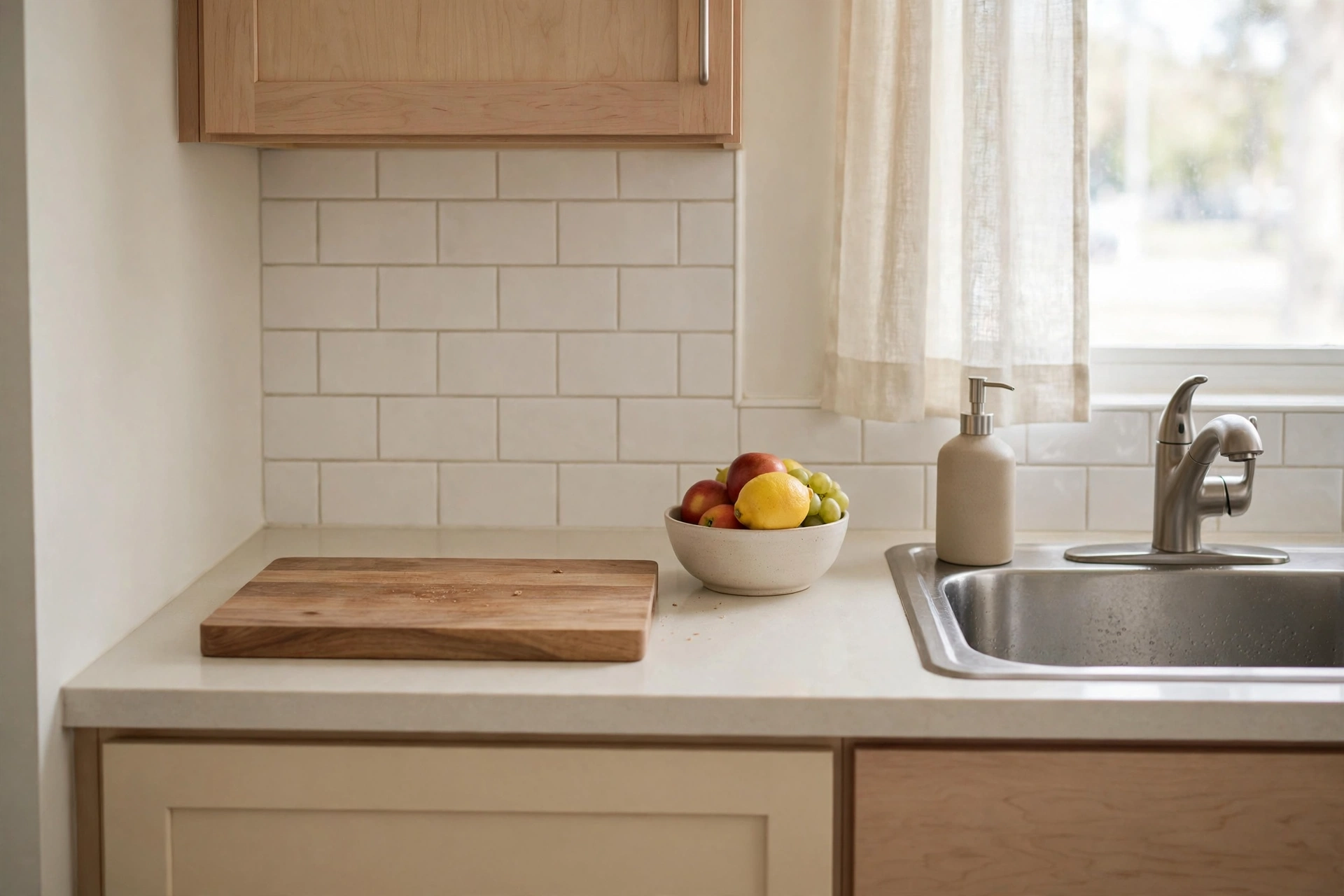
Your kitchen counters are not cluttered because you lack discipline. They are cluttered because every object without a real home lands there by default. Mail, small appliances, the blender you use twice a month, three half-used spice jars: the counter absorbs them all. If you want to know how to organize kitchen counters so they stay clear, the answer is not another basket. It is a one-time reset followed by one simple rule.
This plan takes one weekend. Saturday is the clear-out and the sort. Sunday is the relocation, when everything that lost its counter spot gets a real home. Nothing here requires new furniture or a renovation. If you want the room-wide system behind it, start with our complete small kitchen organization guide; this article is the counter-only version.
Step 1: Take Everything Off (Saturday Morning)
Take every single thing off the counters. Not most things, all of them. Small appliances, the knife block, the fruit bowl, the soap dispenser, the random batteries and rubber bands. Set it all on the kitchen table or the living room floor, grouped loosely by type so the next step goes faster.
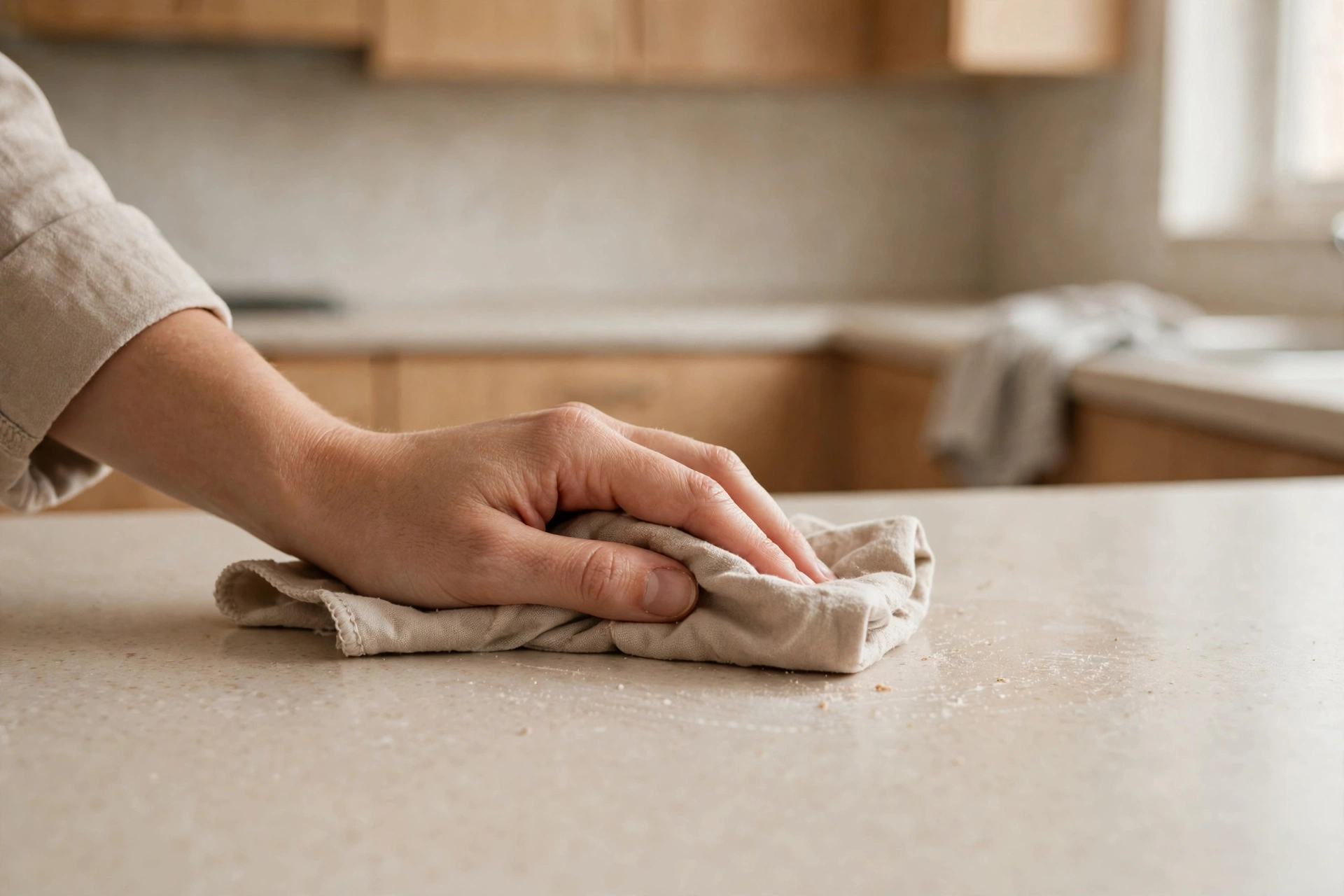
Now clean the bare surface properly. Wipe the counters and the backsplash, and sweep the crumbs out from behind where the toaster sat. A truly bare counter gives you a before picture and a clean working surface. You are not organizing yet; you are resetting.
If you have perishables on the counter, move the fruit bowl to the table with everything else and return it during Step 2. The sort takes less than an hour, so nothing here needs a cooler.
Step 2: Sort Everything Into Three Groups
Group 1 is the daily crew: things you touch every single day. The coffee maker, the soap dispenser, the knife block you actually use, a cutting board. Group 2 is the weekly crew: the stand mixer, the food processor, the waffle maker. Group 3 is the misfits: mail, homework papers, batteries, the vase of dead flowers, anything that wandered in from another room.
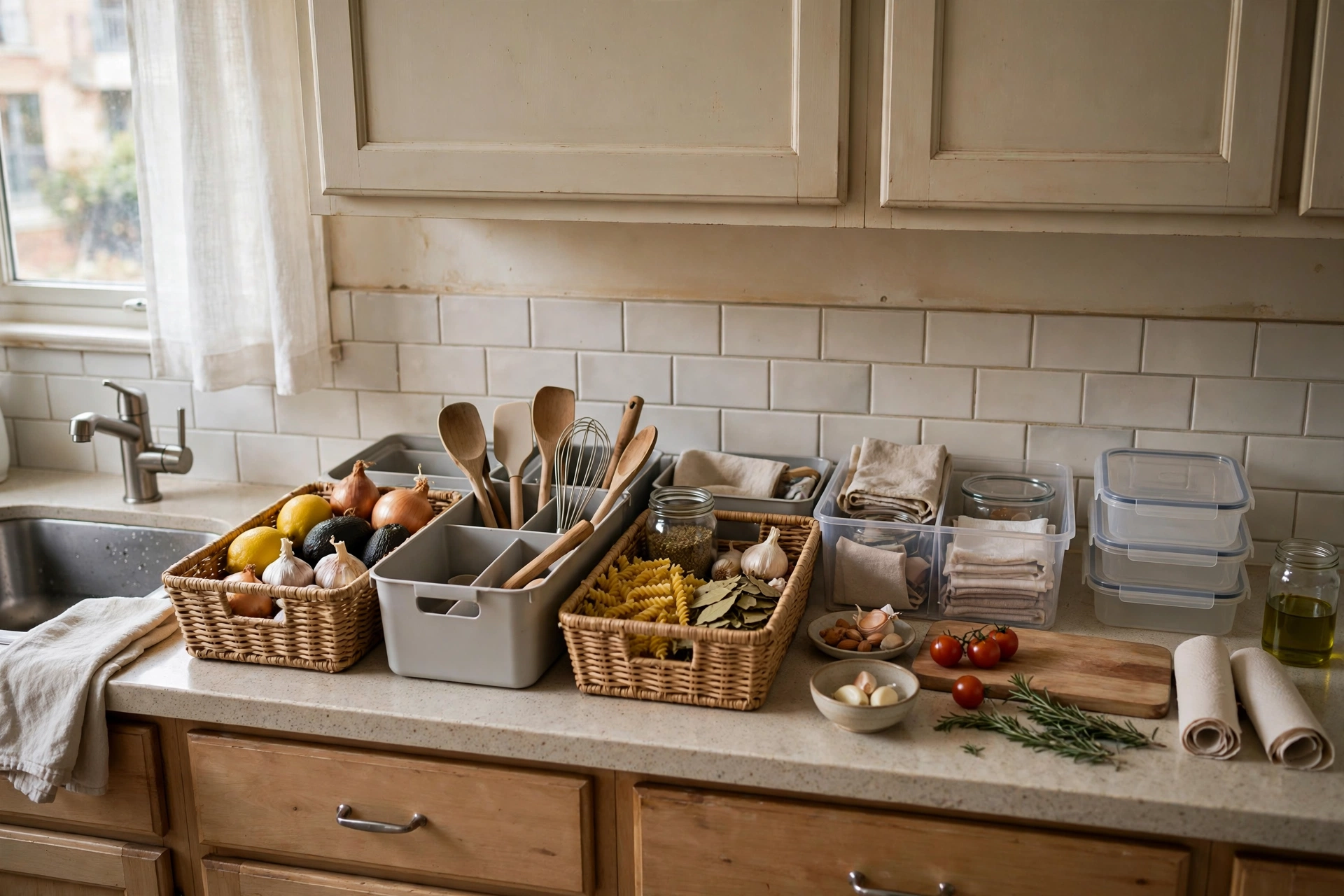
Be strict with Group 1. “Daily” means every day, not most days. A blender used for weekend smoothies is a Group 2 item with a weekend home, not a permanent counter resident. Bag the misfits and return them to their real rooms now, before Sunday. Every object that leaves the kitchen today is one less thing fighting for space tomorrow.
What Earns a Permanent Spot on the Counter
Use the daily-use test on every candidate. Ask: do I reach for this every single day? The coffee setup, the soap, the cutting board you chop on nightly, a small fruit bowl if your family eats fruit daily. Those earn their spot. Everything else, even things you love, is a guest that should sleep somewhere else.
Corral the keepers into zones instead of scattering them. A coffee station in one corner, prep tools near the stove, the soap dispenser by the sink. Grouping keeps daily tools from creeping across the whole surface. If the counters still feel crowded after the sort, your keep list is too long: pick the three most-used items and relocate the rest. Our renter-friendly kitchen upgrades walk through no-drill helpers like cabinet-door racks and adhesive hooks that give relocated items real homes without touching the walls.
A quick starting checklist, using the daily-use test:
- Keep: the coffee maker, soap dispenser, cutting board, the knife block you use every day, and a fruit bowl your family actually eats from.
- Relocate: the stand mixer, food processor, waffle maker, the full spice collection, the toaster you use twice a week, and backup paper towels and bulk supplies.
Borderline items get a two-week trial in their new home. If you genuinely miss something, it moves back with a defined zone. Most of the time you will not.
Where Everything Else Goes
Every relocated item needs a named home, not a vague plan to put it “in a cabinet somewhere.” If an item cannot return to its home in under ten seconds, that home does not work and the item will drift back to the counter.
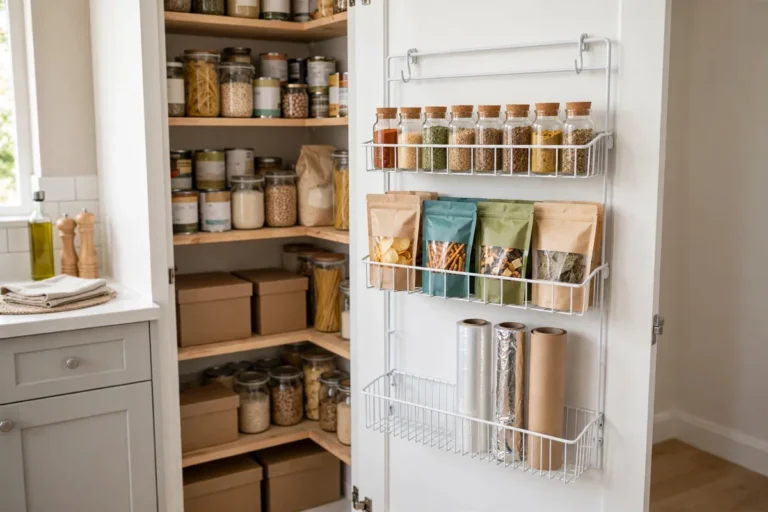
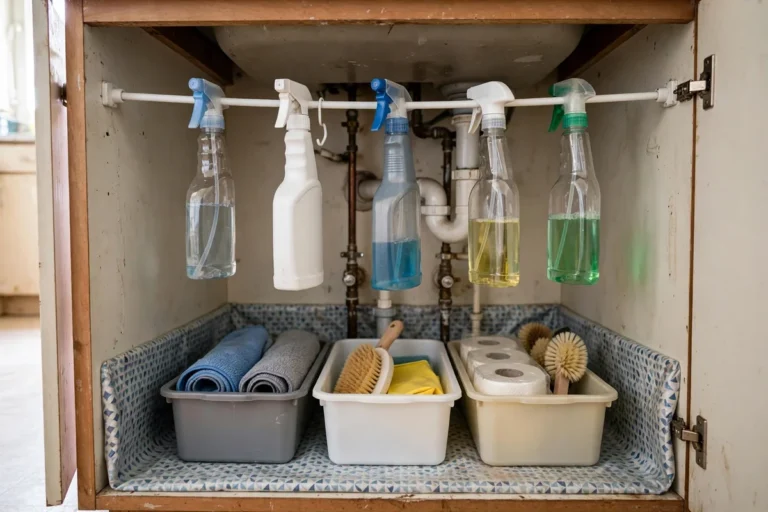
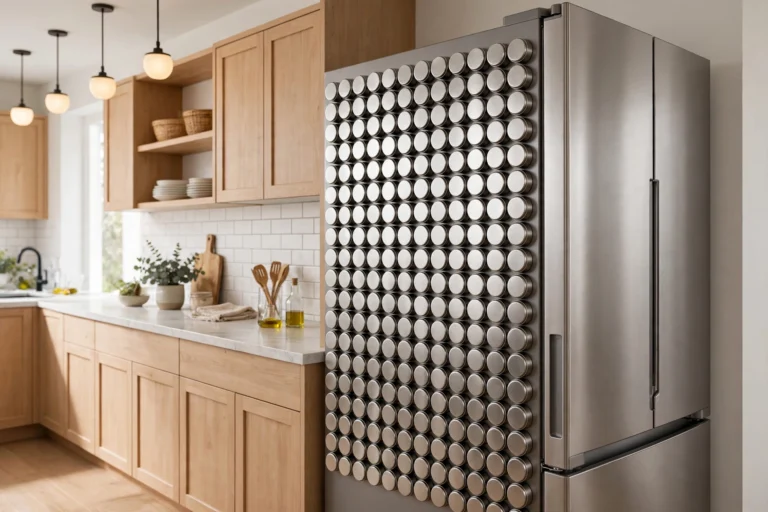
Weekly appliances like the mixer and food processor go to a low cabinet shelf or a pantry shelf where you can lift them with two hands. Our small pantry guide shows how to make room on a budget, and over-door pantry organizers can free shelf space for them. Spices move off the counter to a drawer insert or a magnetic rack on the side of the fridge. Cleaning supplies get sorted into bins under the sink, and a tension rod across the cabinet gives spray bottles a place to hang.
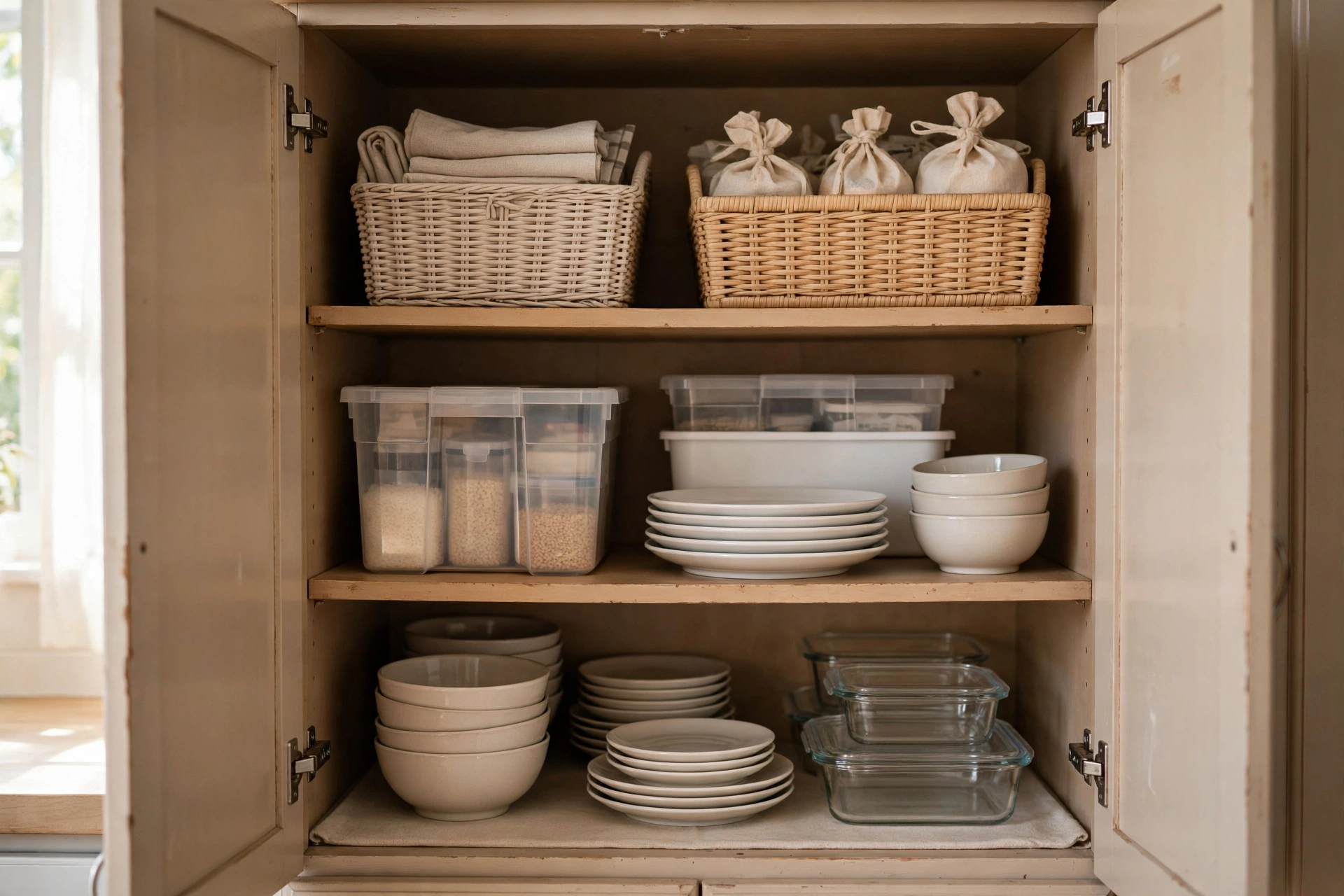
Work top to bottom as you place things: daily items between knee and shoulder height, weekly items up higher or down lower, and the heaviest things on the lowest shelf you can reach without a step stool. Label the bins you cannot see into. A home nobody can find is just clutter with an address.
Do not reorganize the entire cabinet while you relocate. Give each relocated item the first sensible shelf or bin it fits, and stop. A full cabinet reorganization is a different weekend project; mixing it into this one is how Sunday runs out.
The One Rule That Keeps Counters Clear
The reset rule: every evening, before you sit down, spend five minutes returning everything on the counter to its home. The coffee pot goes back to its station corner, the sponge to the sink, the mail to the tray by the door. Five minutes keeps the weekend reset permanent, because clutter never gets a full day to compound.
Pair it with the touch-once habit for new arrivals. When something new enters the kitchen, it goes straight to its home, not to the counter “for now.” The counter is a workspace, not a waiting room. And when a new gadget arrives permanently, an old one gets relocated or donated. One in, one out keeps the surface honest.
If mail and keys are your repeat offenders, give them one small tray or hook as the only sanctioned landing strip. Everything else bounces. One defined landing spot beats a counter-wide slow drift, and it makes the nightly reset almost automatic.
When the rule slips, and it will during a busy week, do not restart the whole weekend. Run a ten-minute mini-reset: misfits back to their rooms, weekly items back to their homes, counters clear again. One skipped night is a blip; a week of skipped nights is a new clutter layer. The audit question stays the same every time: does this item pass the daily-use test?
A Sample Weekend Schedule
Here is how the weekend breaks down in practice. Saturday morning, 30 to 45 minutes: everything off the counters, surfaces cleaned. Saturday midday, 30 minutes: the three-group sort on the kitchen table, misfits bagged and returned to their real rooms the same day. Saturday afternoon, 20 minutes: the daily crew corralled into zones on the clean counters.
Sunday morning, about an hour: relocate Group 2 items to their named homes, one zone at a time. Start with appliances, then spices, then under-sink supplies. Sunday afternoon, 30 minutes: label any opaque bins, set up the single landing strip for mail and keys, and walk the kitchen once to confirm every relocated item has a home you can reach in under ten seconds. Sunday evening: run the first five-minute nightly reset. From here on, the habit does the maintenance.
Quick Answers
Why do my counters fill up again within a week?
Because the reset happened but the rule did not. Either items never got real homes, or new items arrived without any. Re-run the daily-use test on everything currently out. Anything that fails gets relocated tonight, not next weekend.
Should I buy countertop organizers?
Only after the sort, never before. A small tray that groups your coffee station looks tidy and keeps it contained. An organizer that holds items you already decided to relocate just hides the clutter. Reuse something you own before buying anything new.
How do I keep counters clear in a tiny kitchen with almost no storage?
Shrink the keep list first. In a truly small kitchen, the daily-use test leaves maybe three items. Then use the walls and cabinet doors for everything else: adhesive hooks, a magnetic spice rack, and a rail beside the stove add storage without a single hole. Our no-drill kitchen upgrades cover the full set.
Your Next Step
Saturday: everything off, surfaces cleaned, the three-group sort. Sunday: every relocated item gets its named home, and the nightly five-minute reset starts the same evening. By Sunday night the only things on your counters are the ones that passed the daily-use test.
Keep the system behind it with our complete small kitchen organization guide, and browse more fixes in the kitchen hub.