Small Kitchen Cabinet Organization With Shelf Risers
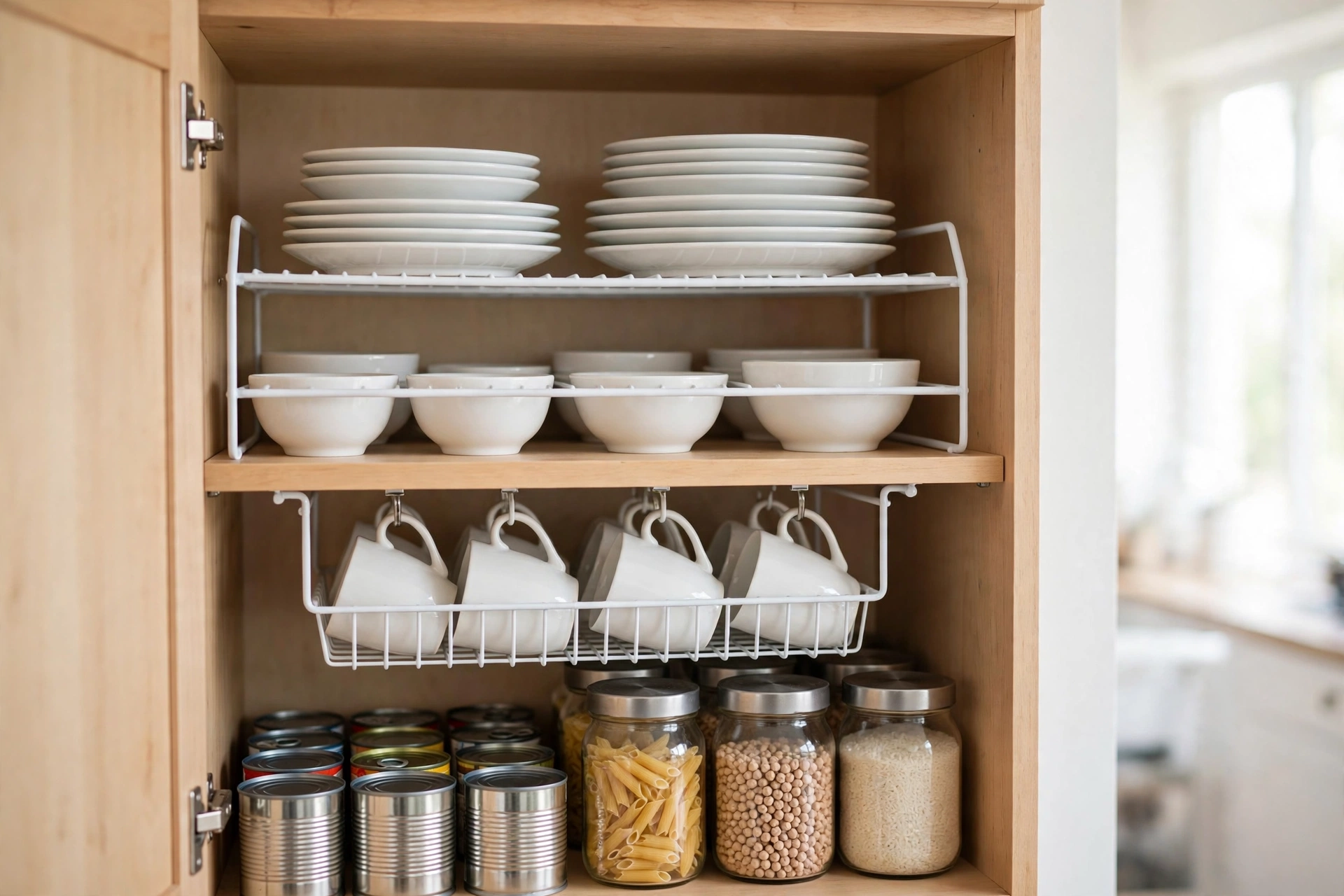
Open a typical kitchen cabinet and you will see the problem immediately: a single row of mugs or cans sitting on the shelf, with a foot or more of empty air floating above them. That air is wasted storage. Shelf risers, the simple platforms that create a second level inside a cabinet, turn that dead air into usable space, and under-shelf baskets grab the space nobody else uses at all. Together they can roughly double what a small cabinet holds, with no drilling and no tools. Here is how to plan the layout, choose the right pieces, and fit them so everything stays reachable.
Risers work best as part of a kitchen-wide system. Our complete small kitchen organization guide covers where everything in the kitchen should live, and the small pantry organization guide applies the same riser-and-basket logic to food storage.
Measure Before You Buy Anything
Risers and baskets only work when they fit the cabinet, and cabinets are not as roomy inside as they look from the front. Measure three things before ordering: the interior width (subtract about an inch for the side panels), the interior depth (subtract about half an inch so the door closes), and the clear height from the shelf surface to the underside of the shelf above. Write down the height of the tallest item that will sit on each level, because a riser that leaves no room to lift a plate off it is worse than no riser at all.
Also check the door. Open it fully and look at the swing: under-shelf baskets and door-back organizers must not hit the door frame or the items on the opposite side. If the cabinet has a center stile (the vertical bar between two doors), measure each opening separately, since organizers have to fit through the opening, not just inside the cabinet.
Shelf Risers: The Main Move
A shelf riser is a small freestanding platform, often wire or bamboo, that sits on a cabinet shelf and holds a second layer of items above it. Put plates on the bottom and bowls on the riser, or cans below and spices on top, and one shelf now does the work of two. The best candidates are cabinets where items are short and the shelf gap is tall: dish cabinets, mug cabinets, and canned-goods shelves. Choose a riser that fits your measured depth so it does not wobble, and check that it is rated for the weight you will put on it.
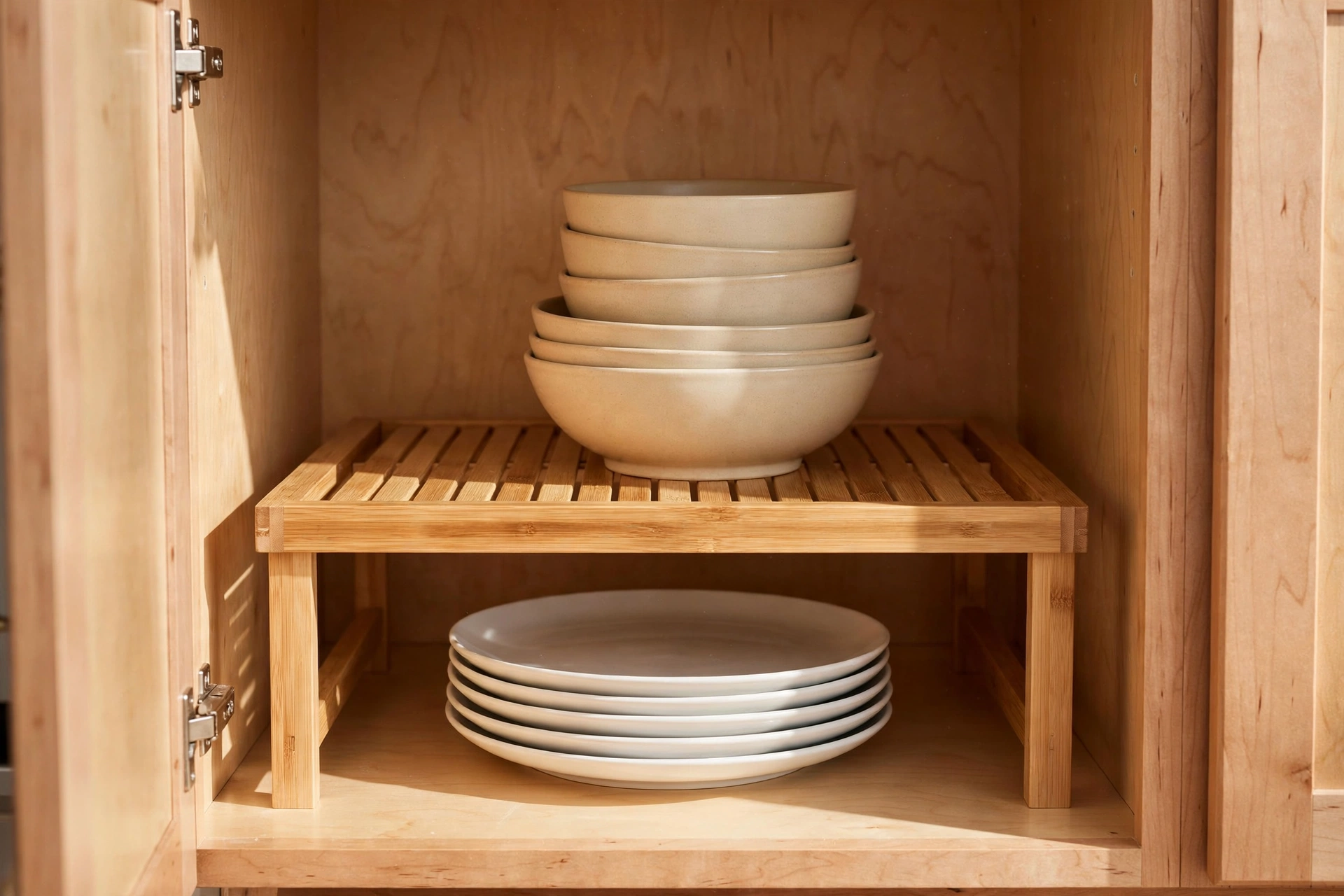
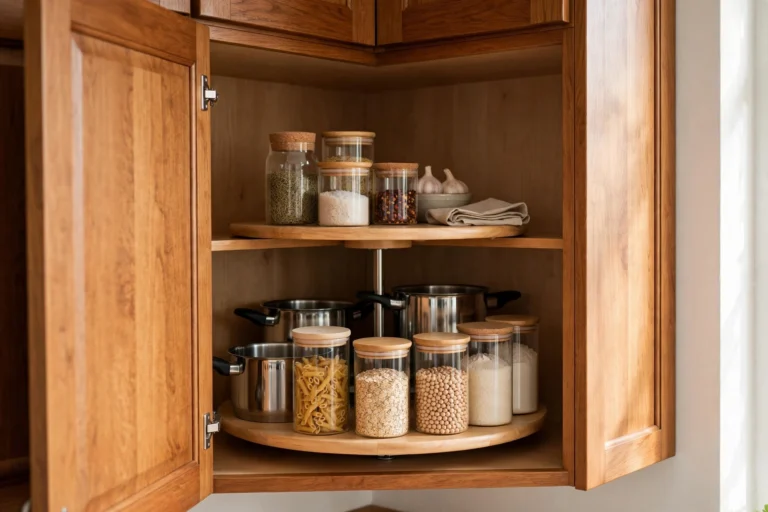
Two rules keep risers practical. First, do not build more than two levels per shelf: three layers of dishes mean the top layer is out of reach and the bottom layer is buried, which defeats the purpose. Second, keep the heaviest items on the original shelf, not on the riser, since the cabinet shelf carries weight better than a small platform. For corner cabinets, an L-shaped or corner riser works better than a rectangular one pushed into the dead corner. For spices and cans, a tiered (stair-step) riser beats a flat one because you can see every row at a glance.
Under-Shelf Baskets: Free Extra Storage
Under-shelf baskets are wire baskets with arms that slide onto an existing shelf, creating a pull-out drawer in the air beneath it. They are the easiest win in the whole cabinet: no installation, no tools, and they use space that literally nothing else occupies. They suit lightweight items that do not stack well on their own: mugs hung by their handles, packets of oatmeal and seasoning, boxes of tea, spare lids, or dish towels.
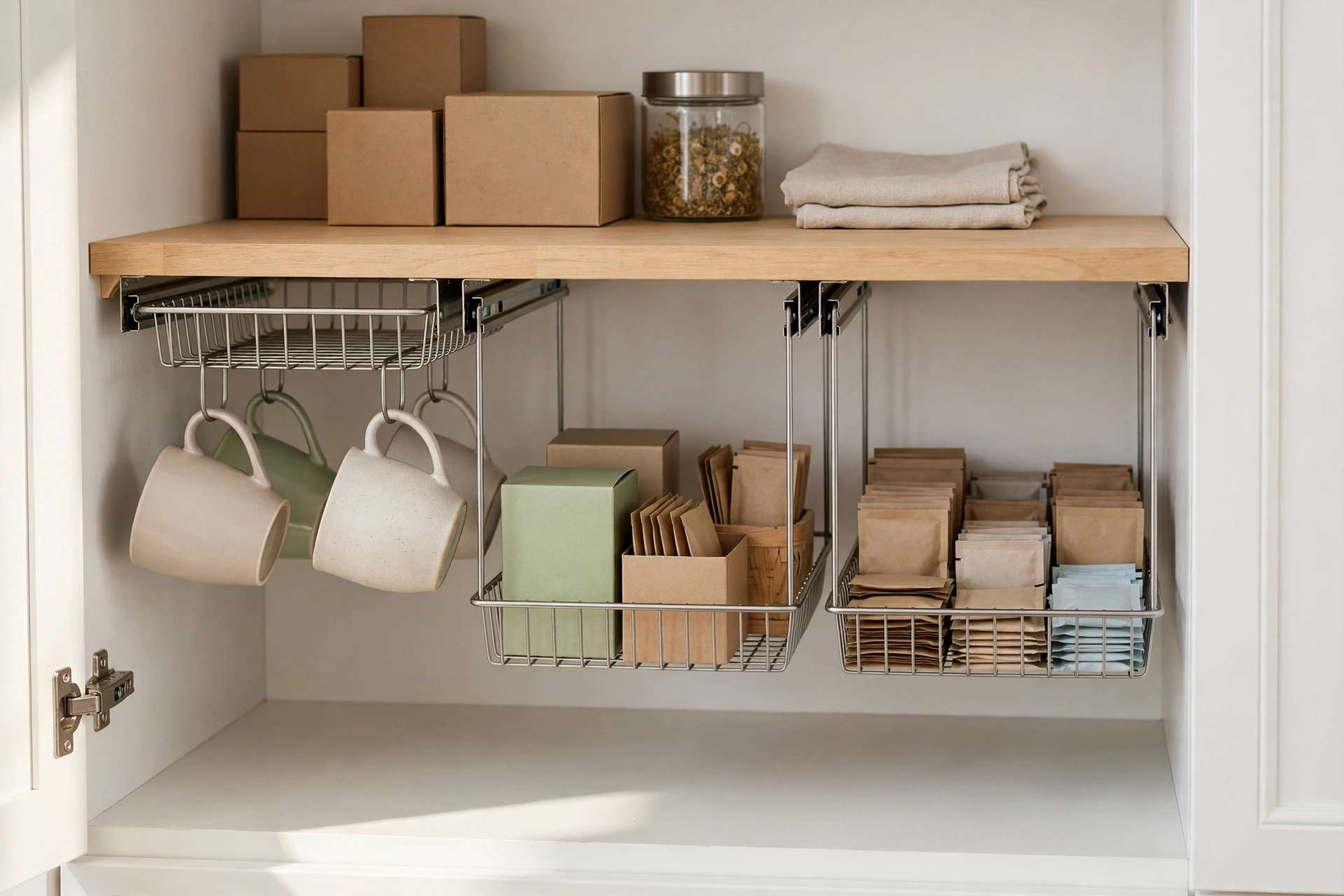
Keep the load light and the items short. An under-shelf basket full of heavy cans will sag the shelf it hangs from, and tall items will block the shelf below. Measure the clear height under the shelf before buying, and leave enough room to slide the basket out without catching. In rental kitchens this is one of the best no-drill upgrades available, since the basket comes off as cleanly as it goes on.
Door-Back Storage and Vertical Dividers
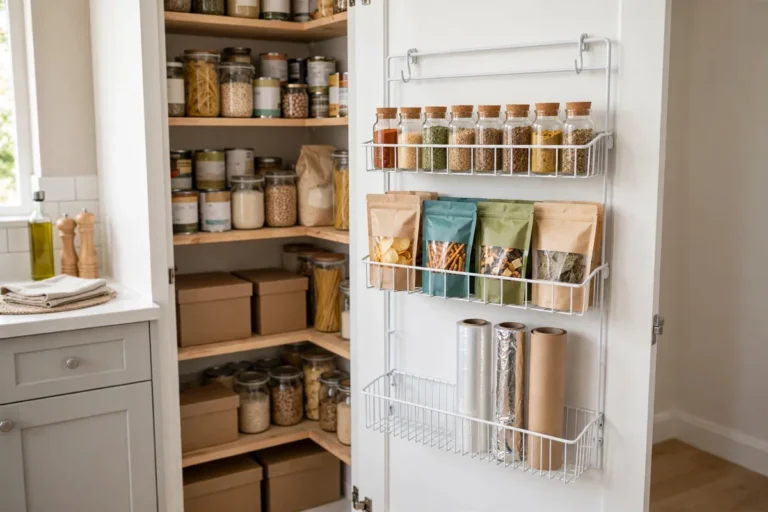
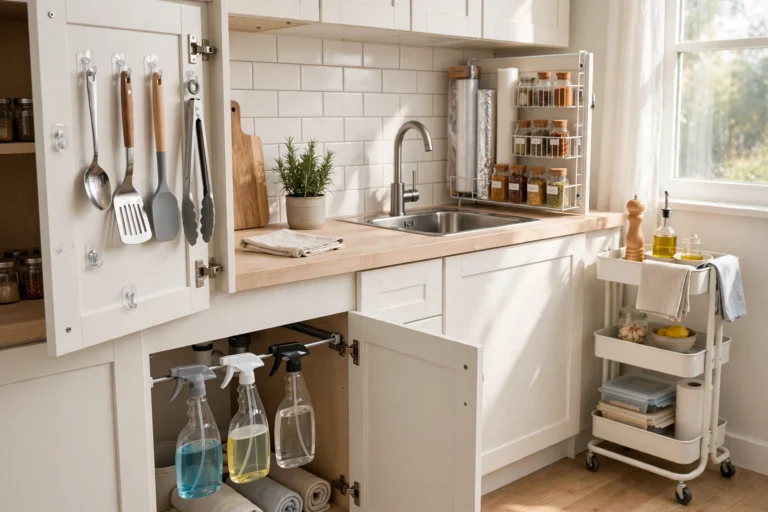
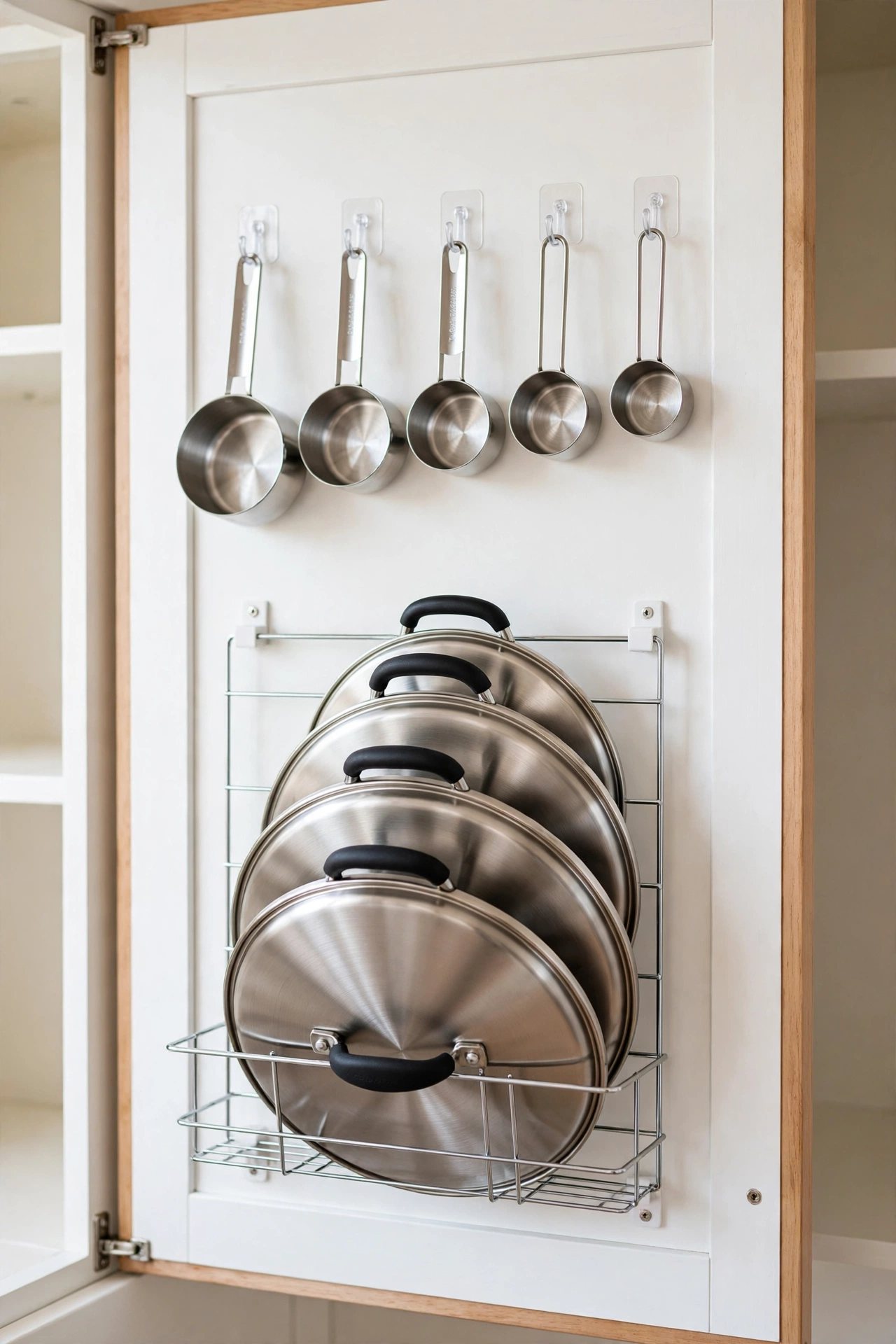
The inside of a cabinet door holds more than most people expect. Adhesive hooks or a slim over-door rack store measuring cups, measuring spoons, pot lids, or a small spice rack right where you cook. Check the manufacturer’s surface and weight limits before sticking anything to a cabinet door, and confirm the door still closes without the organizer hitting the shelf contents. Keep the load light: doors are not designed to carry weight, and a heavy rack will strain the hinges over time.
For the flat items that always end up in an unusable pile, add a vertical divider or file-style rack: cutting boards, baking sheets, cooling racks, and muffin tins store upright instead of stacked, so you can pull one out without lifting the whole pile. Let wooden boards dry fully before storing them upright, and choose a rack with slots wide enough for your largest tray. One divider rack often frees up an entire shelf.
A Simple Cabinet-by-Cabinet Plan
Once the hardware is in, assign every cabinet a job based on how you actually cook. Daily dishes and mugs go in the cabinet nearest the dishwasher, at eye level to shoulder height, with risers doubling the plate and bowl layers. Cooking oils, spices, and utensils belong near the stove, with a tiered riser so the back row of spices stays visible. Heavy items like pots, the stand mixer bowl, and bulk containers live below waist level, where lifting is safest and the cabinet structure is strongest. Rarely used items, the holiday platter, the specialty bakeware, go up high where the riser keeps them tidy but out of the daily path.
Group by task, not by type. Baking supplies live together in one cabinet zone (flour, sugar, measuring tools, mixing bowls), coffee and tea gear in another, everyday cooking in a third. When everything for one job is in one place, you stop opening four cabinets to make one meal, and the risers keep each zone’s items visible instead of stacked and forgotten.
What to Avoid
Risers cause problems when they are overfilled. Do not stack items on a riser so high that you cannot lift them off safely, and do not put daily items on the very top level where you need a step stool. Do not buy organizers before measuring: a riser that is half an inch too deep will stop the door from closing, and an under-shelf basket that is too tall will trap the shelf below it. Finally, resist the urge to fill every new level immediately. Organize what you own first, remove the duplicates and the gadgets you never use, then let the risers serve what is left. Extra capacity works best when it holds less, not more.
Cabinet Riser FAQ
How much weight can a shelf riser hold?
It depends on the riser and the cabinet shelf beneath it. Sturdy metal or bamboo risers typically handle everyday dishes, bowls, and cans without trouble, but always check the product’s stated limit and put the heaviest items on the original shelf rather than the riser. If the cabinet shelf itself sags, the riser will not fix that: redistribute weight or move heavy items to a lower cabinet.
Do under-shelf baskets work on all shelves?
They need a shelf with a clear edge to grip and enough open space beneath it. They work best on fixed wooden or thick shelves; very thin or wire shelves may not hold the arms securely. Measure the height available under the shelf and the depth of the basket, and keep the contents light so the shelf does not bow.
Are these renter-friendly?
Yes. Shelf risers, under-shelf baskets, and vertical dividers are all freestanding: they lift out with no marks at all. Adhesive door-back hooks are the only semi-permanent piece, so check the product’s removal instructions and your lease before using them, and test in a hidden spot first. Everything else moves with you on moving day.
Your Next Step
Pick the single most frustrating cabinet in your kitchen, the one where you dig past three things to reach the one you want. Measure it tonight: width, depth, and clear height. Order one riser and one under-shelf basket sized to those numbers, and spend twenty minutes this weekend fitting them and regrouping the cabinet by task. When that cabinet feels twice as big, you will know exactly which cabinet to do next.
For the full kitchen picture, read our small kitchen organization guide and our renter-friendly kitchen upgrades, and browse the kitchen hub for every kitchen article.