Corner Cabinet Solutions: Lazy Susans That Actually Fit
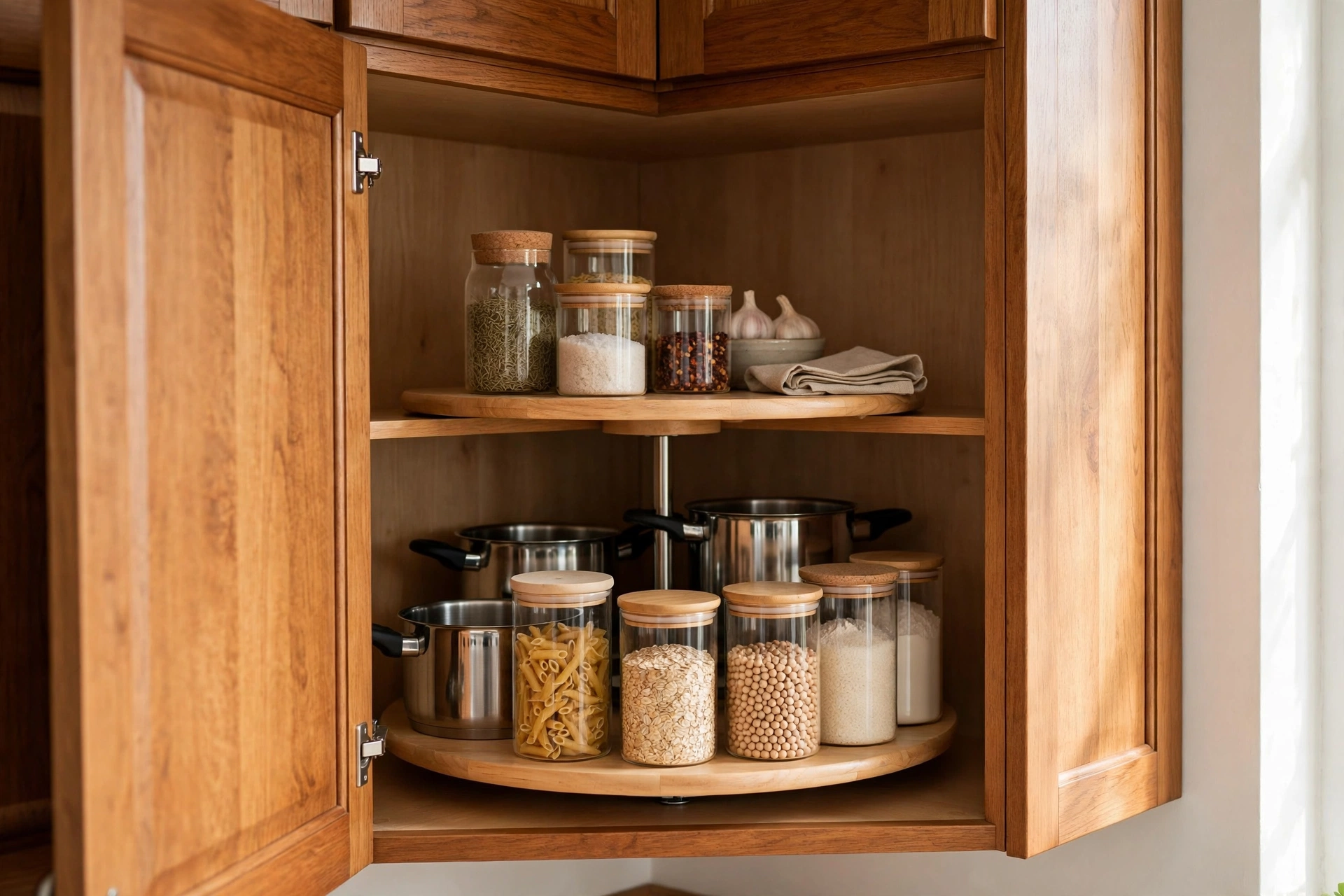
The corner cabinet is where kitchen storage goes to disappear: a deep, dark L-shaped void where cans migrate to the back and small appliances are forgotten for years. The problem is not the space, it is access. A lazy susan, the rotating tray that brings the back of the cabinet to the front, fixes access for most corner cabinets, but only if you match the shape and size to your specific cabinet. Here is how to measure, which solution fits which corner, and what actually belongs in each zone.
This is one piece of a complete kitchen system: our small kitchen organization guide covers where everything in the kitchen should live, and the renter-friendly kitchen upgrades handle everything that must come out cleanly at move-out.
Know Your Corner Type First
Corner cabinets come in two main configurations, and each wants a different solution. A diagonal corner cabinet has a single door cut across the corner: this is where kidney-shaped and pie-cut lazy susans shine, because the shape fills the awkward geometry. A blind corner cabinet has an L-shaped opening where one side is hidden behind the adjacent cabinet: this is the true black hole, and it usually needs pull-out trays or a swing-out system that brings the hidden section out to you. Open your cabinet, note which type you have, and buy for that type: a round turntable in a blind corner leaves half the space unreachable.
Measure Before You Buy Anything
Three measurements decide everything. First, the cabinet opening: the turntable must pass through the door, not just fit inside the box. Second, the interior depth and width at the widest point: the tray should leave a finger’s width of clearance from the walls so it spins freely without jamming. Third, the vertical clearance between shelves: tall items like oil bottles need a tall tier, while a two-tier unit halves the usable height per level. Measure the tallest item that will live on each tier before choosing single or double tier. A tray that is a quarter inch too wide will hit the hinges; a tray that is too small leaves storage unused.
Lazy Susan Shapes and What Fits Them
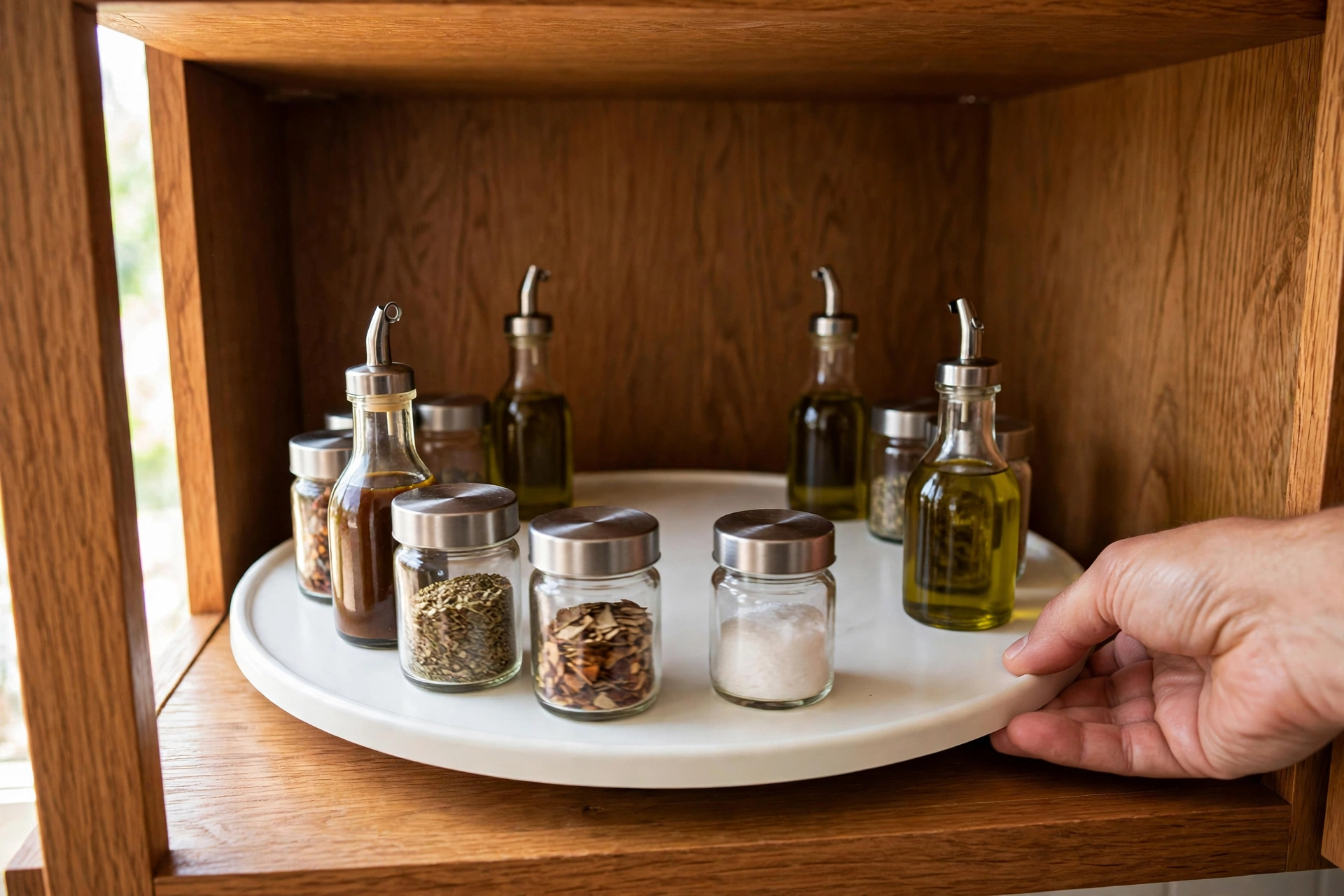
Full-round turntables are the simplest option and suit cabinets with open access and small, roundish contents: spices, condiments, sauces, vitamins. A single-tier tray about 10 to 12 inches across on a standard shelf turns the back row into the front row with one spin. Group items by type (baking spices together, oils and vinegars together) so a single spin lands you near the whole group. Add a small rimmed lip or place items in short bins on the tray, because a quick spin sends loose jars sliding, and a jammed turntable is worse than no turntable.
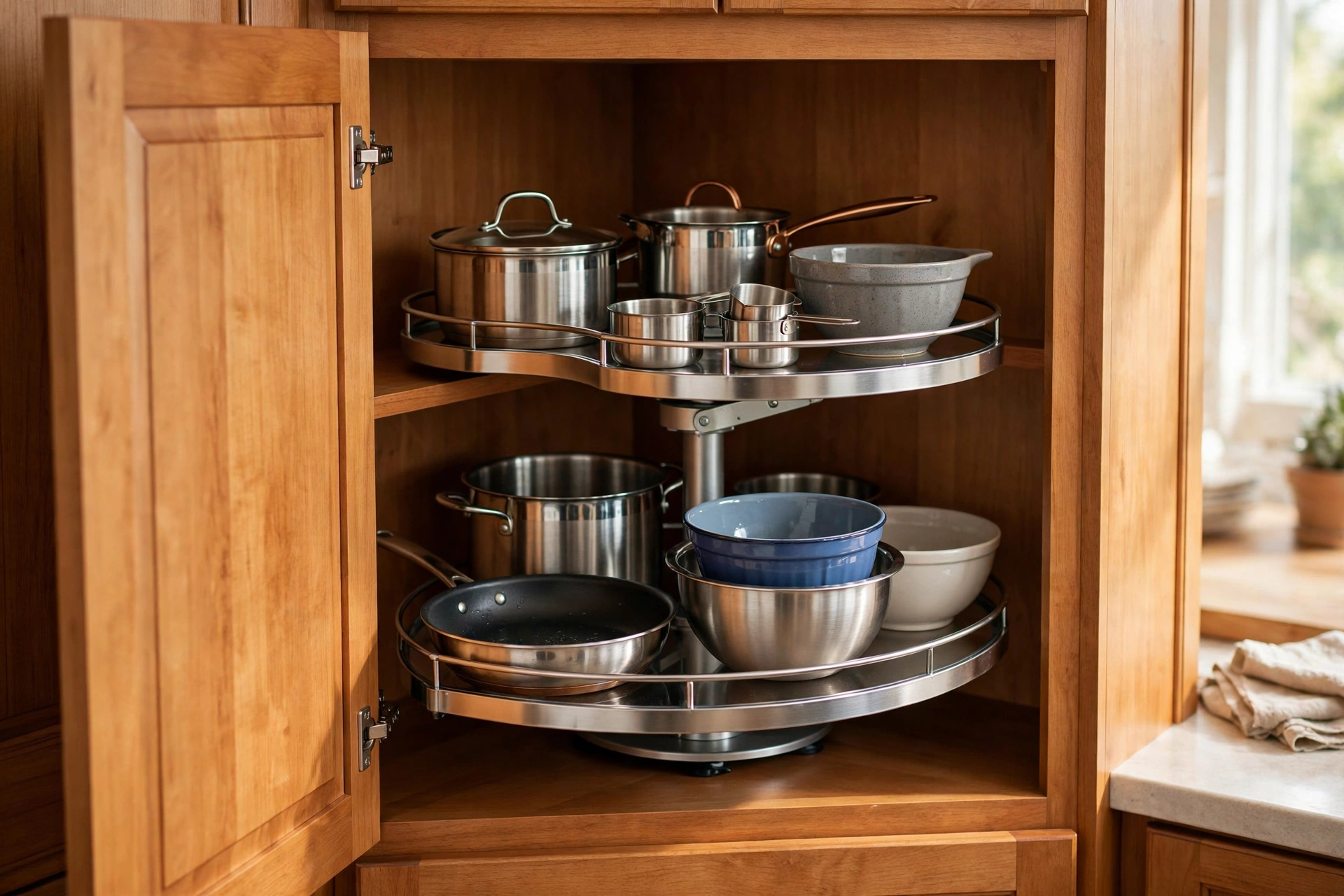
Kidney-shaped and pie-cut two-tier lazy susans are built for diagonal corner cabinets. The shaped trays fill the corner geometry that round trays waste, and the two tiers double the surface area. These are the workhorses for pots, mixing bowls, and bulk dry goods: heavier items go on the bottom tier where the bearing carries them best, lighter jars and boxes on top. Check the tray’s stated weight capacity and spin it loaded before you fill it permanently. An overloaded tray wobbles, and a wobbling tray eventually stops spinning.
When to Skip the Spin: Pull-Out Trays
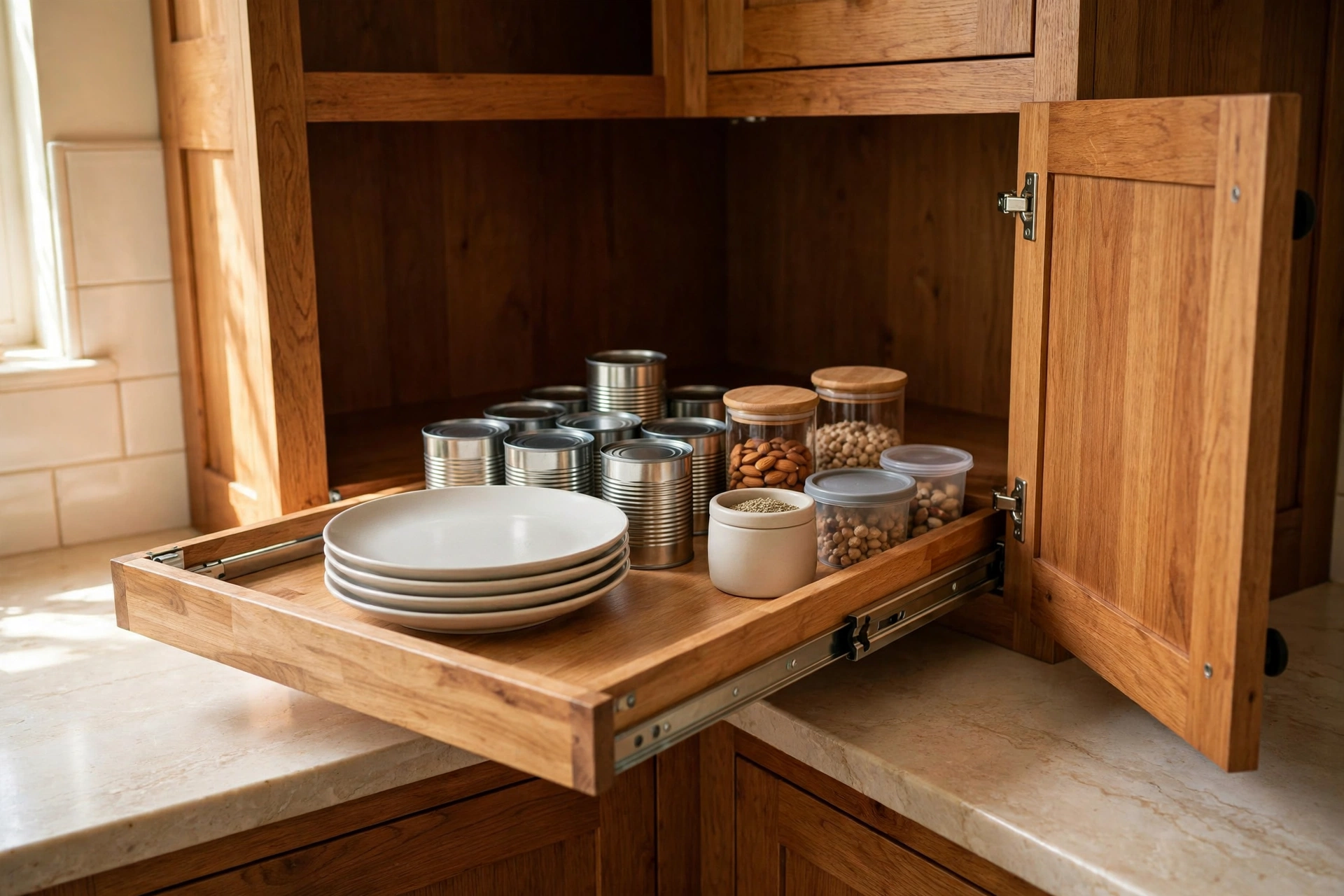
For blind corners and for heavy items, pull-out trays beat turntables. A sliding tray on drawer glides comes all the way out to you, so there is no dead zone at all: stack plates, cans, and containers on it and pull the whole thing into the light. Heavy pots and small appliances that would strain a turntable’s bearing ride fine on glides rated for the weight. The trade-off is cost and installation: pull-out units are pricier than simple turntables and usually need screws into the cabinet, so renters should check their lease and use the existing shelf holes where possible rather than drilling new ones.
What to Store in the Deep Corner
Even with perfect hardware, the corner should hold the right things. Good corner residents: items you use in groups (all the baking gear together, all the pots together), bulky items that fit nowhere else, and backup supplies in labeled bins. Bad corner residents: single-use gadgets you grab weekly (they will get buried), unprotected glass near heavy pots, and anything you need while cooking with one hand. If an item comes out of the corner more than twice a week, it belongs on a regular shelf instead.
Budget and No-Install Options
You do not need a full cabinet rebuild to fix a corner. A simple freestanding turntable dropped onto an existing shelf costs little and installs in seconds: it handles spices and condiments immediately. For deep shelves, stackable pull-out baskets slide in with no screws and give you the tray effect for cans and packets. A stick-on LED light inside a dark corner costs less than most organizers and solves the other half of the black-hole problem: you cannot organize what you cannot see. Reserve the built-in kidney units and glide-mounted pull-outs for cabinets you will live with for years.
What to Avoid
Three mistakes waste a good turntable. First, overloading: heavy items on a light-duty tray warp the spin and wear out the bearing. Second, loose small items with no containment: lids and packets slide off and jam the mechanism. Third, installing the wrong shape for your cabinet type: a round tray in a blind corner, or a kidney unit in a cabinet it cannot swing through, turns an expensive organizer into an expensive mistake. Measure twice, match the solution to the corner type, and load by weight from the bottom up.
Your Next Step
Open your corner cabinet tonight and identify the type: diagonal or blind. Measure the opening, the interior depth, and the shelf clearance. Then buy the matching solution: a simple turntable for spices, a shaped two-tier unit for a diagonal corner, or a pull-out tray for a blind corner or heavy pots. Fit it this weekend, load the corner by category, and the black hole becomes the most organized cabinet in the kitchen.
For the full kitchen plan, read our small kitchen organization guide and the small pantry guide on a budget, and browse the kitchen hub for every article.