Renter Friendly Kitchen Organization: Upgrades Without Drilling Holes
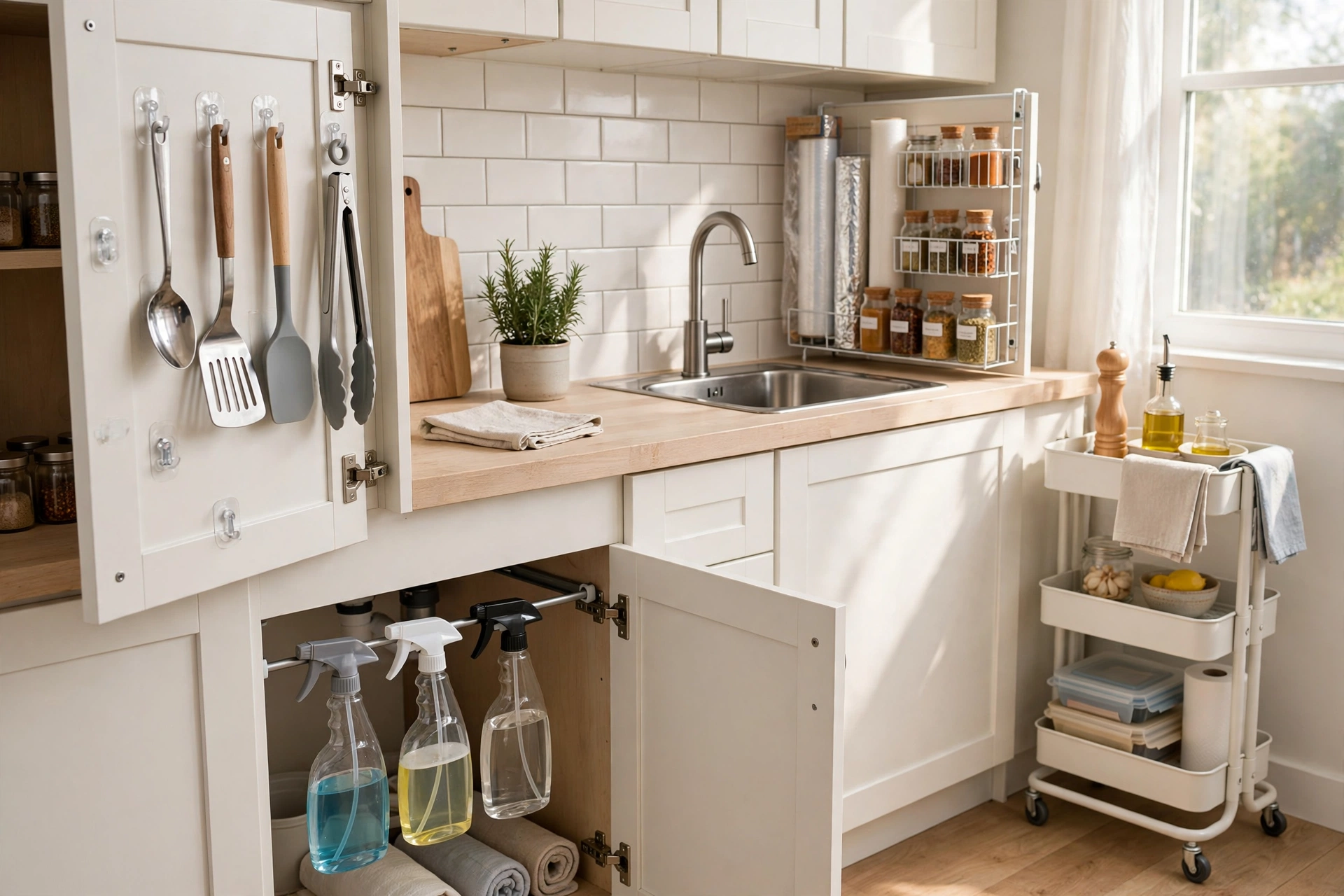
Your lease says no drilling, no screws, no holes in the walls, but your kitchen still needs to work every single day. The good news: the best renter friendly kitchen organization upgrades don't need a drill at all. With adhesive hooks, tension rods, over-door racks, and a few freestanding pieces, you can add serious storage to a rental kitchen with methods designed to come down at move-out.
Every idea in this guide is removable. Nothing here requires tools beyond a measuring tape, and everything is designed to come down without patching or spackling. 'No-drill' describes the method, not a guarantee, check your lease and test in a hidden spot first.
The No-Drill Toolkit: 5 Methods That Do Everything
Before the upgrades, learn the five methods. Nearly every renter-friendly kitchen fix uses one of these:
Adhesive hooks and strips. The workhorse. They bond to tile, glass, metal, sealed wood, and the inside of cabinet doors. The two rules: clean the surface with rubbing alcohol first, and respect the weight rating on the package. Give them the full curing time (usually an hour) before hanging anything.
Tension rods. Spring-loaded rods that press between two surfaces: perfect inside cabinets, under sinks, and across window frames. Measure the span before buying; a rod extended near its maximum holds less weight than one used in the middle of its range.
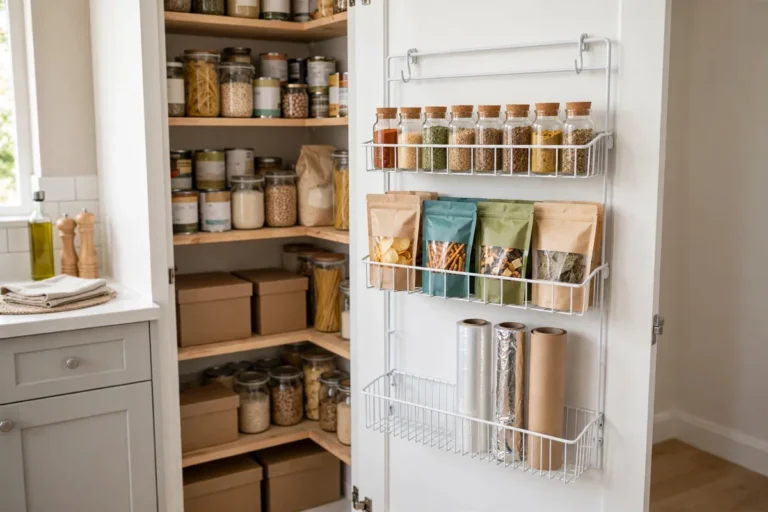
Over-door and over-cabinet organizers. Wire racks and baskets that hook over the top of a door or cabinet door. No mounting at all. Check that the door still closes fully and add small felt pads where metal meets the door to prevent rubbing.
Freestanding storage. Rolling carts, shelf risers, turntables, and countertop organizers that simply sit in place. Zero wall contact, and they move with you.
Magnetic storage. The side of your fridge is a vertical surface begging to be used. Magnetic shelves, spice containers, and hooks stick straight on and peel straight off.
Renter Friendly Kitchen Organization for Walls
Blank walls are wasted storage. Here's how to use them without a single hole.
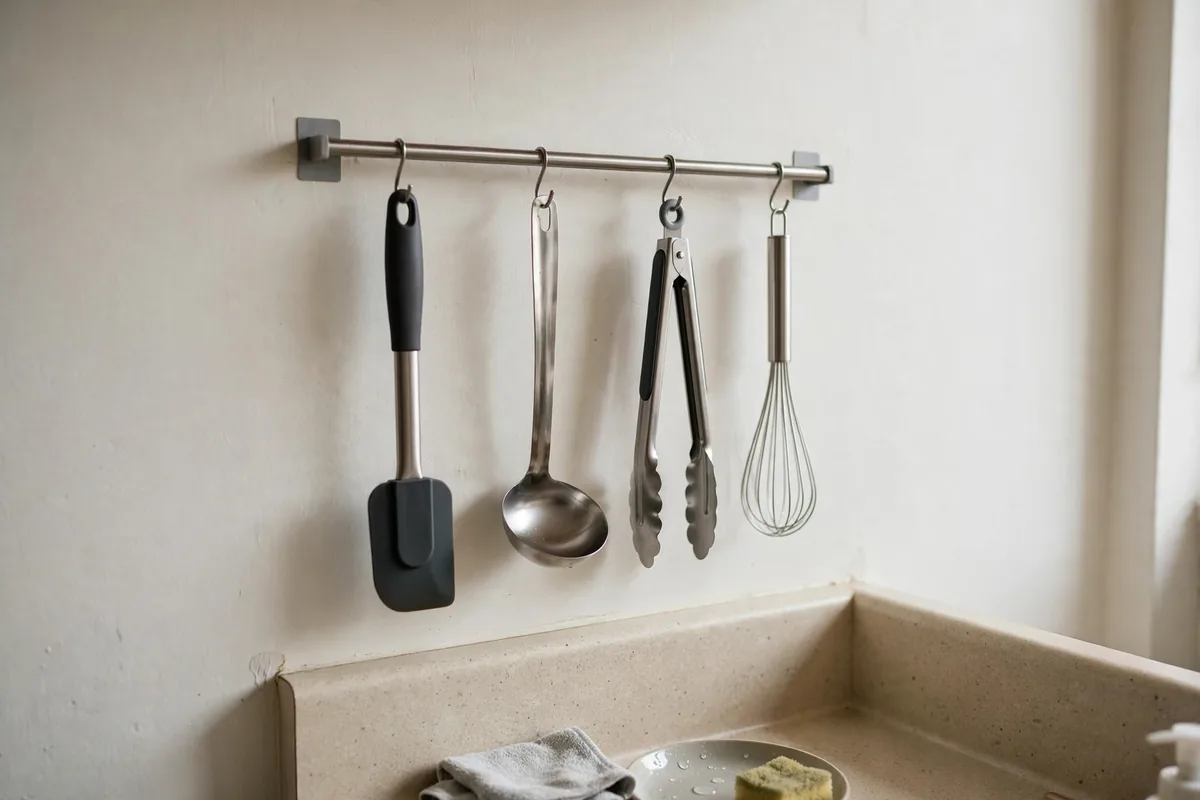
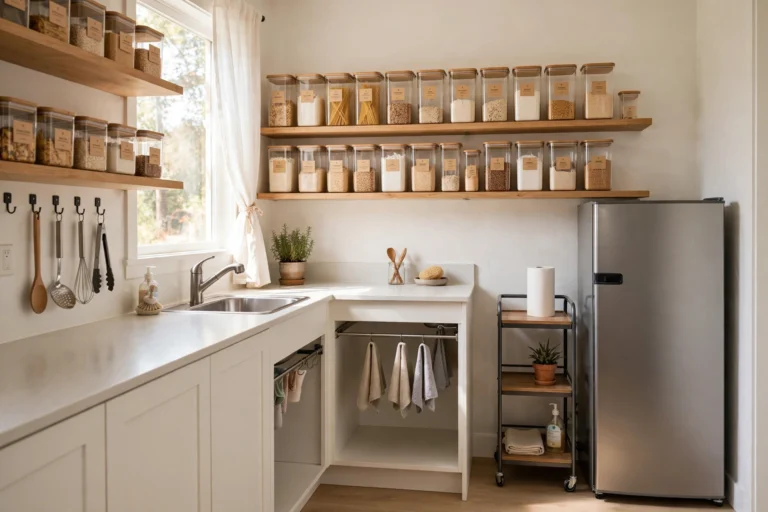
Hang utensils on an adhesive rail. A short adhesive-mounted rail with sliding hooks near the stove holds spatulas, ladles, and tongs right where you cook. Keep it to one short rail, a full wall of hanging tools reads as clutter fast.
Put mugs on adhesive hooks. A row of sturdy adhesive hooks under a cabinet or on a backsplash gets mugs off the counter and out of a crowded cabinet. Hang them by the handle so they don't collect dust inside.
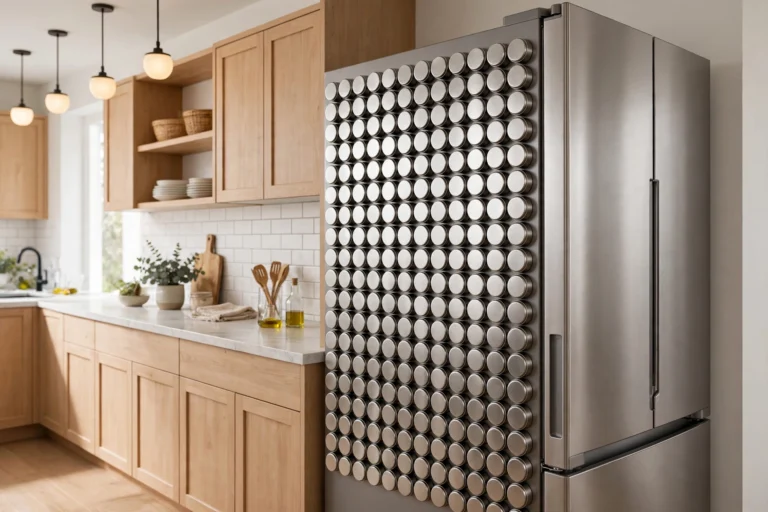
Use the side of the fridge. Magnetic spice containers turn the side of your refrigerator into a spice rack. A magnetic shelf holds paper towels or a small basket for onions and garlic. Nothing to install, nothing to remove later.
Hang a produce basket. A two-tier hanging basket on a strong adhesive hook keeps fruit and vegetables off the counter and visible, so they actually get eaten.
Mount a small adhesive shelf. Above the coffee station or beside the stove, a small adhesive shelf holds the salt, pepper, and cooking oil you reach for daily. Keep it light, small items only.
Inside Cabinet Doors: Free Storage You're Not Using
The inside of every cabinet door is a blank panel of storage space. It takes minutes to claim.
Add a slim spice rack inside the pantry door. An adhesive-mounted slim rack holds spice jars in a single row. Measure the door's clearance first so it still closes over the shelf contents.
Hang lids on the door. Pot lids are bulky and awkward on shelves. A pair of adhesive hooks or a small adhesive rack on the inside of the cabinet door holds two to three lids flat.
Stick measuring cups inside a door. A row of small adhesive hooks on the inside of the baking cabinet door holds measuring cups and spoons. They're visible, reachable, and out of the drawer.
Mount a caddy under the sink door. An adhesive caddy or small basket on the inside of the under-sink door holds sponges, brushes, and dish soap, the items you grab with wet hands.
Store wraps and foil on a door. An over-cabinet-door wire organizer or an adhesive rack on a tall cabinet door keeps plastic wrap, foil, and parchment upright and easy to grab.
Under the Sink Without a Single Screw
The cabinet under the sink is awkward: pipes everywhere, dark, damp. It's also prime real estate for cleaning supplies, and it needs no drilling to fix.
Hang spray bottles from a tension rod. Mount a short tension rod across the cabinet, high enough to clear the pipes, and hang spray bottles by their triggers. They lift off the cabinet floor entirely.
Add a stackable shelf around the pipes. A small freestanding shelf creates two levels in the cabinet, working around the plumbing instead of fighting it. Cleaning products go up top, backups below.
Lay down a leak tray. A shallow plastic tray or boot mat on the cabinet floor catches drips and makes wipe-downs easy. It also protects the cabinet base, which your landlord will appreciate.
Corral small items in bins. Dishwasher pods, trash bags, and extra sponges go in one small bin each. Under-sink chaos is almost always small items with no container, fix the container, fix the chaos.
Counters, Carts, and Freestanding Wins
When you can't touch the walls, let furniture do the work.
Slide in a slim rolling cart. The gap beside the fridge or stove (often just a few inches) fits a slim rolling cart perfectly. Use it for spices, oils, or cleaning supplies. It pulls out when you need it and disappears when you don't.
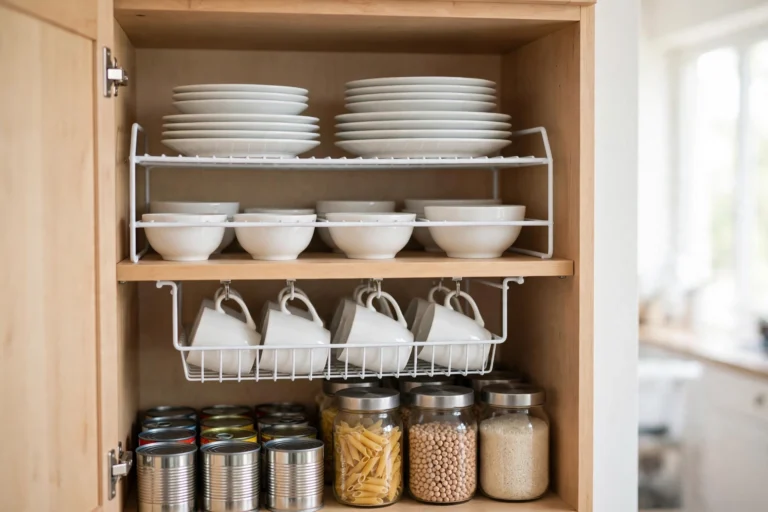
Double cabinet space with shelf risers. Freestanding shelf risers sit inside existing cabinets and instantly create a second level for mugs, cans, or bowls. No installation; lift them out at move-out.
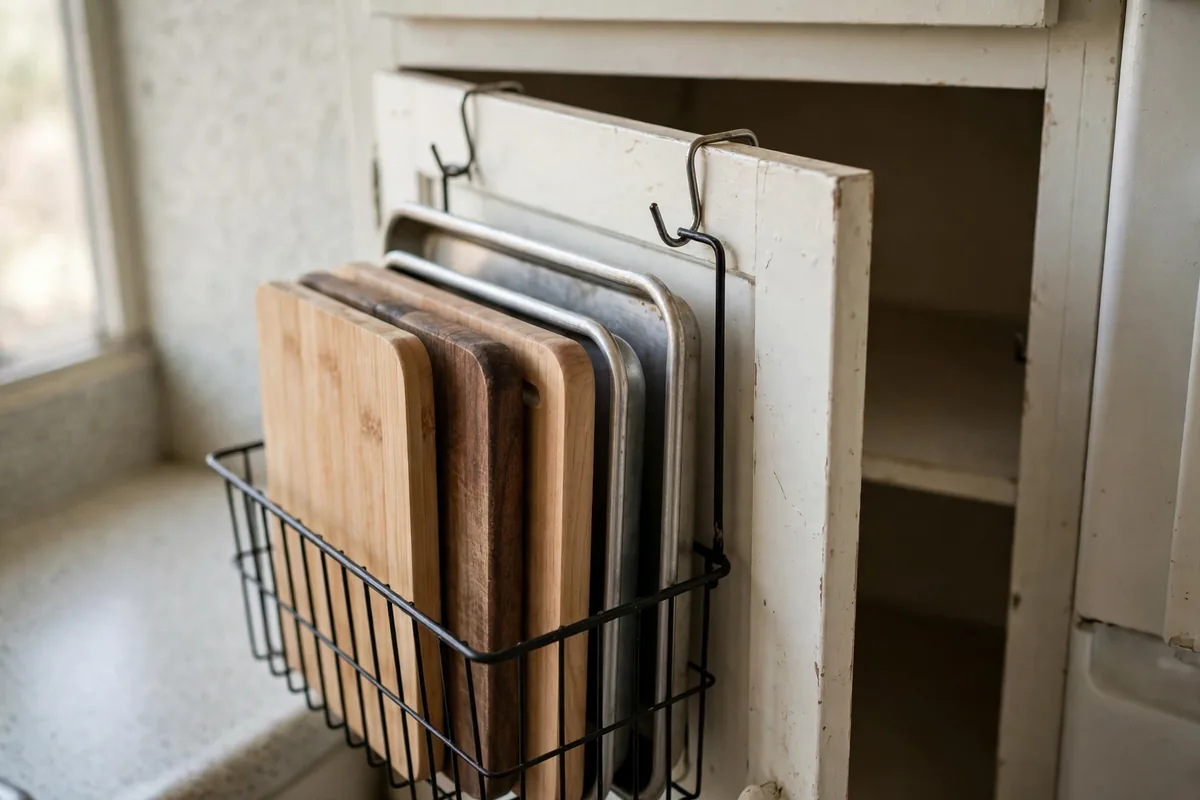
Hang an over-cabinet-door organizer. Over the most-used cabinet door, a wire basket adds a whole extra storage unit for wraps, cleaning supplies, or snacks. It lifts off in seconds.
Add a turntable to deep cabinets. A turntable (lazy susan) in a deep corner cabinet or under the sink ends the digging-behind-bottles problem. It just sits on the shelf.
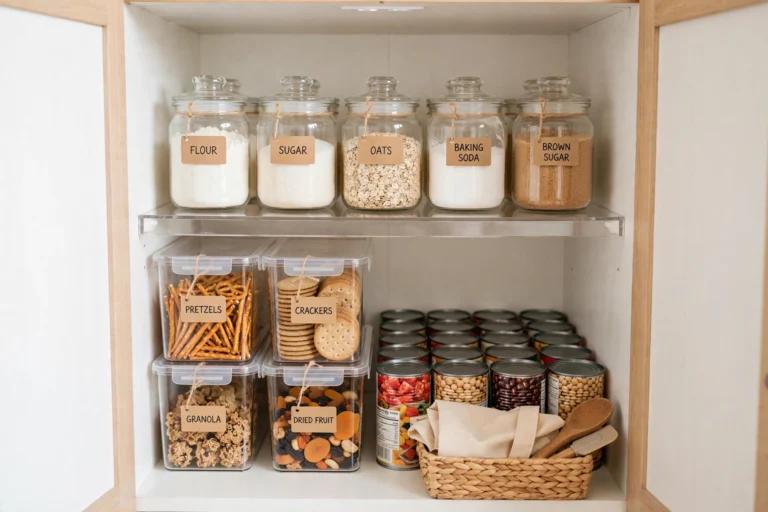
Use clear stackable bins in the pantry. Uniform bins you can see through make a pantry look twice as organized with zero installation. Stack them to use vertical space inside the cabinet.
Protect Your Deposit: 6 Renter Rules
No-drill doesn't mean no-thought. These six rules keep every upgrade truly removable.
1. Read your lease first. Most leases ban nails and screws but explicitly allow removable adhesive products. A five-minute read now prevents a move-out argument later.
2. Prep every surface. The number-one reason adhesive products fail is a greasy or dusty surface. Wipe with rubbing alcohol, let it dry completely, then apply. This single step is the difference between "holds for a year" and "falls off by Tuesday."
3. Respect weight ratings. A hook rated for one pound holds one pound. Match the product to the job. Use two hooks for heavier items, and keep heavy things (like a cast-iron skillet) on freestanding storage instead.
4. Test in a hidden spot. Before committing adhesive to a visible wall, test a small piece inside a cabinet or behind the fridge for a week. If it removes cleanly there, it'll remove cleanly anywhere.
5. Keep the originals. If you swap cabinet knobs or a faucet head for your own, bag the originals, label the bag, and store it somewhere safe. Swapping back takes twenty minutes at move-out.
6. Photograph everything. Take dated photos of walls, doors, and cabinet interiors before you stick anything up and after you take it all down. If there's ever a deposit dispute, you have proof.
FAQ: Renter Friendly Kitchen Questions
Will adhesive hooks damage my kitchen walls or cabinets?
Removable adhesive hooks come off cleanly when you follow the removal instructions on the package, usually a slow, straight pull on the release tab. They work best on smooth, intact surfaces like tile, glass, metal, and sealed wood. Avoid them on damaged paint, old wallpaper, or unfinished drywall, and always test in a hidden spot first.
How much weight can a tension rod hold?
It depends on the rod's length and the surfaces it's pressing against. A short rod wedged tightly between solid cabinet walls can hold spray bottles and light baskets; a long rod stretched near its maximum is best for very light items only. For anything heavy, use freestanding storage instead.
Can I hang things on a tile backsplash?
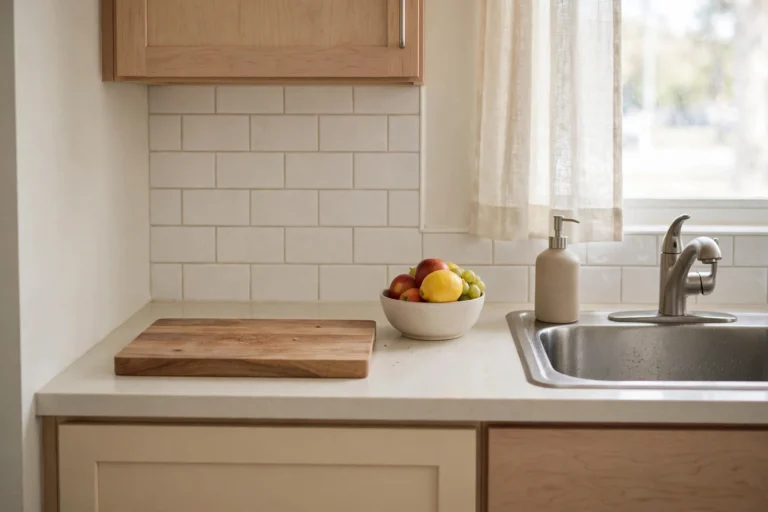
Yes, tile is one of the best surfaces for adhesive products because it's smooth and non-porous. Clean it with rubbing alcohol first, let it dry, and apply. Avoid grout lines when placing hooks, since the uneven surface weakens the bond.
What should I do with all of this when I move out?
Work in reverse: pull adhesive tabs slowly according to the package directions, lift off over-door organizers, collapse tension rods, and roll the cart out. Wipe away any residue with warm water or a mild adhesive remover, then compare against your move-in photos. No holes means no patching.
Are over-door organizers safe for cabinet doors?
For most standard cabinet doors, yes. Choose a slim profile so the door still closes fully, and stick small felt pads on any metal part that touches the door's finish. If a door won't close cleanly with the organizer on, move it to a different door rather than forcing it.
Start With One Upgrade This Weekend
You don't need to do all of this at once. Pick the upgrade that solves your most annoying daily problem (the spray bottles under the sink, the spice chaos, the utensils with no home) and do just that one this weekend. One removable upgrade, twenty minutes, and nothing to patch at move-out.
When you're ready for the full system, our complete guide to organizing a small kitchen walks through zones, vertical space, and weekly upkeep step by step. And for more ideas by space, browse the kitchen organization hub.
One Comment