Hidden Storage Ideas for Small Living Rooms
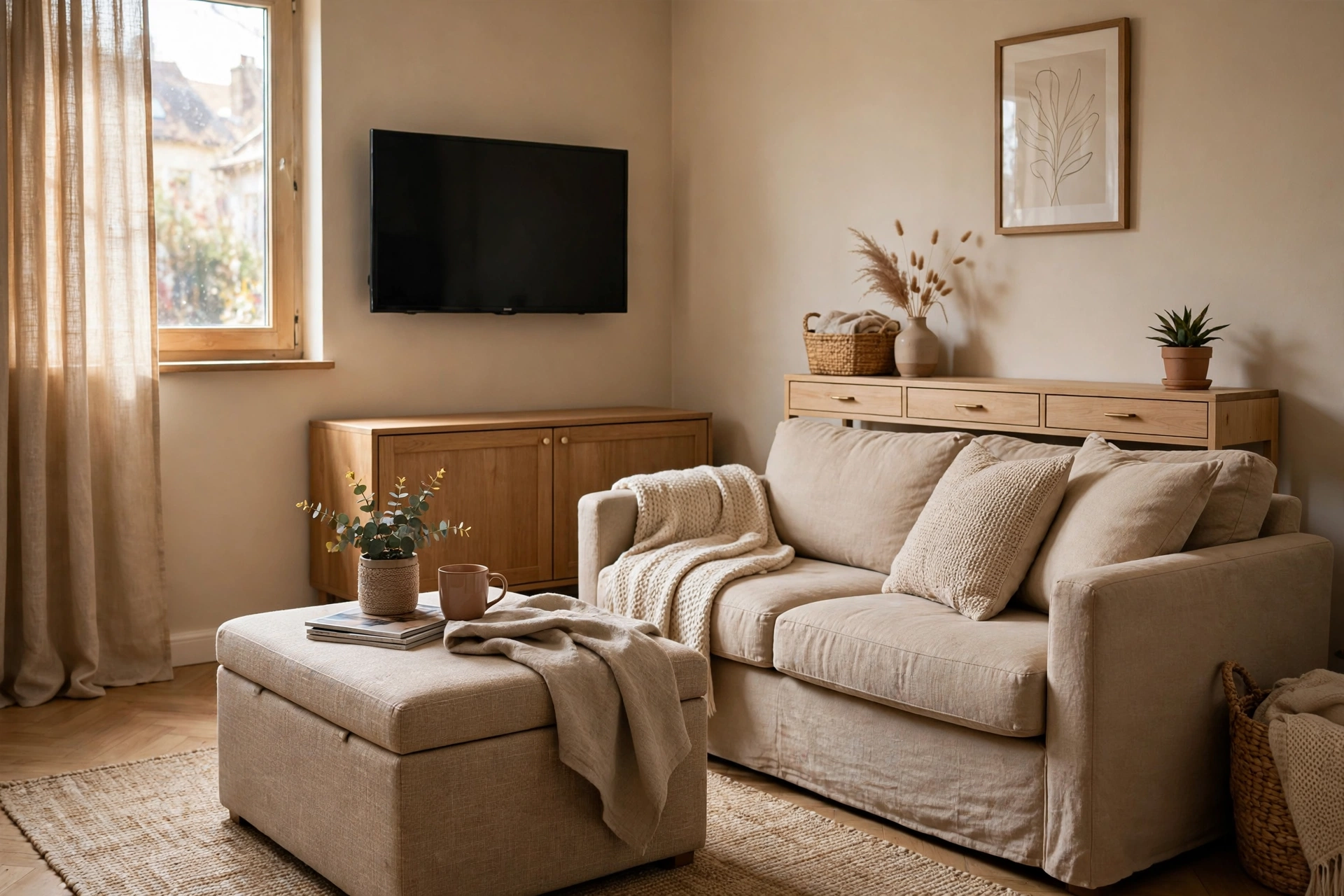
A small living room looks cluttered for one reason: everything you own is on display. The fix is not fewer belongings, it is storage that does not look like storage. A coffee table that hides blankets, a TV console that swallows remotes and cables, a sofa-side table that works as a filing drawer for everyday clutter. This concealment-first approach keeps the room calm without asking you to own less, and every piece below earns its floor space by doing two jobs at once.
These solutions fit into the wider plan in our small apartment organization guide, and if you are renting, pair them with the renter-friendly storage ideas that need no drilling at all.
The Rule: Every Piece Does Two Jobs
In a room under about 150 square feet, a piece of furniture that only does one thing is a luxury. Before you buy anything new, apply the two-job test: does it give you a usable surface (to sit on, set a drink on, hold a lamp) AND a hidden compartment? A storage ottoman passes. A plain coffee table does not. A slim console behind the sofa passes. A decorative bench fails. This one rule filters out almost every bad purchase before it happens.
Storage Ottomans and Lift-Top Coffee Tables
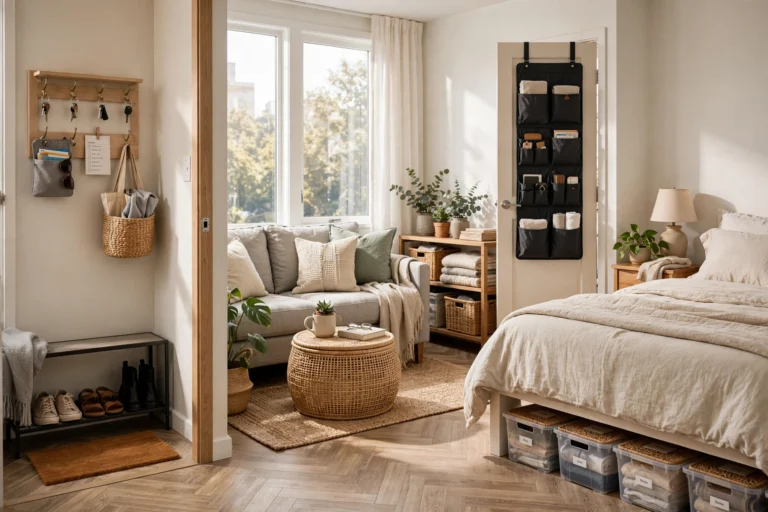
The ottoman is the highest-impact piece in a small living room. A large storage ottoman replaces your coffee table, adds seating for one more person, and hides blankets, board games, and the charging cables you want out of sight. Choose one with a hinged lid that stays open on its own, so you can reach inside without holding the lid with one hand. If the top will serve as a coffee table, add a tray: it gives mugs a stable surface and corrals the remote so it does not disappear into the blanket pile.
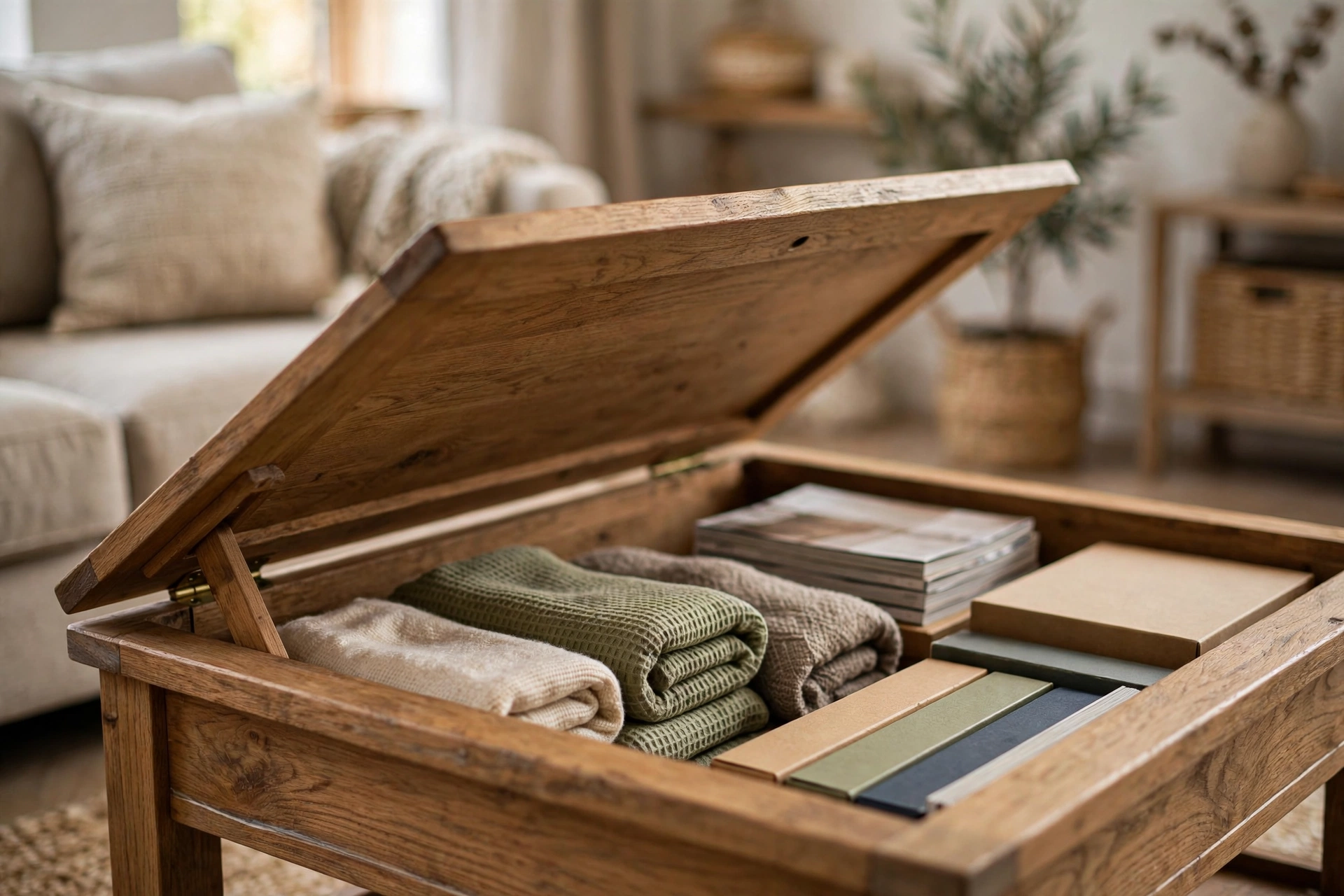
Lift-top coffee tables are the working cousin of the ottoman. The top rises toward you, revealing a deep compartment for laptops, chargers, kids’ art supplies, and everything else that accumulates around the sofa. When the top is up, the compartment doubles as a lap desk for work or dinner, which matters in apartments where the dining table and the desk are the same place: the sofa. Test the lift mechanism before buying if you can. A stiff or squeaky hinge will make you avoid the compartment entirely, and hidden storage you never open is just decoration.
Closed Consoles: The Cable and Media Hiding Machine
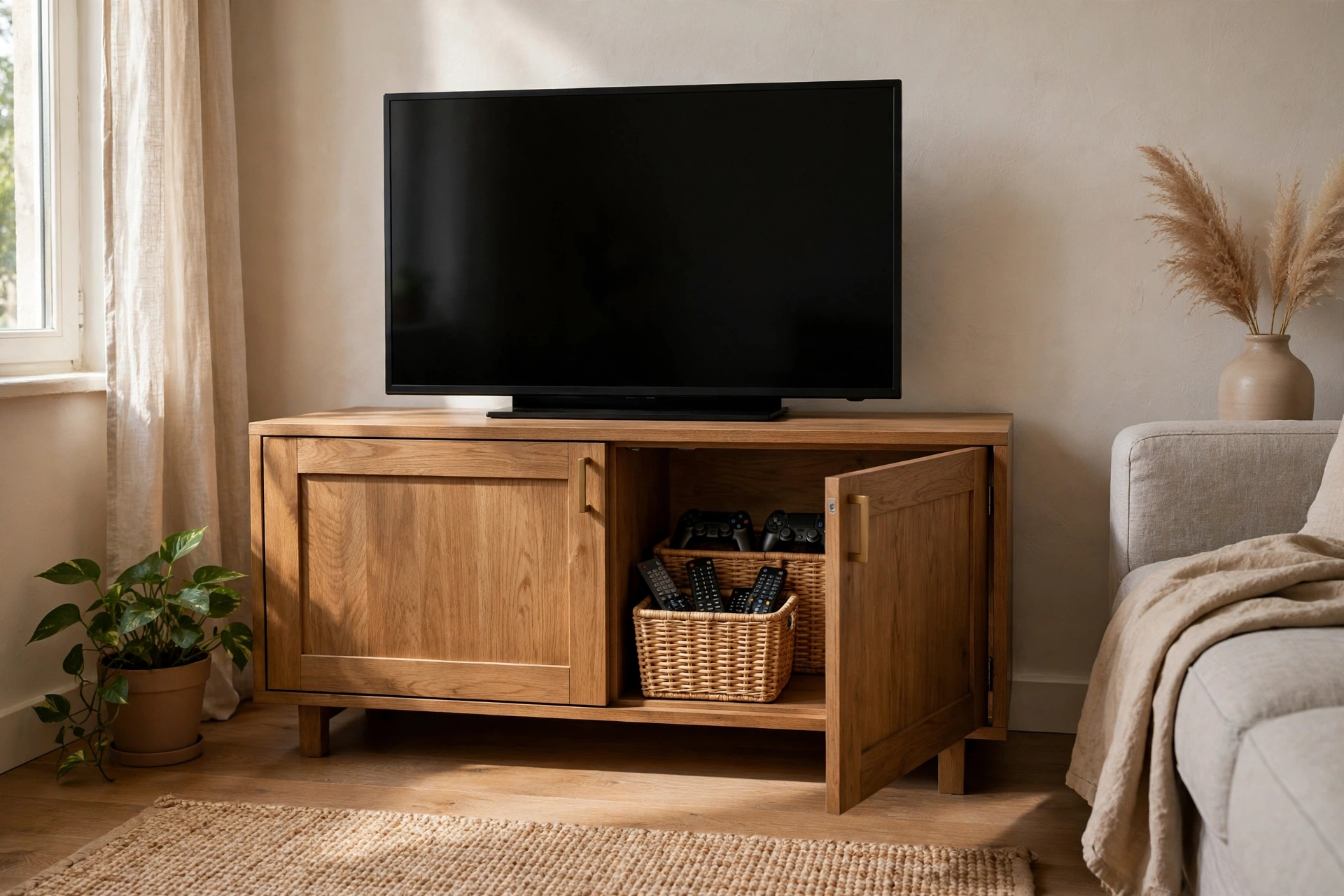
The TV corner is where visual clutter gathers: remotes, game controllers, streaming boxes, routers, and the nest of cables that feeds them all. A console with closed doors solves this in one move. Doors matter more than style here. An open media shelf looks fine on day one and turns into a dust-collecting display of electronics by month three. Closed cabinets keep everything dark, dust-free, and invisible.
Inside the cabinet, use two woven baskets: one for remotes and controllers, one for the accessories. Cut a small notch in the back panel for cable routing, or look for consoles that already have cable openings. Keep the back accessible: you will need to reach the router or streaming box eventually, and a console you have to disassemble for troubleshooting is a console you will curse. For electronics, leave ventilation space and never block vents, since enclosed devices can overheat.
Behind-Sofa Solutions: The Most Wasted Zone
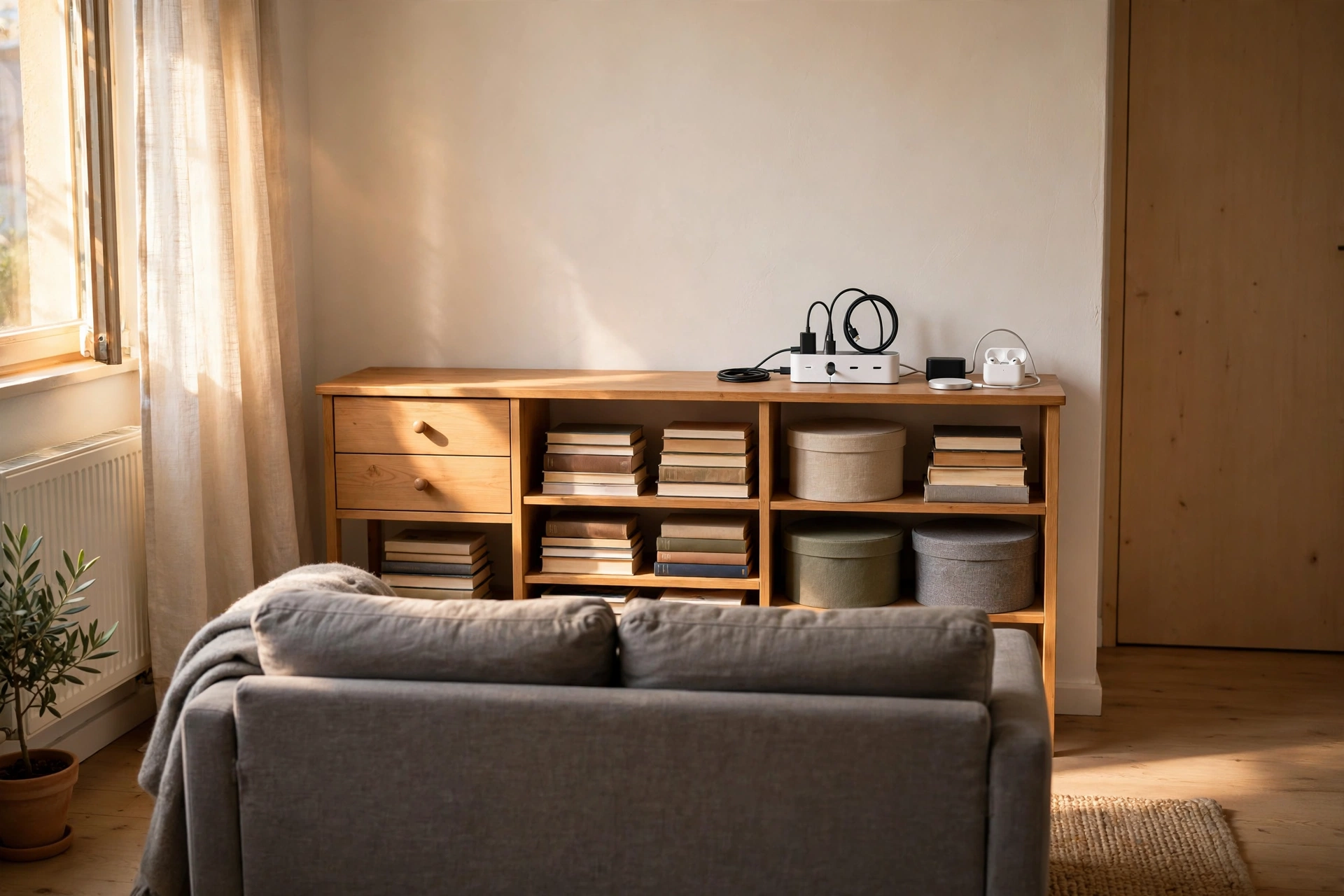
The strip of floor between the back of the sofa and the wall is dead space in most small living rooms, and it is usually the right depth for a slim console table. At 10 to 12 inches deep, a behind-sofa console holds books, a charging station, lidded fabric boxes for paperwork, and the lamp you have no side table for, all in a zone that was holding nothing.
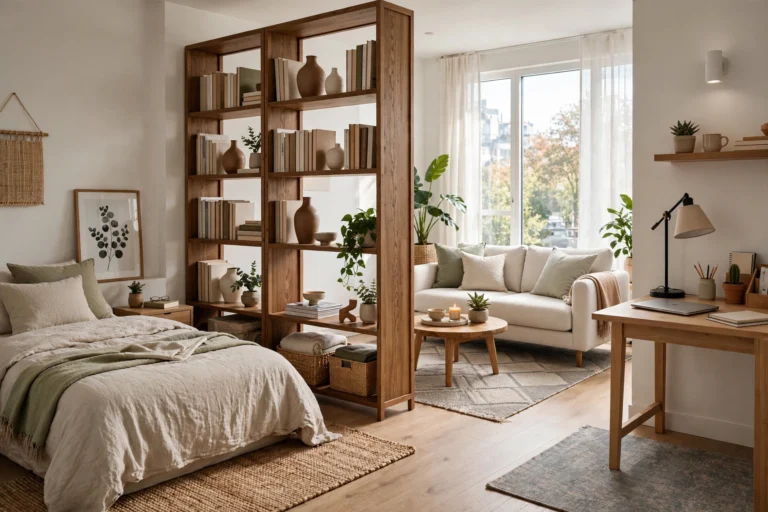
Measure the gap before you shop: if the sofa sits against the wall, a behind-sofa console will not fit, and you should treat the wall itself as the storage zone instead (see below). Where the gap exists, prefer drawers or closed cubbies over open shelves, since the back of a sofa puts this zone at eye level from across the room and open shelves will read as clutter. In a studio layout, this console also works as the visual divider between the living area and the rest of the space, which is exactly the zoning trick our studio apartment layout guide recommends.
What Goes Where: The Weekly-Rule Test
Hidden storage fails when it hides the wrong things. Use the weekly rule: anything you use every day stays within arm’s reach of the sofa (one remote, the charger you actually use, the current book). Items you reach for less than once a week go in the hidden compartments: extra blankets, board games, guest bedding, seasonal decor. If you find yourself digging through the ottoman daily, the system is telling you those items are not hidden-storage items: move them closer and move something else down.
Wall-Mounted Alternatives When Floor Space Is Gone
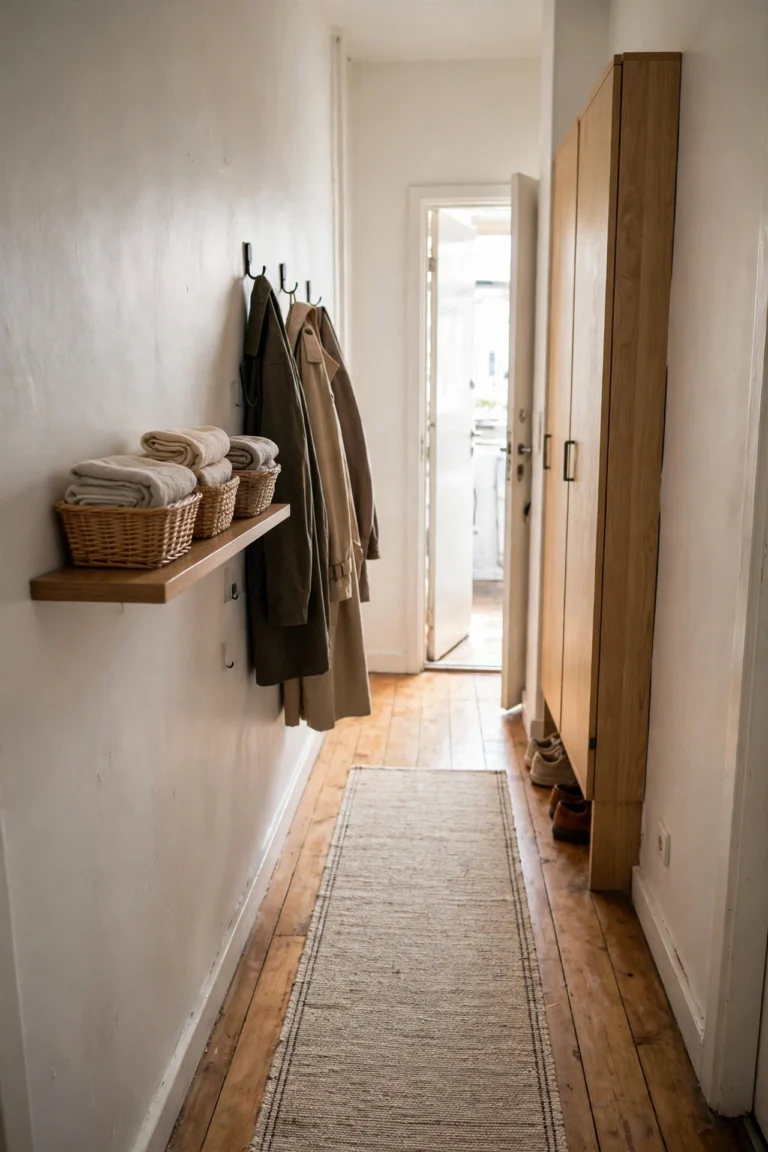
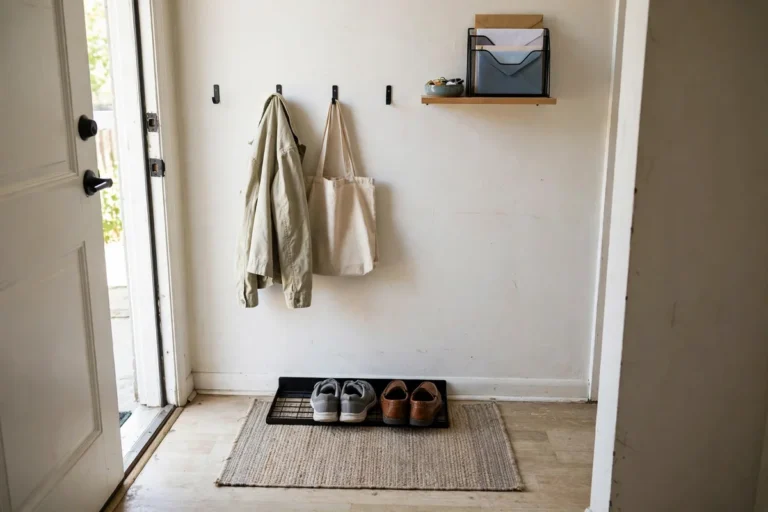
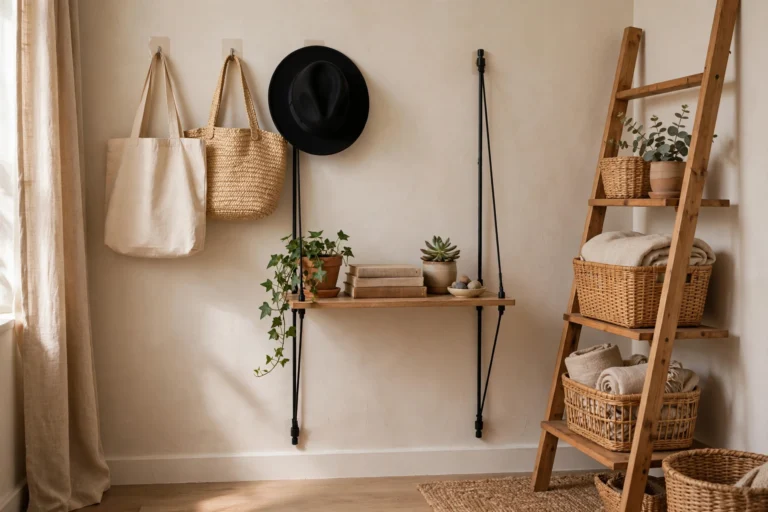
Some living rooms have no room for even a slim console, and the answer is to go up. Wall-mounted cabinets with doors hide media, games, and paperwork without touching the floor, and in a small room they read as built-in rather than bulky. A floating shelf with a lidded basket underneath does the same job for less money. If your lease forbids drilling, heavy-duty adhesive rails and tension-mounted shelving towers give you a vertical zone with no holes in the wall, but always check the weight rating and the product’s removal instructions first.
What to Avoid
Three mistakes ruin the concealment strategy. First, buying storage you cannot reach: a deep console cabinet where items vanish into the back becomes a junk drawer with doors. Second, overfilling the hidden compartments: leave about a fifth of each compartment empty, or the lids will not close and the clutter spills back out. Third, storing daily-use items inside furniture that requires two hands to open: if the remote lives in a compartment with a stiff lid, it will live on the coffee table within a week. Hidden storage works when opening it is easy and the contents are things you do not need every hour.
Your Next Step
Pick the single messiest zone in your living room right now: the coffee table, the TV corner, or the back of the sofa. Measure it tonight, then choose one two-job piece that fits it. One ottoman or one closed console, installed and loaded this weekend, will change how the whole room feels more than any number of small organizers scattered across the shelves.
For the room-by-room plan, read our complete small apartment guide and the 45 renter-friendly storage ideas, and browse the small apartment hub for every article.
One Comment