16 Clothing Storage Ideas for Bedrooms With No Closet
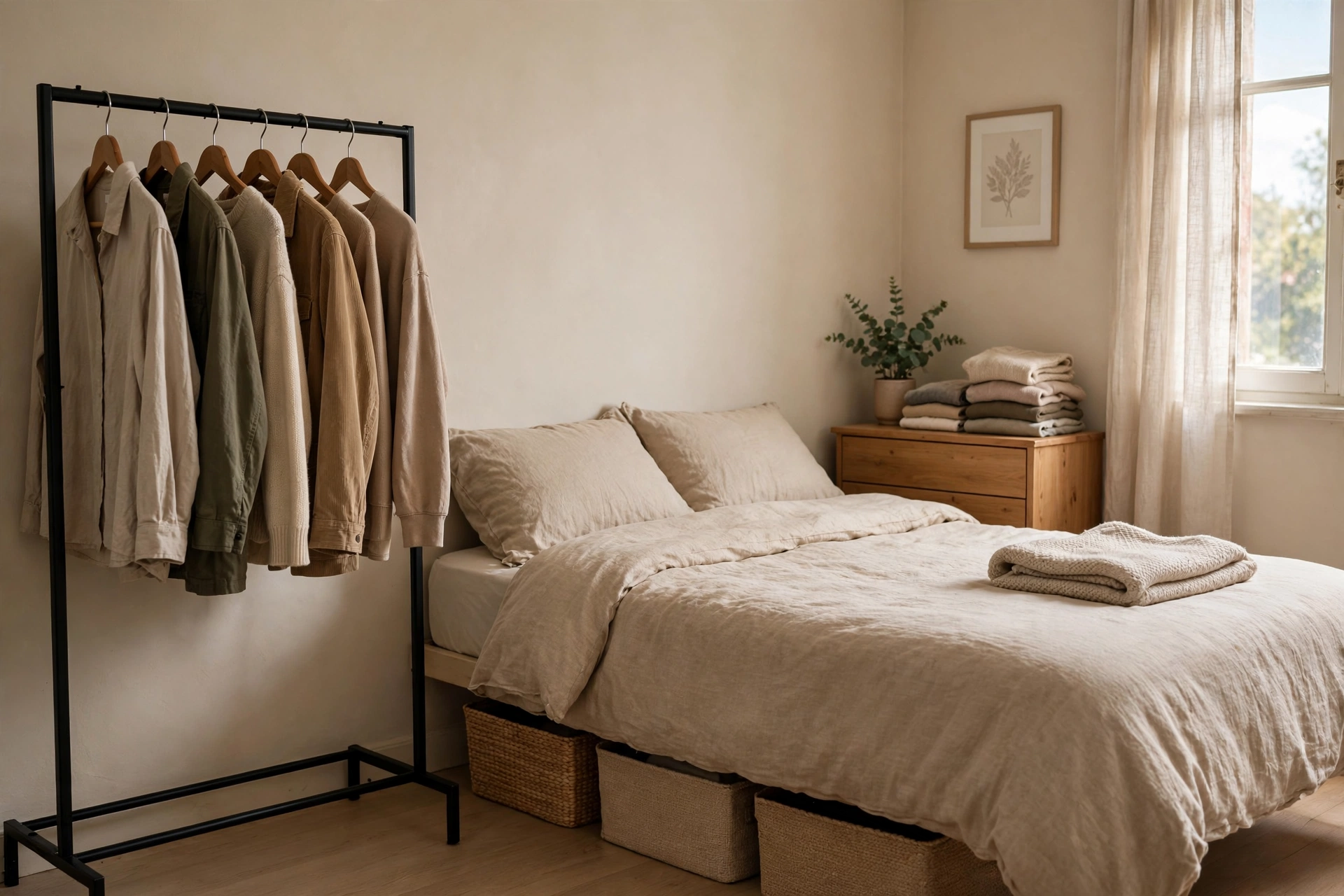
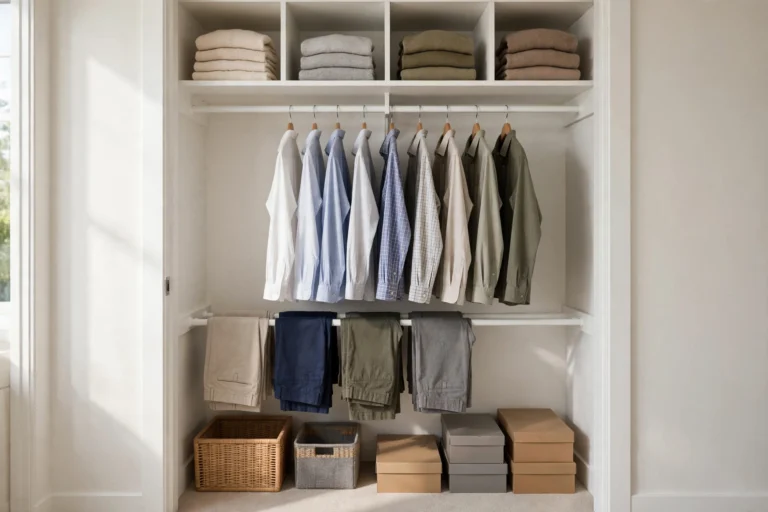
A bedroom without a closet is not a storage problem so much as a design problem: you need all the jobs a closet does (hanging, folding, shoes, accessories) done by furniture and wall space instead. The 16 ideas below cover each job separately, so you can build exactly the pieces you are missing and skip the ones you are not. Start with hanging space and under-bed storage, then add folded storage and wall solutions as your wardrobe demands.
These ideas extend the plan in our small bedroom organization guide and the 35 small bedroom storage ideas. If you do have a closet elsewhere in the bedroom, our closet organization guide squeezes more out of it.
Hanging Space Replacements
1. A freestanding garment rack as the main “closet”
A sturdy garment rack is the closest thing to a closet you can buy: one hanging rail, usually with a lower shelf. Hang only the clothes that need it (shirts, jackets, dresses, work clothes), group them by type, and use matching hangers so the rack reads as intentional rather than temporary. Leave space between garments. A crammed rack looks like a laundromat and makes every outfit harder to find. Choose a rack with a metal frame and a center support if it is wider than about four feet, since a long rail sags under real clothing weight.
2. A rack with a lower shelf for shoes and baskets
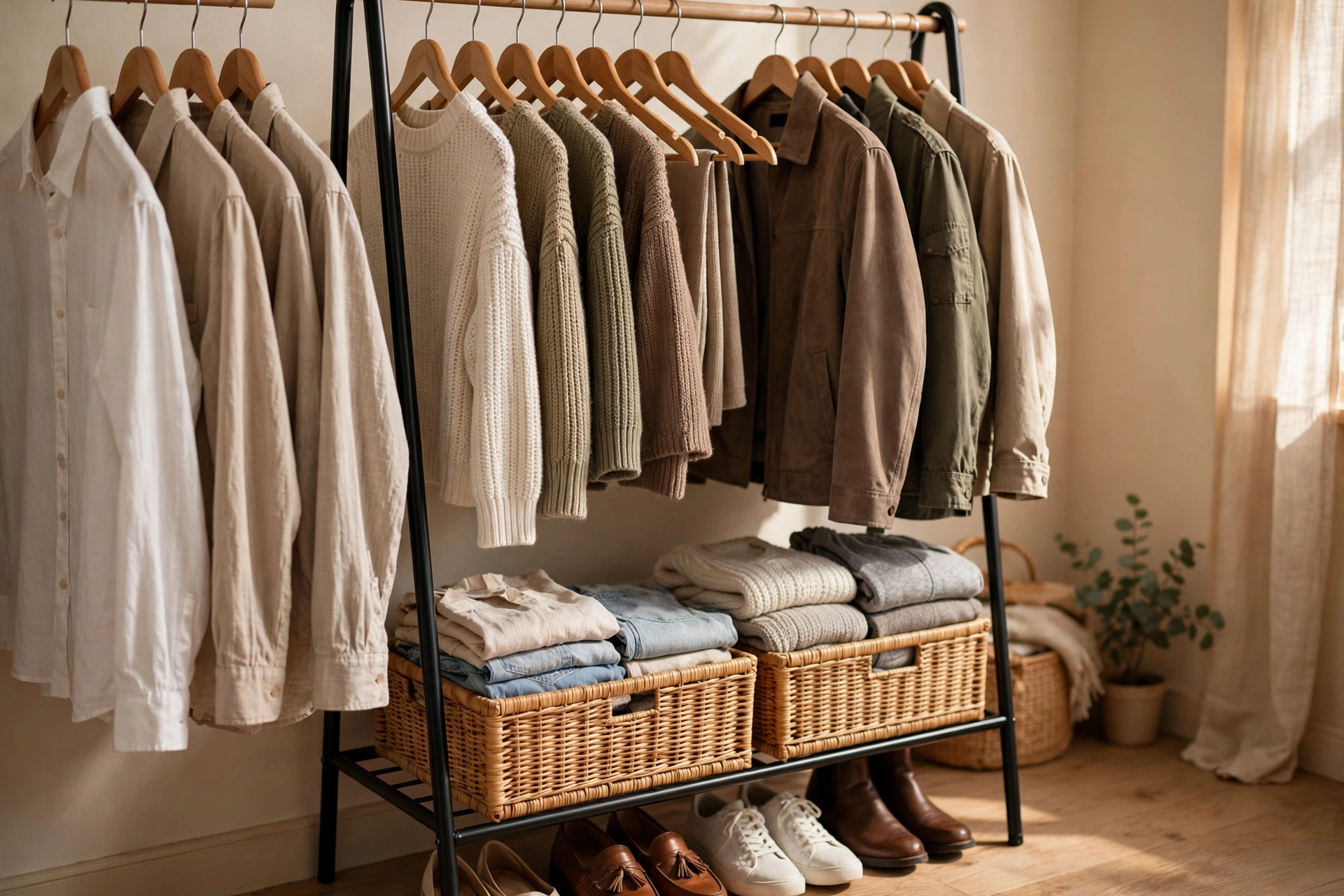
If your rack has a bottom shelf, use it instead of letting it gather dust. Woven baskets on the shelf hold folded sweaters or accessories, and shoes line up underneath in pairs. This single piece then handles hanging, folded, and shoe storage in about six square feet of floor. Keep the bottom level slightly underfilled: a shelf you cannot slide a shoe out of easily is a shelf you will stop using.
3. A fabric hanging shelf organizer on the rack
A canvas hanging shelf organizer turns empty rail space into a set of cubbies: it hangs from the garment rack’s rail and gives you four to six shelves for folded t-shirts, jeans, or undergarments. This is the fastest way to add folded storage without buying furniture, and it moves with you. Put a small open bin or divider inside each cubby so stacks do not collapse sideways.
4. A wardrobe corner with a curtain
If open racks offend your sense of order, a ceiling- or wall-mounted rod with a fabric curtain creates a closed wardrobe corner. The curtain reads as a design choice rather than a workaround, and it keeps dust off your clothes. Use a curtain you can pull fully aside for dressing, and keep the rod-mounted side as the hanging zone while folded items live elsewhere. This suits bedrooms where the no-closet setup is permanent and you want it to disappear.
Under-Bed Storage: Your Hidden Closet Floor
5. Lidded under-bed bins for off-season clothes
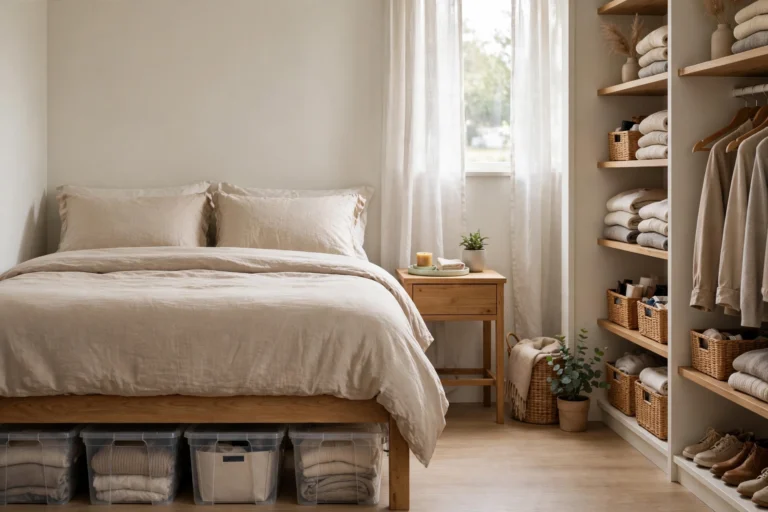
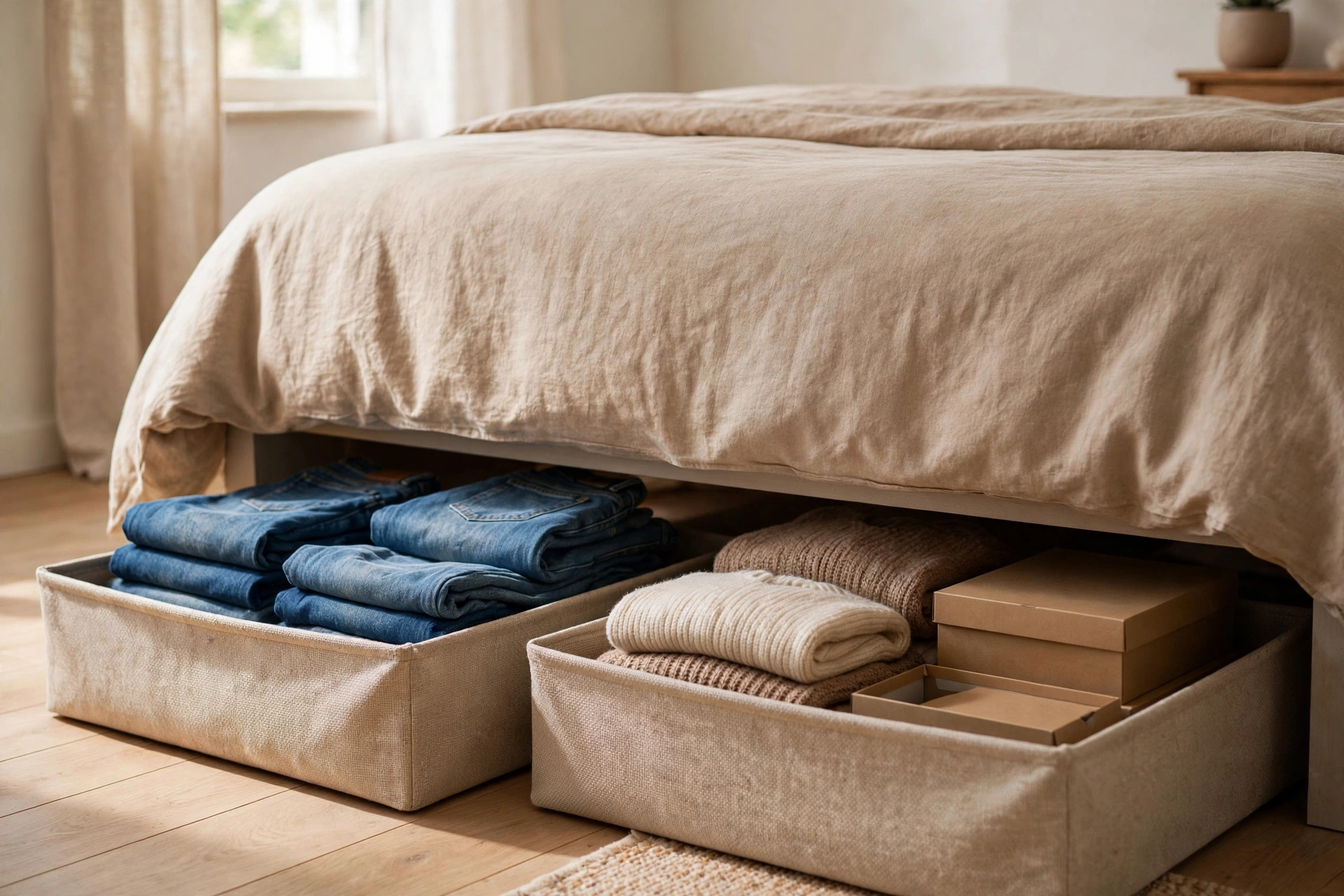
The space under the bed holds a full season of clothing. Lidded fabric bins protect folded items from dust and slide out easily, and because they are hidden, they are the right home for the things you need least often: off-season sweaters, spare bedding, travel bags. Give each bin a job (winter clothes in one, extra linens in the other) so you never have to open all of them to find one thing.
6. Measure your clearance before buying anything
Not every bin fits every bed. Measure the clear height under your bed frame, including the space the bin needs to slide. Slim bins (about 4 to 6 inches tall) suit low platform beds; deeper bins need a higher frame or risers. A bin that is half an inch too tall will not slide, and a soft-sided bin that buckles will drag. If the clearance is too low for any useful bin, a bed risers can buy you a few inches, but check that the bed stays stable.
7. Rolling under-bed drawers for daily access
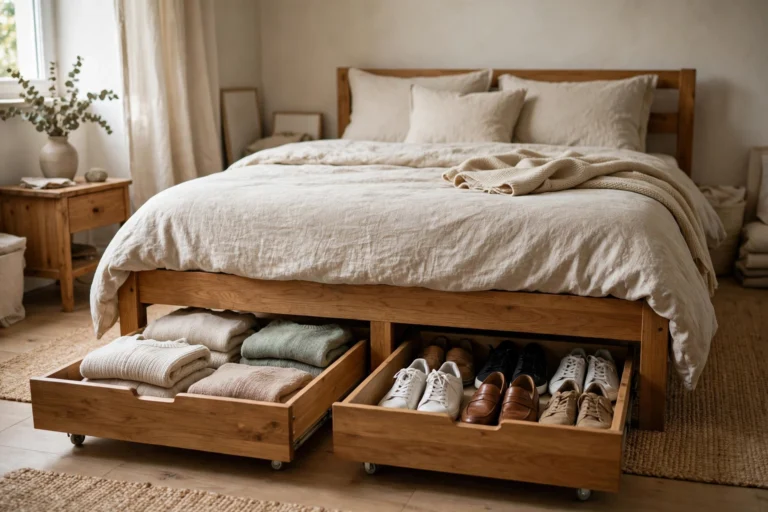
For things you reach for every day, rolling under-bed drawers beat plain bins: wheels mean the drawer glides out smoothly even when full, so you will actually use it. Reserve these for high-turnover items (gym clothes, jeans, pajamas) and keep off-season storage in the cheaper static bins. Label each drawer on the front edge so getting dressed does not become a guessing game.
Folded Clothing Without a Dresser
8. A compact dresser or drawer unit
A dresser is still the best folded-clothes storage there is, but size it to the room: a slim 36-inch tallboy uses height instead of width and costs far less floor space than a full-width unit. Put it against the wall nearest the garment rack so getting dressed happens in one zone. Add drawer dividers for socks and undergarments, since one deep drawer of mixed small items becomes a tangle within a week.
9. Cube shelves with fabric bins
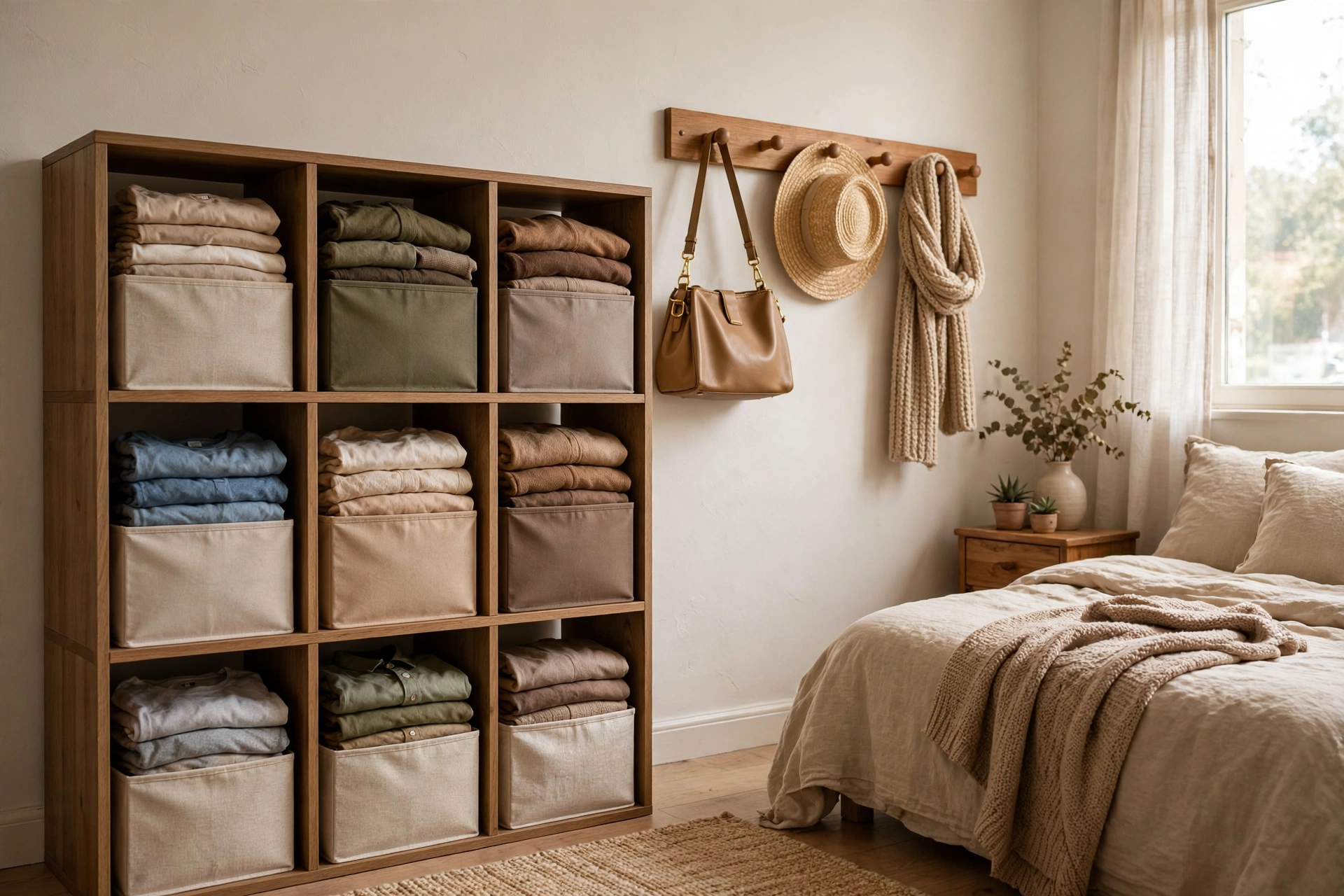
A cube shelf unit with matching fabric bins is a dresser alternative that doubles as display: folded clothes go in the bins, books and a plant go on the open cubes. Use one bin per clothing category (tees, pants, sweaters) so each stack stays shallow and visible. The unit also works as a nightstand replacement or a room divider in a studio, which makes it pull more than its weight in a small bedroom.
10. A bookshelf repurposed as a clothing shelf
A tall narrow bookshelf uses vertical space for folded clothes without the footprint of a dresser. Fold shirts and pants in thirds so each stack is visible from the front, and keep stacks to about five items deep so the bottom one is not crushed. Reserve the top shelf for accessories and the lowest shelf for baskets of socks and undergarments.
Wall Space: The Free Closet
11. A peg rail for bags, hats, and tomorrow’s outfit
A wooden peg rail takes zero floor space and holds the items that otherwise migrate to the bed or the floor: bags, hats, scarves, and the next day’s outfit. Mount it at a height where coats hang clear of the dresser below, and keep each peg to one or two items so it stays a staging area instead of a second closet. If your lease forbids drilling, adhesive-backed rails hold lighter loads, but check the weight rating first.
12. Wall-mounted shelves for folded stacks and baskets
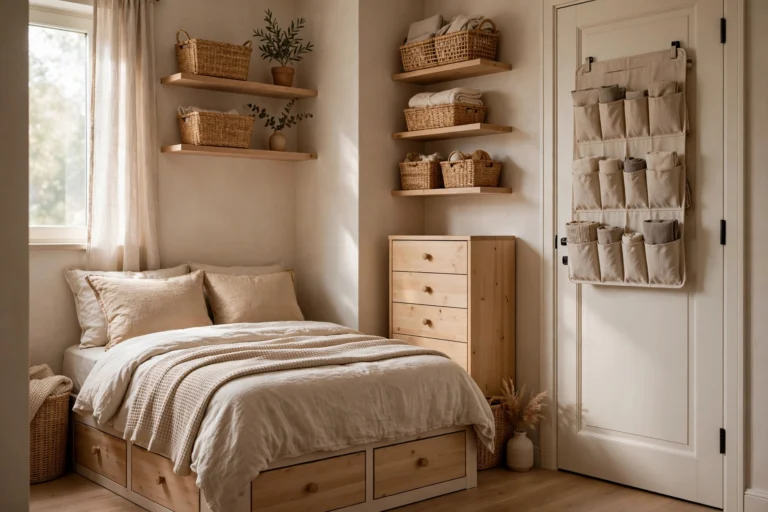
Two or three wall shelves above the dresser or beside the rack create a folded-clothes zone off the floor. Baskets on the shelves keep stacks from toppling and let you label categories. Mount shelves into studs or use the correct anchors for your wall type, since a shelf of folded jeans is heavier than it looks.
13. An over-the-door organizer for accessories and shoes
The back of the bedroom door is free real estate. A fabric over-the-door organizer with clear pockets holds shoes, accessories, belts, and scarves where you see them when you leave. This is especially useful in a no-closet room because shoes otherwise eat floor space in every corner. Choose one with slim pockets so the door still closes cleanly.
Shoes and the Rest
14. A slim vertical shoe rack
A narrow ten-tier-style shoe rack uses dead vertical space near the wall and can hold dozens of pairs in about two square feet. Anchor tall racks to the wall (with the manufacturer’s hardware) so they cannot tip. If you are renting and cannot anchor, choose a wider, lower rack: stability beats capacity when you cannot drill.
15. A storage bench at the foot of the bed
A storage bench at the foot of the bed hides out-of-season clothes or spare linens and doubles as a place to sit while putting on shoes. Pick one with a hinged top so the lid stays open hands-free, and keep it shallow enough that you can still walk around the bed comfortably. This piece also gives the room a finished look that bare storage bins cannot.
16. Vacuum bags for bulky seasonal items
For the bulkiest textiles (winter coats, heavy blankets, ski gear), vacuum-sealed bags shrink volume dramatically, and the compressed bags then fit in under-bed bins or the storage bench where the items alone would not. This is seasonal rotation storage, not daily access: once sealed, leave the bag closed until the season changes, or the bags lose their point.
Keeping Open Storage Looking Tidy
When your closet is open, tidiness is the system. Four habits keep it calm: matching hangers on the rack, baskets that hide the visual noise of small items, a strict one-in-one-out rule for the rack (a new shirt means one leaves), and a weekly five-minute reset where everything gets re-hung and re-folded. Open storage punishes accumulation faster than a closed closet does, which is actually an advantage: the rack will tell you when your wardrobe is too big.
Your Next Step
Sort your clothes into three piles today: hang, fold, and store away. Buy or place the hanging solution first (the rack), because hanging clothes are the hardest to improvise. Add under-bed bins this week for the store-away pile, then fill in folded storage and wall hooks as the gaps show themselves. A bedroom without a closet does not need all sixteen ideas: it needs the four or five that match your wardrobe.
For the full bedroom plan, read our small bedroom organization guide and the 35 bedroom storage ideas, and browse the bedroom hub for every article.