Small Bedroom Closet Organization: A Complete Guide
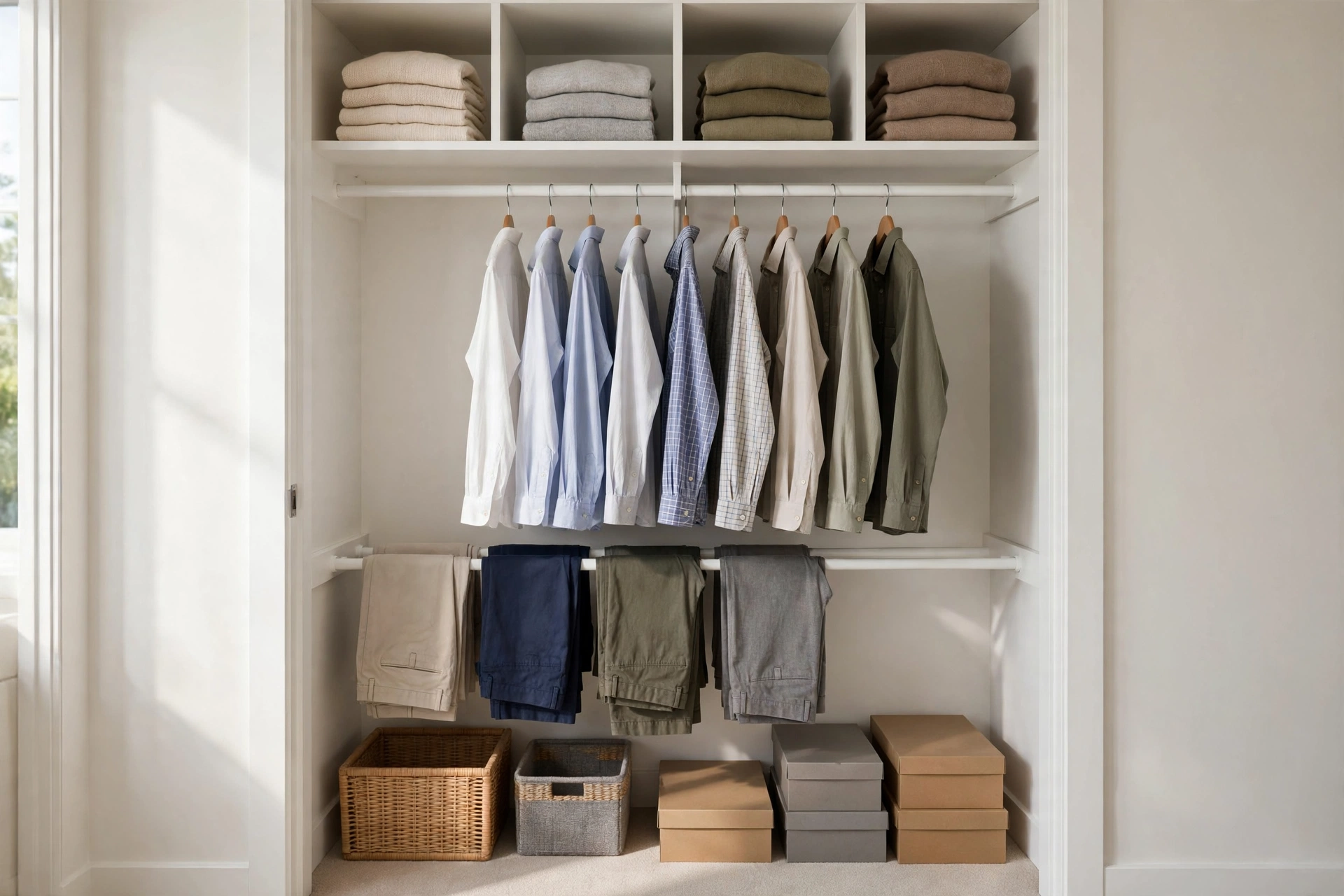
Most small bedroom closets come with one rod and one shelf, and that builder-grade setup wastes more than half of the space it occupies. The air below your hanging clothes sits empty, the top shelf is too high to use well, and the floor quietly becomes the shoe department. The fix is not a bigger closet. It is a smarter layout: a double-hang system that turns one row of clothes into two, shelves that actually hold folded clothes instead of avalanches, and the back of the door pulling its weight for the first time. This guide shows you how to triple a tiny reach-in closet’s capacity with renter-friendly changes, no drilling required.
If the closet is only one part of a messy bedroom, start with our complete small bedroom organization guide, then come back here for the closet itself. For quick wins across the whole room, our 35 small bedroom storage ideas pair well with everything below.
Measure First: The Numbers That Matter
Closet organizing is mostly math, and five minutes with a tape measure prevents almost every common mistake. First, measure the rod height: a single rod is usually about 66 inches from the floor, which is why everything below it turns into dead space. A double-hang setup puts the top rod at about 80 to 82 inches and the lower rod at 40 to 42 inches, which instantly gives you two rows of hanging space for shirts, blouses, and folded pants. Second, measure your closet’s depth. Standard reach-in closets are about 24 inches deep, which fits hangers comfortably; anything shallower than about 20 inches means you should use slim hangers so sleeves do not brush the door.
Third, measure the shelf above the rod. Leave at least 2 inches between the top of a rod and the bottom of the shelf so hangers can slide on and off freely. Fourth, count your rod inches before buying anything. A practical rule of thumb: each hanging top needs about 1 inch of rod, pants about 1.2 inches, jackets about 2.4 inches, and dresses about 1.6 inches. Add up what you own, compare it to the rod inches you have (a double-hang setup roughly doubles them), and the difference tells you whether the closet needs a new layout or a smaller wardrobe.
Double the Hanging Space Without Drilling
The double-hang conversion is the single highest-impact change in a small closet. Most of a wardrobe needs only about 38 to 40 inches of vertical clearance, so a single rod leaves a full row of unused space floating beneath it. A second rod at 40 to 42 inches catches all of that space for shirts, folded trousers, skirts, and jackets. Keep one small section at full height for long items: about a foot or two of width with the lower rod removed handles dresses and coats, which need roughly 60 to 72 inches of drop.
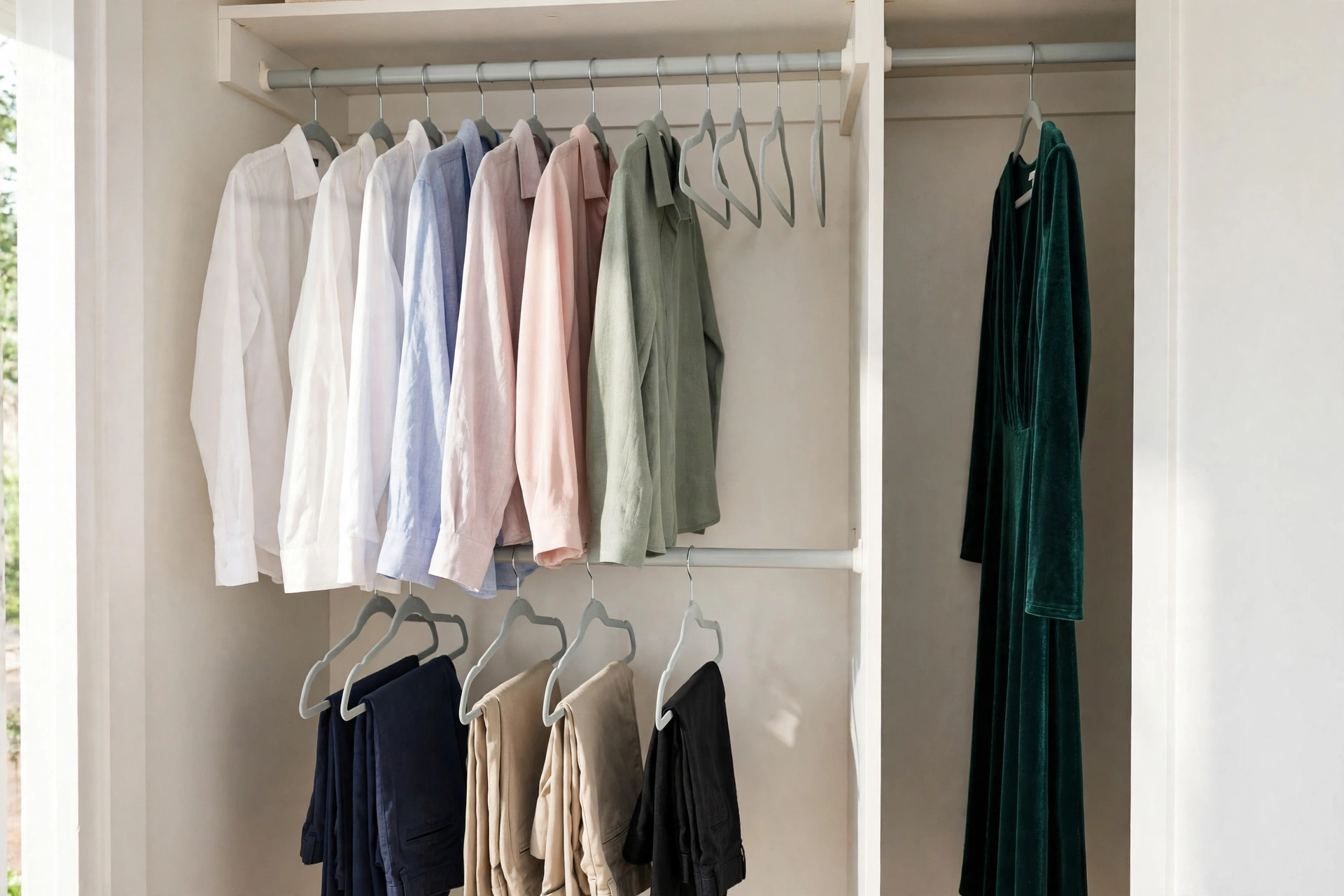
Renters have several no-drill options. A tension rod spanning the closet below the existing rod is the cheapest route, but check its weight rating and the wall surfaces it presses against, since heavy loads can strain it over time. A more stable option is a hang-from-rod system: a vertical frame or set of rods that hooks over the existing rod and holds a second bar. Freestanding double-rod garment racks work inside very deep closets, though they eat floor space. Whichever you choose, distribute weight evenly, keep the heaviest garments near the support points, and make sure the lower rod does not interfere with the closet door closing.
Make the Shelves Work Harder
The shelf above the rod is usually too deep and too high to be useful on its own. Items vanish into the back of a 24-inch-deep shelf, so keep shelf storage to the front 12 to 14 inches: shallow bins, folded stacks, or a narrow shelf tower placed at one end of the closet. Shelf dividers, the simple upright panels that clip onto a shelf, stop stacks of sweaters and jeans from sliding into each other and let you keep four or five tidy piles in the space where one avalanche used to live.
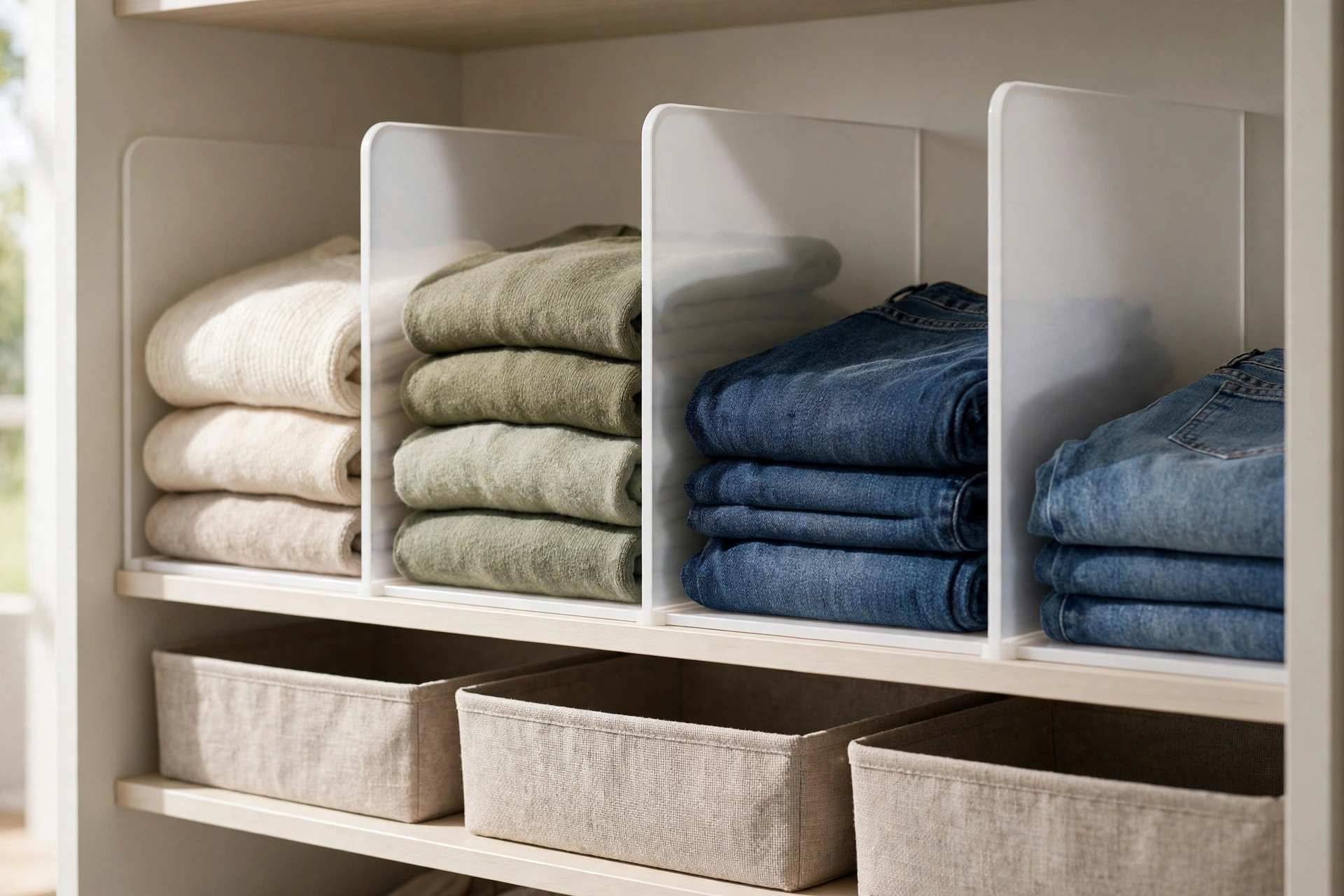
Follow the rule of four for folded stacks: no more than four heavy items like jeans or sweaters per pile, or six light items like tees. Anything taller topples the moment you pull from the middle. Use the hard-to-reach top shelf for soft-sided fabric bins holding off-season clothes, luggage, or the holiday sweater, since soft bins squeeze into irregular gaps where rigid boxes will not fit. Hang structured pieces (blazers, dresses, creased trousers) and fold stretchy ones (knits, tees, denim): knits stretch on hangers, and structure wrinkles on shelves. When in doubt about whether something should hang or fold, let your remaining resource decide, whichever you have less of, rod inches or shelf inches.
Use the Door Back and the Floor Wisely
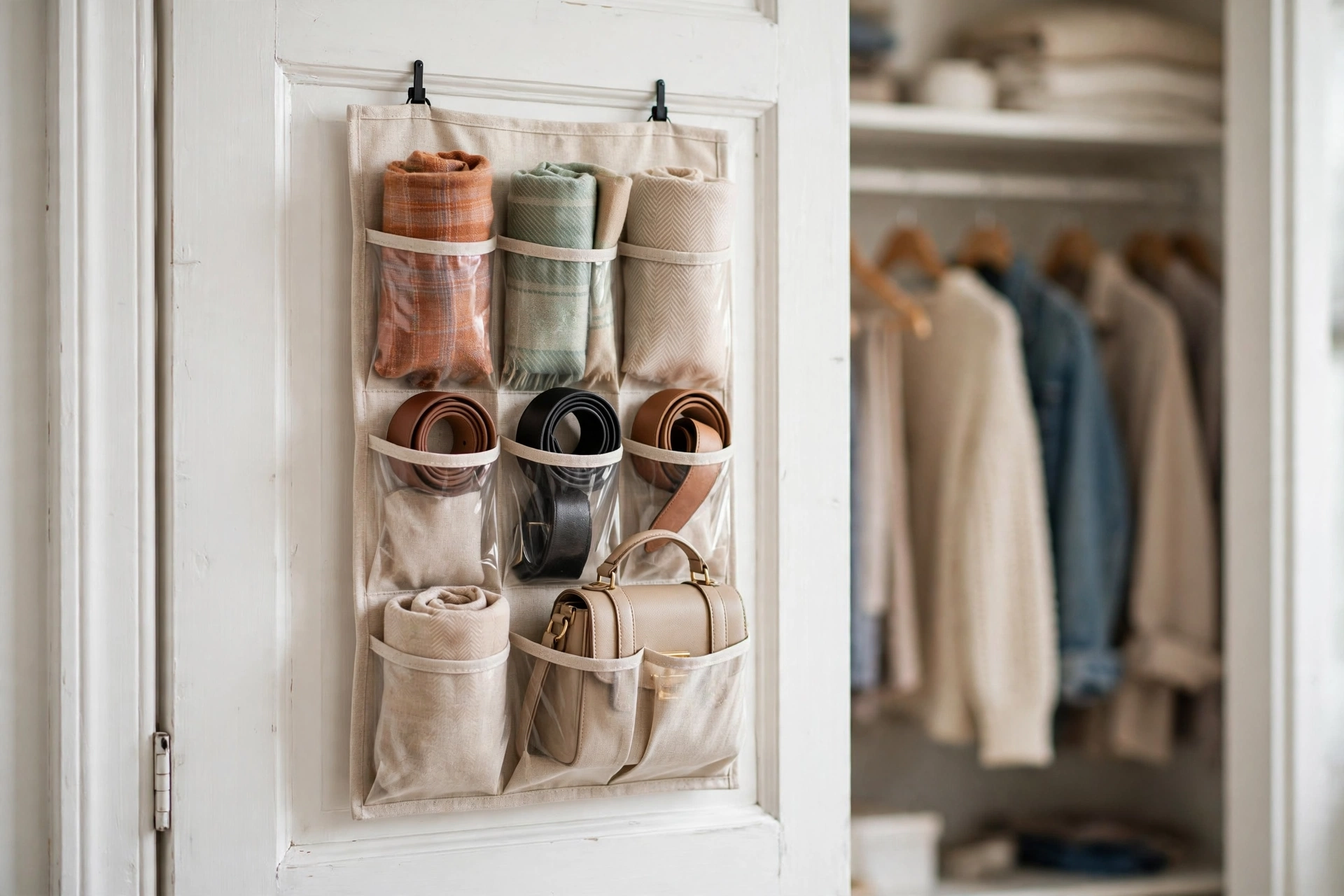
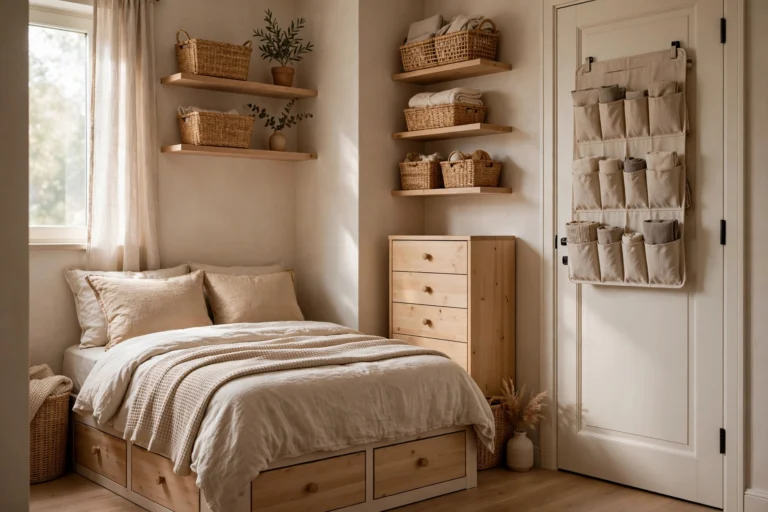
The back of the closet door is free storage you already own. Over-the-door hooks or a slim pocket organizer hold accessories, scarves, belts, and bags without touching a wall. Check two things before buying: the gap between the door and the frame must fit the hooks without scraping, and the hooks should be padded or felt-lined so they do not wear the paint or the door top. Keep the load modest, especially on hollow-core doors, and distribute weight near the hinges rather than the handle side.
The floor deserves a deliberate plan instead of becoming a dumping ground. A low shoe rack or a row of clear shoe boxes keeps pairs findable; if the closet shares floor space with hanging clothes, keep the floor unit under about 10 inches tall so hems do not drag on it. A slim rolling cart no taller than the lower rod can hold socks, gym wear, or accessories and slide out when you need it. Avoid blocking the full width of the floor, since you need to stand in front of the closet to reach the back of it.
Arrange It So It Stays Organized
A layout only stays organized if it matches how you actually get dressed. Put your most-worn items in the golden zone, roughly waist to eye level: the lower rod and the easy-reach shelf sections. Seasonal and occasional pieces go up high. Group clothes by category first (tops, pants, dresses), and arrange by length inside each category so the rod line looks even and gaps are easy to spot. Uniform slim hangers do more than save space: when every hanger looks the same, an empty hanger stands out and reminds you to put the clean laundry away.
Protect the system with a five-minute weekly reset. Walk the closet with a small basket: return strays to their zones, refold any collapsed stacks, and move anything you tried on and rejected back where it belongs. Once a season, pull everything from one zone at a time and ask the honest question about each piece: does it fit, does it get worn, and would you buy it again today. The closet stays organized when the wardrobe inside it is the right size for the space, not when you buy one more organizer.
Small Closet FAQ
How much can a double-hang rod system actually add?
A 4-foot-wide reach-in with one rod offers about 48 inches of hanging space. Converting most of it to double-hang adds roughly another 40 inches of usable rod, nearly doubling the total. Paired with shelf dividers and door-back storage, the practical capacity of a tiny closet can triple compared to the original single rod and bare shelf.
Will a tension rod damage the closet walls?
A tension rod itself does not drill holes, but it presses hard against the walls, which can scuff paint or dent soft drywall under heavy loads. Use rubber end caps, keep the load within the stated weight limit, and consider a hang-from-rod system instead if your lease is strict about wall marks. Always check your lease or ask before installing anything that bears weight.
What should go on the hard-to-reach top shelf?
Anything you need less than once a month: off-season clothes in soft bins, luggage, spare blankets, or the box of clothes you are storing for a sibling. Label the bins so you can find things without dragging everything down. Never put daily items up there, since every out-of-reach item is an item that will end up on the floor instead.
Your Next Step
You do not need to rebuild the whole closet this weekend. Start with the measurement that changes everything: count your rod inches and compare them to what you own. If the numbers do not fit, add the second rod first, since that one change unlocks the most space. Then add shelf dividers to the top shelf, hang something useful on the door back, and run your first five-minute reset on Sunday evening. Do it in that order and the closet will feel twice as big by next weekend.
For the rest of the bedroom, our small bedroom organization guide covers dressers, nightstands, and under-bed storage, and the bedroom hub has every bedroom article in one place.
One Comment