Under-Sink Bathroom Organization Around Tricky Pipes
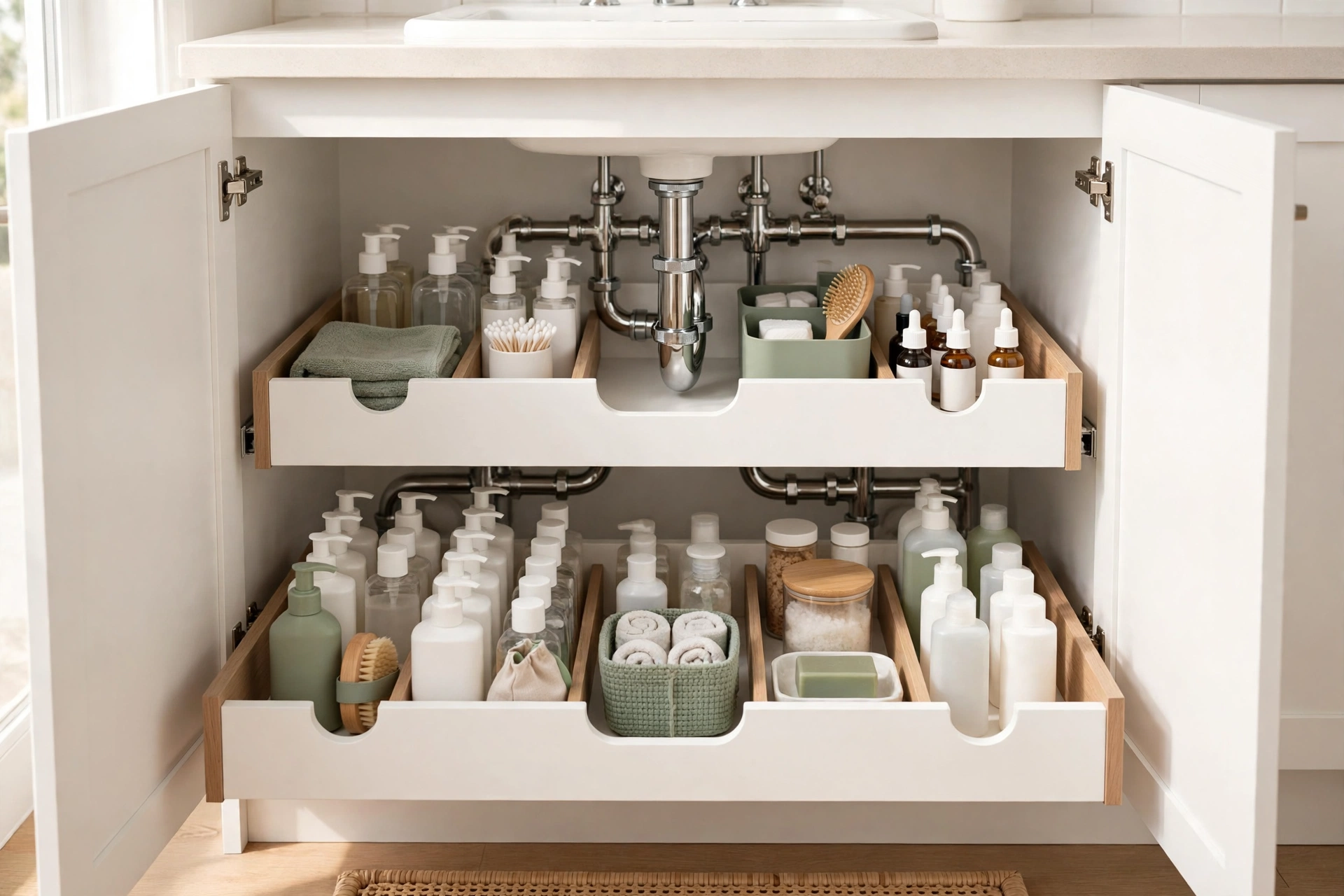
The cabinet under the bathroom sink is one of the most frustrating spaces in any home. The drain pipe runs through the middle, the water supply lines hug one side, and the P-trap juts out just far enough to block every storage container you try to slide in. The result is a cabinet where everything ends up shoved in a pile in front of the pipes.
There is a fix that works no matter how awkward your plumbing is. Measure the cabinet carefully first, then choose storage designed around pipes: expandable two-tier drawers that straddle the drain, plus stackable bins sized to fit the gaps around the supply lines. This guide walks you through both, starting with the measurements that make everything else click into place.
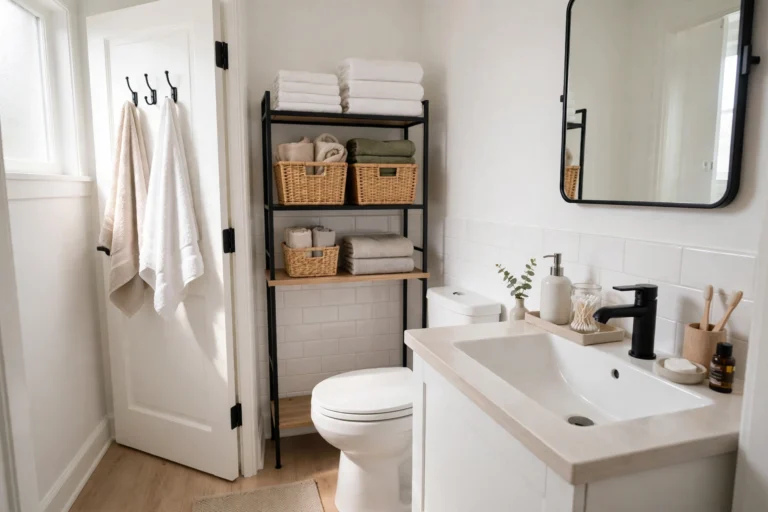
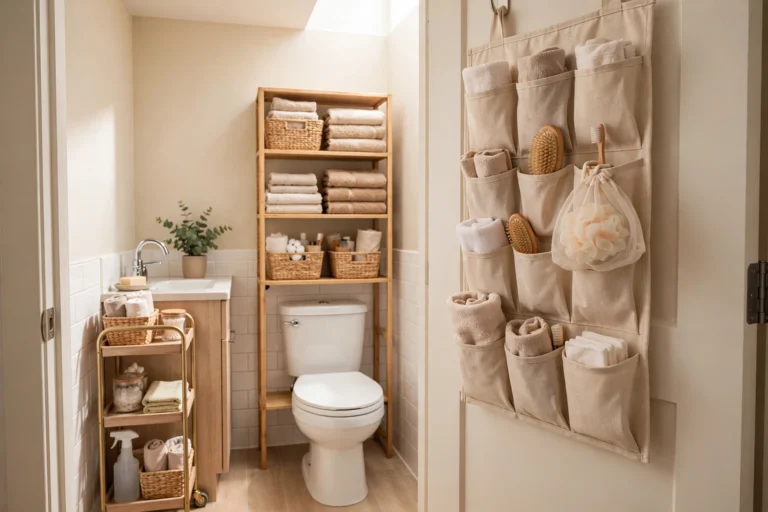
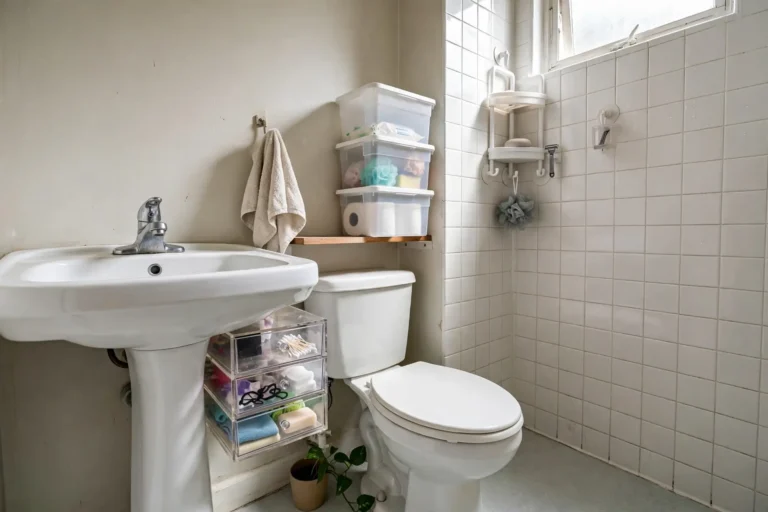
If under-sink storage is one piece of a bigger bathroom puzzle, our small bathroom storage ideas for renters cover the whole room without drilling, and the tiny bathroom organization guide takes the same measure-first approach room by room.
Measure Before You Buy: The 10-Minute Cabinet Audit
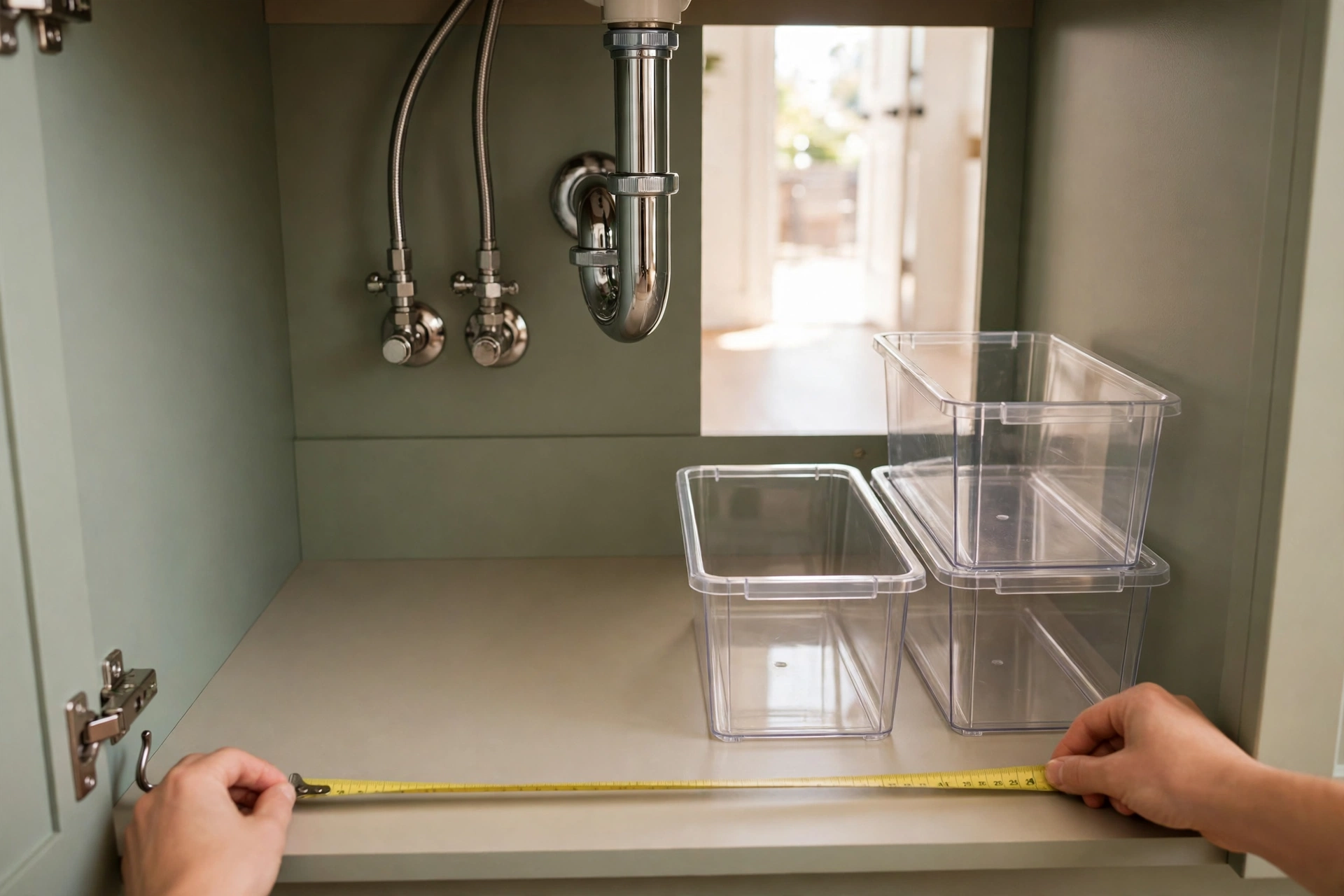
Almost every under-sink organizing product fails for the same reason: it was bought for the cabinet, not for the pipes. Ten minutes with a tape measure fixes that. Empty the cabinet completely and measure with the doors open.
Start with the cabinet shell. Measure the interior width at the front and at the back (back walls often narrow because of plumbing cutouts), the full interior depth from the door to the back wall, and the clear height from the cabinet floor to the lowest point of the sink bowl or its mounting clips. Note the door opening width too, since every drawer or bin has to pass through it.
Now map the pipes. Find where the drain pipe enters the floor or back wall and note how far it sits from each side. Mark the P-trap’s swing, which is the curved section that drops lowest and juts furthest forward. Locate both supply valves and the shutoff handles, and note how much clearance you need to reach them quickly. Any storage you buy must leave those valves accessible, because the one time you need them, you will need them fast.
Finally, measure the three zones your pipes create: the full-width strip across the front (usually pipe-free), the area to the left of the drain, and the area to the right. These zones are the key to the whole system. Two-tier drawers and stackable bins work precisely because each one can live in a zone the pipes do not occupy.
Two-Tier Drawers That Wrap Around Pipes
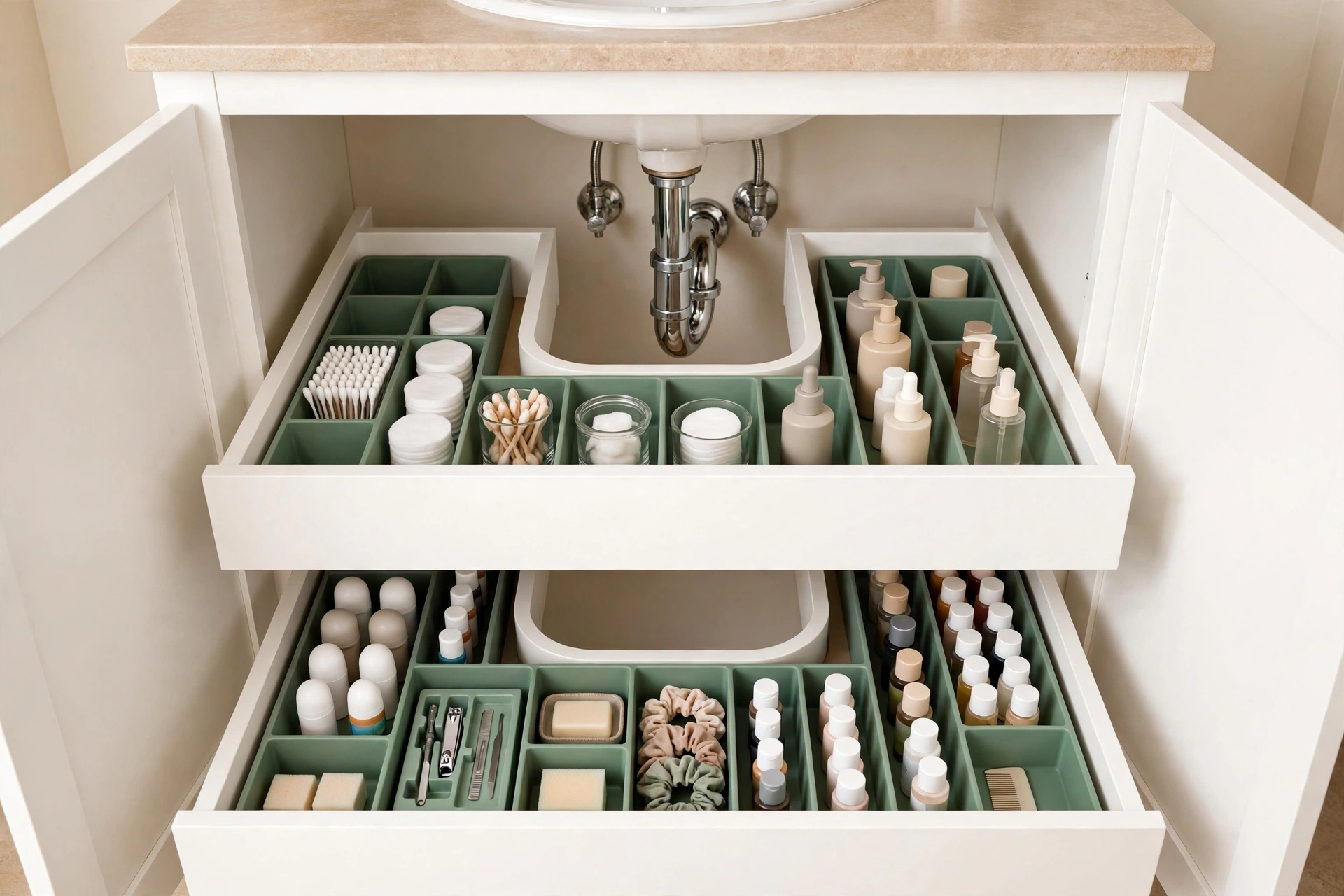
Two-tier under-sink drawers are the single best upgrade for a pipe-crowded cabinet. They come in two styles, and the difference matters. Standard two-tier units are simple stacked drawers that sit in the pipe-free front zone. The ones worth buying for tricky layouts are the U-shaped or expandable style: the back of the drawers is cut away or adjustable, so the unit slides in with the drain pipe passing through its open center.
When you shop, compare products against your zone measurements rather than your cabinet’s total size. Check the unit’s width at its widest point, its depth from front to back, and the position of the pipe cutout or U-gap. The drawers should open without hitting the P-trap, and the top tier should clear the sink bowl clips above. If your pipes sit off-center, look for units where the cutout can be shifted or where two narrower drawer sets can flank the drain instead of one wide unit.
Use the drawers for what you reach for daily: skincare, contact solution, deodorant, hair products. The pull-out action is the point, because nothing ends up forgotten at the back of a dark cabinet when every row slides out to meet you. Renters like these units because they lift out with no screws or adhesives, and they come down cleanly at move-out.
Stackable Bins for the Awkward Corners
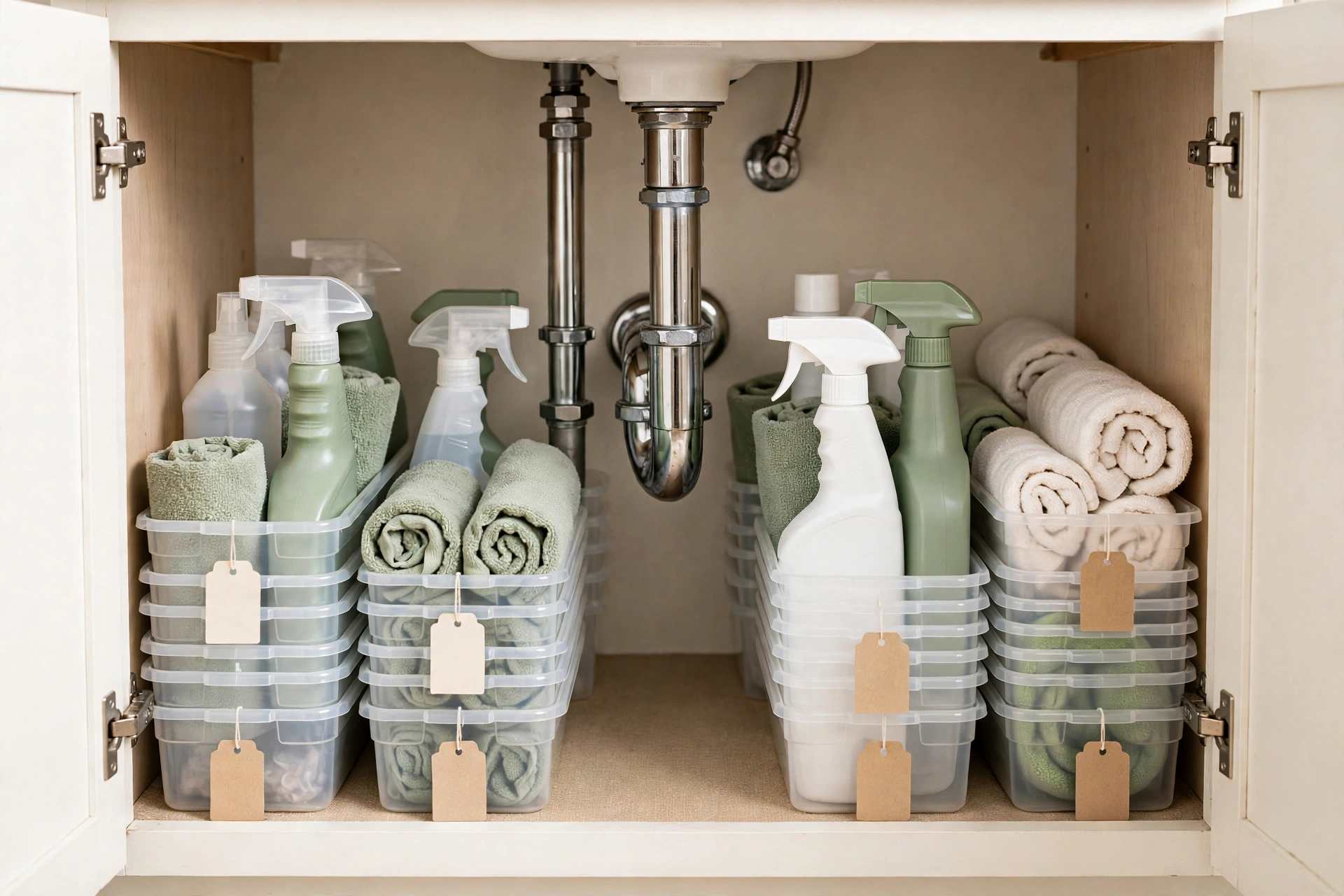
Drawers handle the center. Stackable bins handle the corners, those wedge-shaped gaps on either side of the drain where a single tall container never fits. Buy bins by internal usable space, not by the printed label on the package. A bin listed as 10 inches wide may lose an inch to its own rim and handle, which matters when your zone is 9 inches between the drain and the cabinet wall.
Match bin height to the height of the zone it lives in. Under a low P-trap swing, use short bins that slide underneath. Beside tall supply lines, use narrow bins that tuck alongside them. Stack only where the full column of bins stays clear of the pipes above; if a second bin bumps the P-trap, that stack is one bin too tall. A short stack of two beats a tall stack that wobbles and has to be unstacked every time.
Give every bin a job so the system stays organized after the first month. Cleaning supplies live in one bin, backstock toiletries in another, first aid in a third. Labeling the front of each bin with a label maker or a piece of painter’s tape takes two minutes and keeps everyone in the household putting things back in the right place. Before buying a full matching set, try one or two bins in the trickiest zone first, since a $6 test beats a $40 set that does not fit.
Do Not Forget the Cabinet Doors
The inside of the cabinet doors is free storage that costs nothing to claim. Narrow wire racks or plastic caddies that hook over the door hold hair tools, brushes, or cleaning sprays without taking a single inch of shelf space. Adhesive-mounted versions exist, but bathrooms are steamy, so choose hooks or caddies rated for humid rooms and prep the surface with rubbing alcohol before sticking anything. In a rental, these organizers lift off at move-out, and pull-tab adhesives are designed to come down without pulling the finish.
Keep It Leak-Safe and Easy to Clean
Anything stored under a sink should survive a small drip, because supply valves and trap connections can seep long before you notice. Line the cabinet floor with a waterproof mat or a cut-to-fit silicone liner so a slow leak pools on plastic instead of swelling the cabinet wood. Once every few months, pull the drawers forward and feel around the pipe connections for dampness. If you find a wet spot, move your storage out of the way and call your landlord or a plumber before the cabinet takes real damage. Never block the shutoff valves with a bin, no matter how perfectly it fits.
Your Next Step
Start with the tape measure today. Once you have your zone measurements written down, order one expandable two-tier drawer unit for the center and two or three stackable bins for the corners, then live with the setup for a week before filling any remaining gaps. If you want the whole-bathroom version of this plan, our tiny bathroom organization guide applies the same measure-first thinking to every other corner of the room.