The Complete Guide to Organizing a Tiny Bathroom
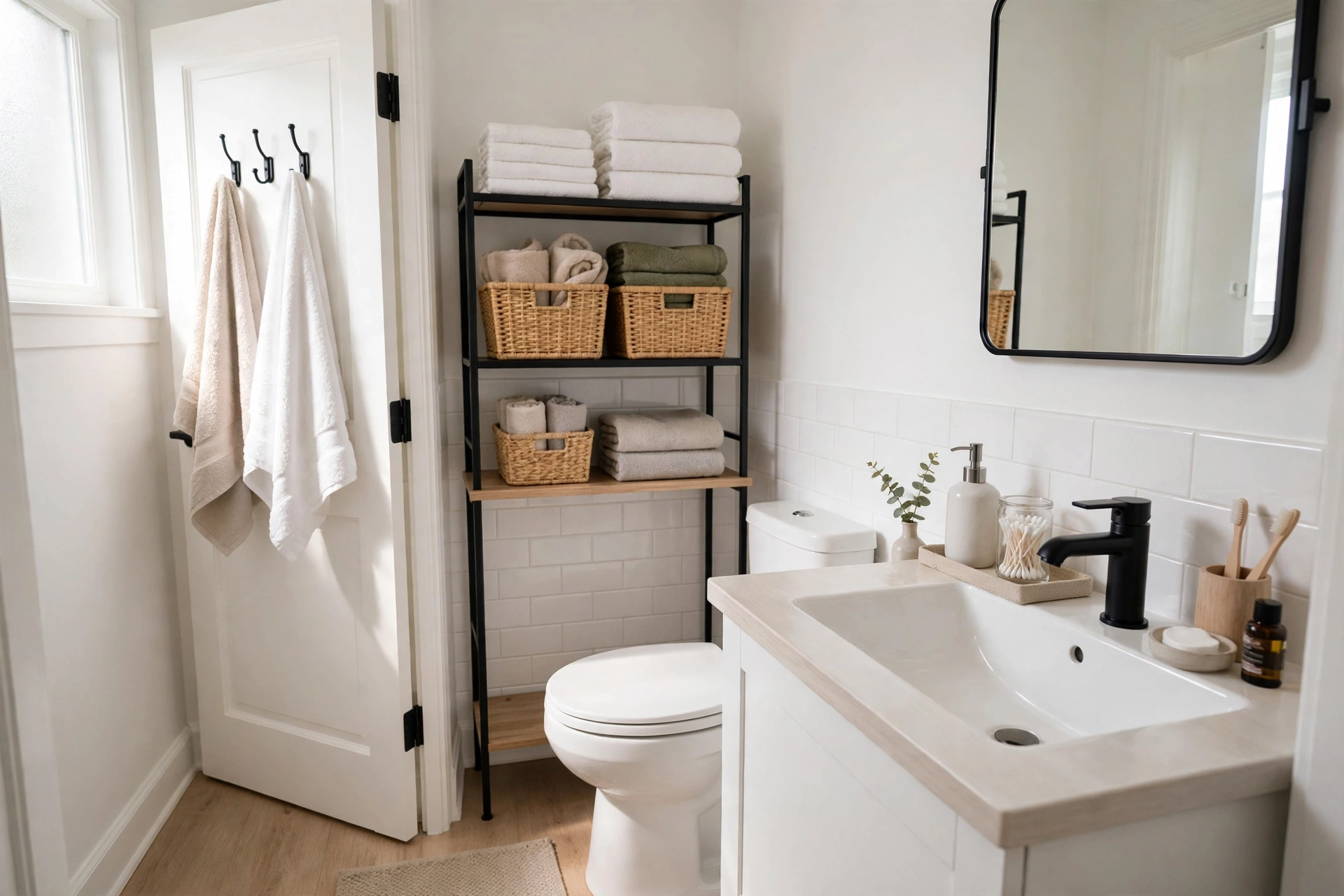
A tiny bathroom does not need more storage products. It needs a better storage plan. In bathrooms under 40 square feet, the usual problem is not that there is nowhere to put things: it is that everything lands wherever it fits, blocking fixtures, crowding the counter, and eating the little floor space that makes the room feel breathable. The fix is a zone system: five small territories, each with a clear job, so every item has exactly one home and nothing sits in the wrong place. This guide walks through the zones, what belongs in each, what gets decanted, what leaves the room entirely, and how to build it all without drilling.
If your bathroom storage also needs to be damage-free, our small bathroom storage ideas for renters covers the best no-drill products to pair with the system below.
The Five Zones of a Tiny Bathroom
Divide the bathroom into zones by task, the same way a kitchen has cooking and prep areas. Most tiny bathrooms have five: the daily-use zone (the sink area: toothbrush, skincare, soap, the products you touch twice a day), the shower zone (shampoo, conditioner, body wash, razor), the towel zone (bath towels, hand towels, washcloths), the backup zone (extra toilet paper, replacement toiletries, first-aid basics), and the cleaning zone (the spray bottle, the scrub brush, the plunger). When each category has a territory, clutter stops being a mystery: anything in the wrong zone is visibly out of place.
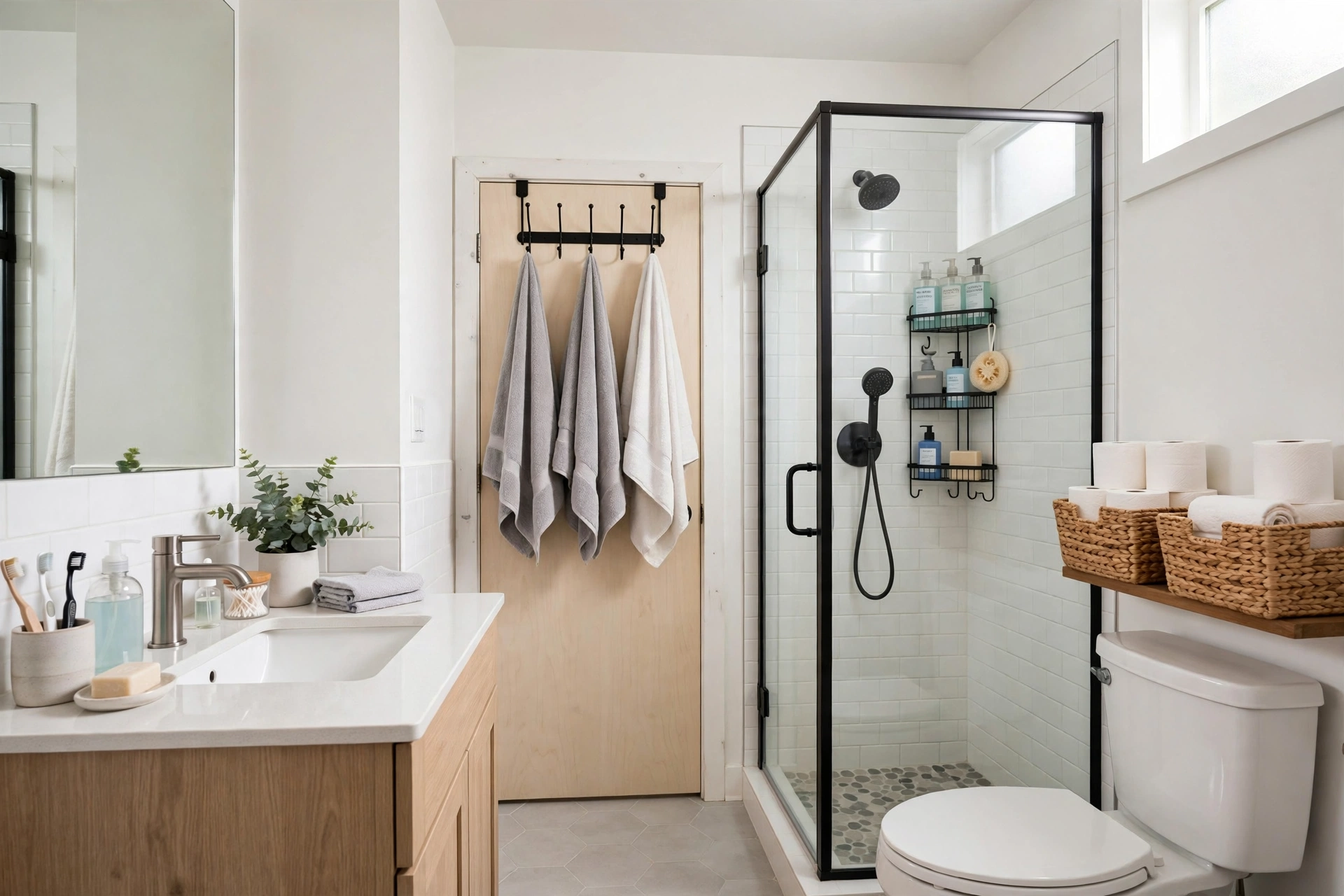
Start with the emptiest zone, which in most small bathrooms is the wall above the toilet or the back of the door. Build one zone completely, live with it for a week or two, then add the next. Tackling all five at once is the reliable way to end up with more organizers and the same mess, because the system never gets tested against your real routine. The order that works best: vertical and wall-mounted storage first, then freestanding pieces, and the counter last. This keeps the floor visible longest, and a visible floor is the strongest signal your brain has that the room feels open.
What Lives Where
Assign every item to the zone where you actually use it. Daily-use products live within arm’s reach of the sink, at waist to eye level: the toothbrush holder, the soap, the moisturizer you use every morning. The shower zone holds only what gets used in the shower, in a caddy or corner shelf, not lined up on the tub edge where bottles fall over and collect grime. Towels live in the towel zone: on the door back, on adhesive hooks, or folded on a narrow shelf. Backups go where you do not look daily, above the toilet or in the under-sink cabinet, corralled in one bin so restocking is a single motion. Cleaning supplies get their own spot, under the sink or in a slim caddy, never mixed with personal-care items.
Then decide what leaves the room. A tiny bathroom cannot hold the family’s medicine cabinet, the cleaning arsenal for the whole apartment, and your backup stockpile. Medicines belong in a cool, dry spot outside the steamy bathroom anyway. Bulk cleaning supplies can live in a hall closet with only the one in-use spray bottle under the sink. Anything you have not touched in three months is a candidate for another room or the donation bag. Every item that leaves makes the zones behind it easier to maintain.
What Gets Decanted (and What Does Not)
Decanting, moving products into matching containers, looks beautiful on the counter but only earns its keep in one situation: the daily-use zone, where you reach for the same few products every day and the containers stay clean. A small tray with a soap dispenser, a cotton-round jar, and a toothbrush cup keeps the sink area tidy and wipable. Everywhere else, decanting creates work: refilling, cleaning sticky jars, and losing the original labels with their instructions and expiry dates.
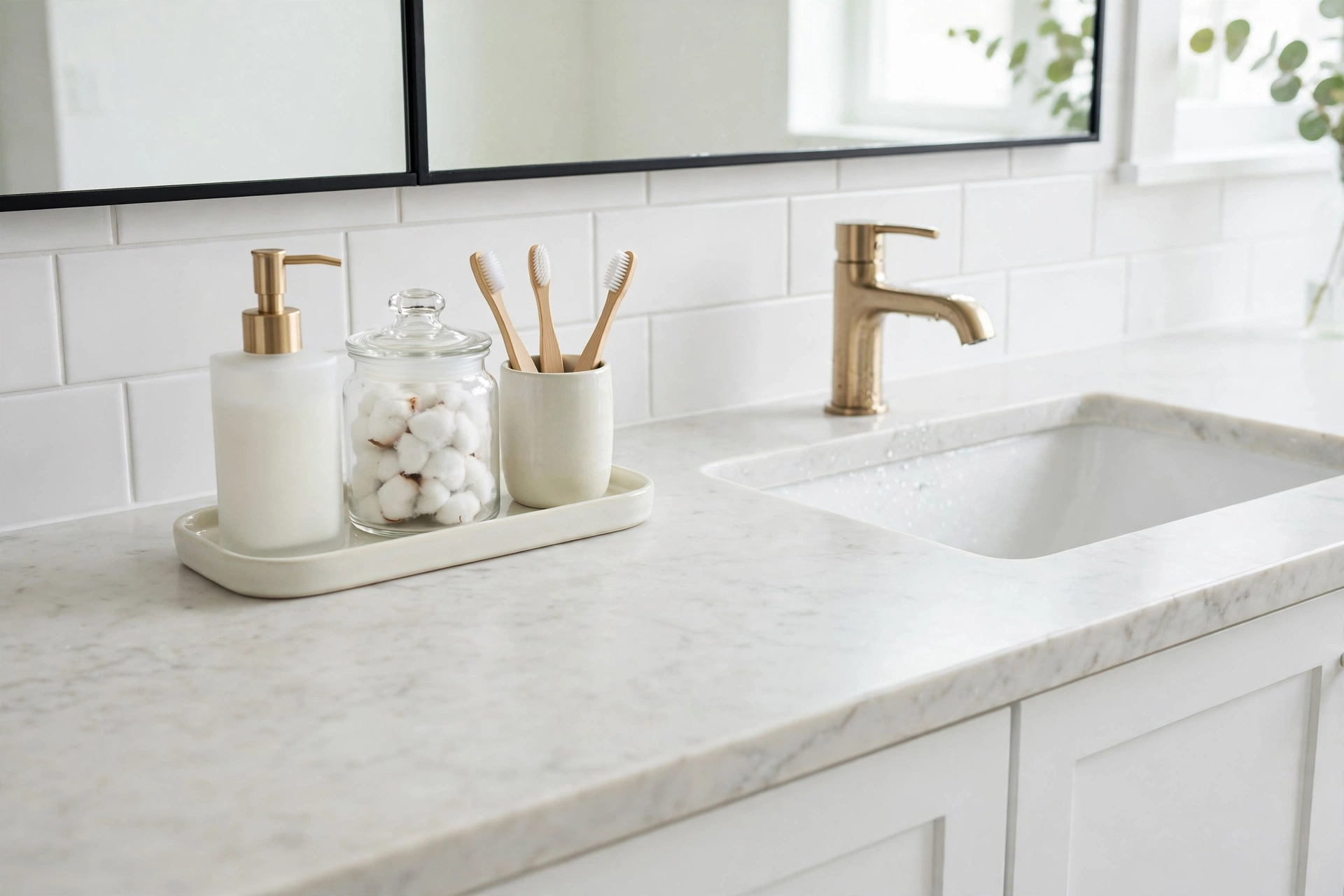
Keep backups in their original packaging in the backup zone, where labels and dates matter more than looks. Never decant medicines or anything where the original instructions must stay readable, and do not decant products you use rarely: a half-used jar of something you touch monthly is just a dust collector in a prettier container. The rule is simple: decant what you touch daily and enjoy looking at, contain everything else.
Build Up, Not Out
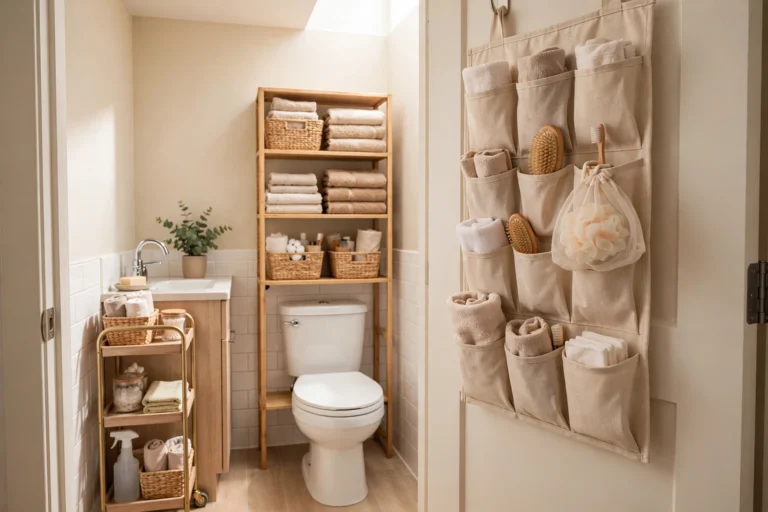
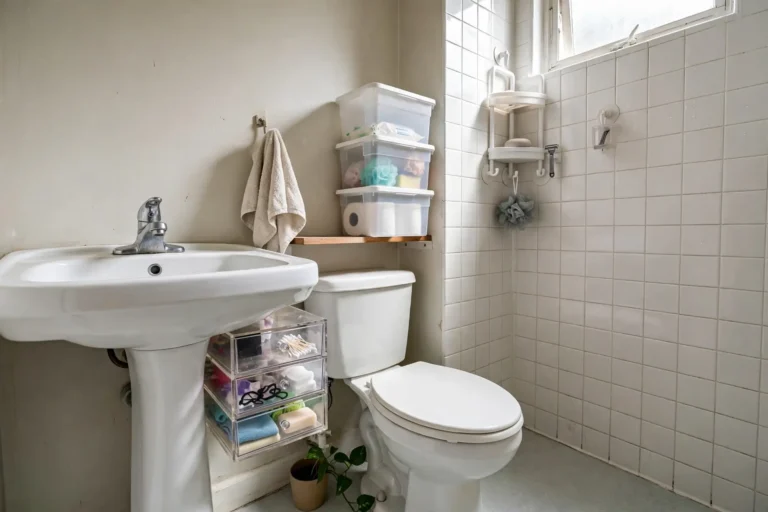
In a bathroom under 40 square feet, the walls are the storage room. An over-the-toilet shelving unit or etagere adds two or three shelves without touching the floor. The back of the door takes a hook rack for towels and the bathrobe. A narrow floating shelf or two beside the mirror holds the daily-use items at eye level. Adhesive hooks inside the shower or on the wall hold the loofah, the razor, and the washcloth. Each of these is renter-friendly: freestanding units need no mounting, and quality adhesive hooks remove cleanly when you follow the product’s removal instructions and weight limits.
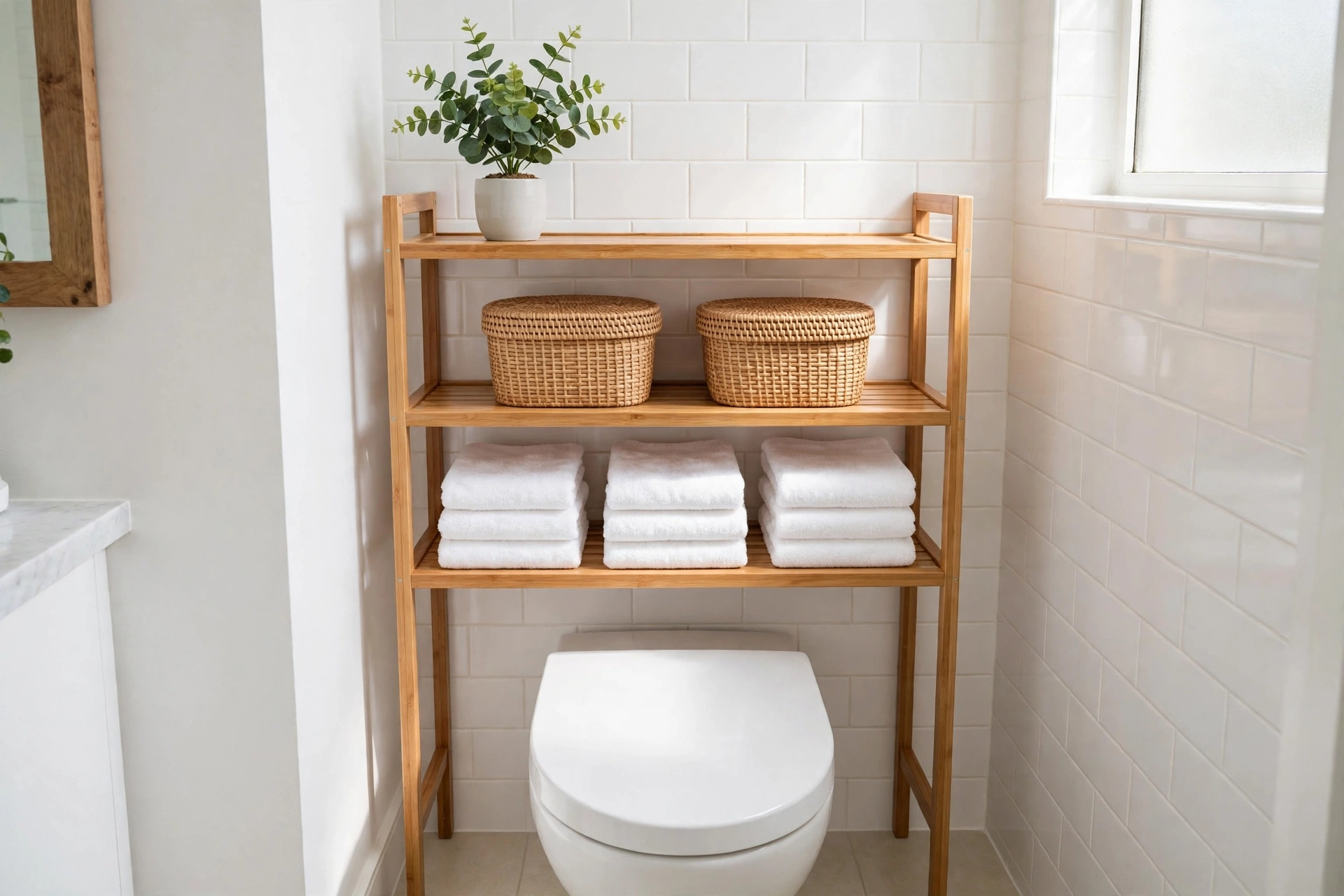
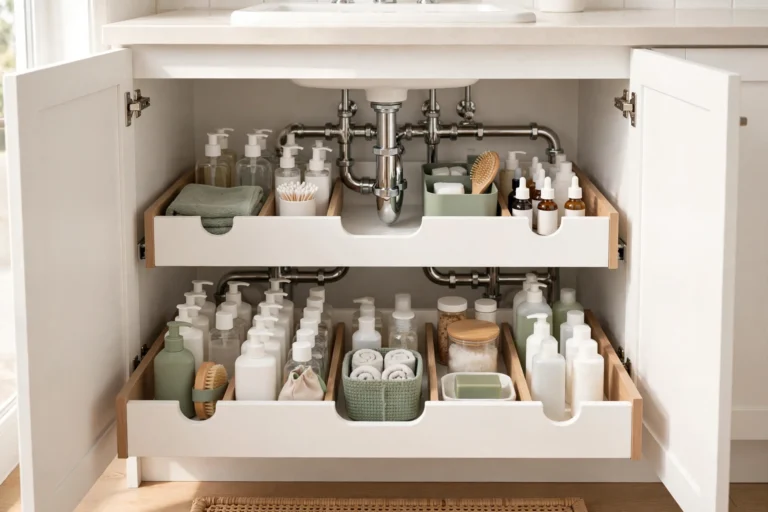
Resist freestanding floor units unless a zone genuinely has no wall option: every square foot of floor you give to storage is a square foot the room feels smaller by. Under-sink space is the exception worth organizing, since it is hidden and usually wasted. A small stackable shelf or two bins around the plumbing turn it into a proper backup and cleaning zone, and a tension rod across the cabinet interior can hang spray bottles by their triggers. Measure around the pipes before buying anything, since plumbing eats more of that cabinet than it appears to.
The Clear-Counter Rule
The fastest way to make a tiny bathroom feel bigger costs nothing: clear the counter. A crowded countertop reads as clutter no matter how organized the cabinets are, and every bottle on it collects dust and water spots that make cleaning take twice as long. Keep only the daily-use items on the counter, grouped on a single small tray so you can lift the whole thing to wipe underneath. Everything else moves to its zone. If an item does not earn its counter spot by being used daily, it does not live on the counter.
A 20-Minute Reset Routine
Zones stay organized when they get a regular reset, and a tiny bathroom needs only twenty minutes a week. Once a week, work zone by zone with a small basket: return strays to their home zones, toss empties and expired products, wipe the counter and the sink, and shake out the bath mat. Refill the daily-use tray from the backup bin so you never discover an empty shampoo bottle mid-shower. Once a month, pull everything from one zone, wipe the shelf or bin, and check expiry dates. Small bathrooms punish neglect fast, but they also reward twenty minutes more visibly than any other room in the home.
Tiny Bathroom FAQ
Where do towels go in a bathroom with no linen closet?
The back of the door is the best first answer: a hook rack or over-door hooks hold two bath towels and the hand towel without using any floor or wall space. A narrow over-the-toilet shelf or a slim rolling cart holds folded spares. Roll instead of fold if the shelf is shallow: rolled towels fit narrower spaces and you can see every towel at a glance.
How do I stop the shower from looking cluttered?
Limit the shower to what gets used there, in one caddy or corner shelf, and retire the bottles lined up on the tub edge. One bottle per product: the half-empty backup lives in the backup zone, not in the shower. A squeegee on an adhesive hook keeps glass clear and doubles as the daily two-minute maintenance habit that prevents grime buildup.
What is the biggest mistake in tiny bathroom organization?
Buying storage before assigning zones. Organizers bought without a plan become new places for clutter to live, which is why so many small bathrooms have a cute basket full of random items on top of the toilet. Map the five zones first, decide what lives in each, and only then buy the one bin or shelf that fills a real gap.
Your Next Step
Do not start by shopping. Start by sorting: pull everything out of one zone, the sink area is the easiest first win, and put each item in its task group. Move the backups and the rarely used items out of the daily zone, corral the daily items on one tray, and clear the counter. When the sink area works, pick the next emptiest zone and build it the same way. Five zones, built one at a time, and the smallest bathroom in the apartment starts feeling like it was designed for you.
For renter-safe product ideas to fill these zones, see our small bathroom storage ideas for renters, and browse the bathroom hub for every bathroom article.
One Comment