Small Bathroom Storage Ideas for Renters (No Drilling)
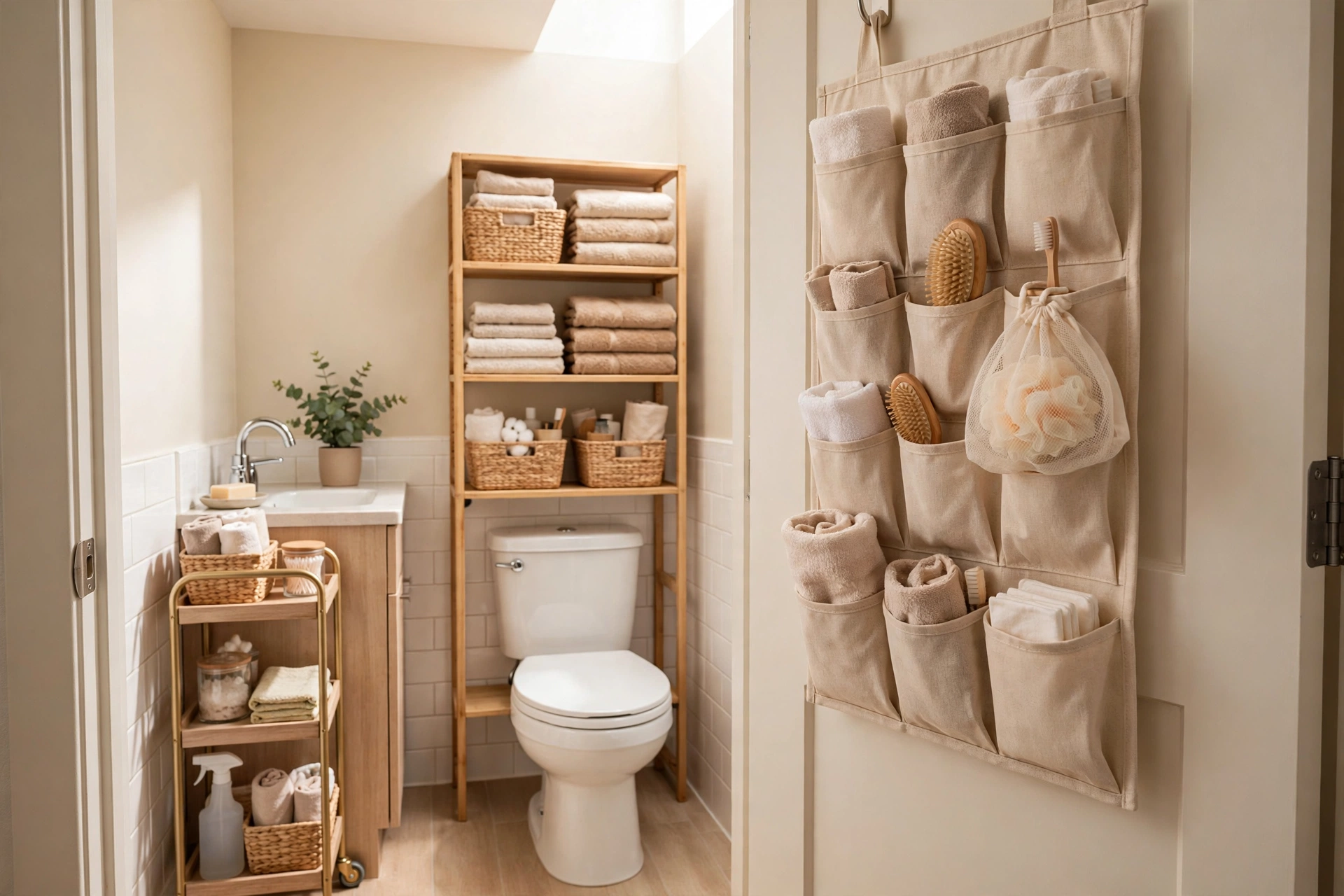
A tiny bathroom in a rental gives you almost nothing to work with: one small vanity, a shallow medicine cabinet if you are lucky, and a few inches of empty wall that your landlord will not let you touch with a drill. Yet the bottles, towels, and daily supplies keep arriving anyway. This guide solves every storage zone in a small rental bathroom, over the toilet, in the shower, around the sink, on the door, on the walls, on the floor, and under the sink, without a single hole in the wall. Follow one zone at a time and you can finish the whole bathroom in a weekend.
The golden rule running through every idea below is simple: nothing is drilled, screwed, or glued permanently. Everything here is freestanding, tension-mounted, suction-mounted, over-the-door, or held with removable adhesive, and everything comes back out at move-out. If you want the same no-drill thinking applied room by room, our 45 renter-friendly storage ideas covers the whole apartment the same way.
Before You Buy: The 10-Minute No-Drill Plan
Renters waste the most money buying organizers that do not fit, so spend ten minutes on this plan first. Measure the space above your toilet tank to the ceiling and the width of the wall around it. Measure the gap between the sink and the side wall, and the height and depth of the vanity cabinet inside, because pipes eat more space than you expect. Check whether your shower walls are smooth tile or textured, because suction cups only hold on smooth, non-porous surfaces. And look at the door, its thickness and the gap at the top, since over-door hooks need a clearance of roughly an eighth of an inch to close without rubbing.
Then do a one-category-at-a-time declutter. Pull everything out of one spot, the shower caddy, the medicine cabinet, the under-sink area, and sort it into three groups: daily use, weekly use, and everything else. Anything expired, broken, or untouched for a year leaves the room. You cannot organize your way out of clutter in a 40-square-foot bathroom, and buying storage for things you do not use is just expensive clutter with a home.
Zone 1: Over the Toilet (The Biggest Free Wall in the Room)
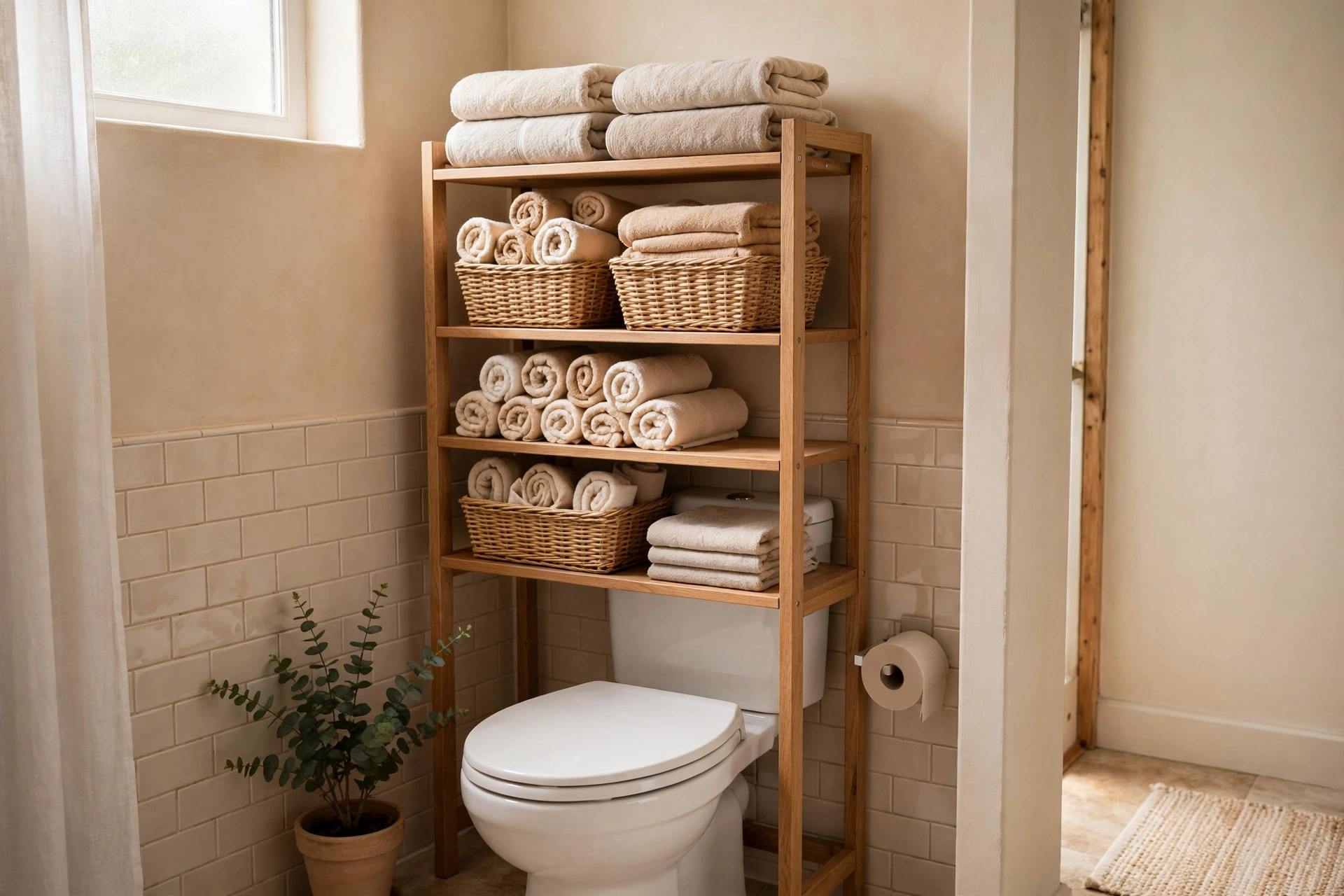
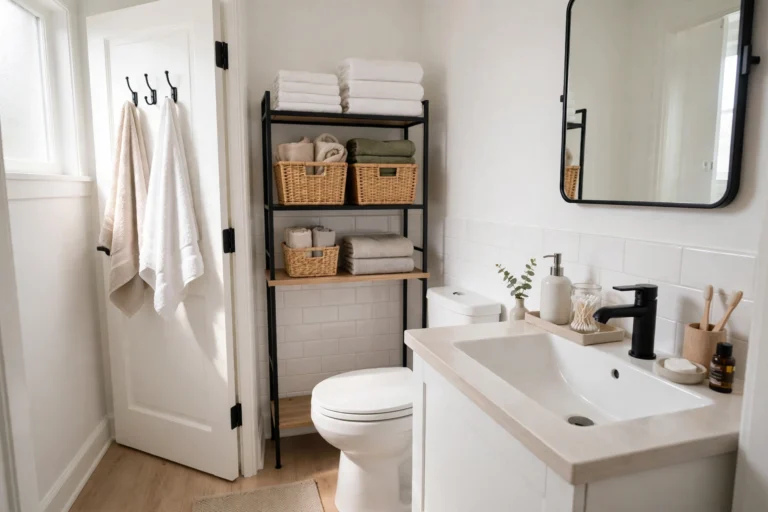
The wall above the toilet tank is usually the largest uninterrupted wall in a small bathroom, and in rentals it just sits empty because nobody can drill into it. A freestanding over-toilet storage unit fixes that. It stands on the floor on either side of the toilet, needs no screws, and most designs give you two or three open shelves plus a cabinet.
Measure before you order. Check three numbers: the width between the side posts (it must clear your toilet tank lid with room to spare), the height of the bottom shelf above the tank (leave at least 2 inches of clearance so the lid lifts freely), and the total height (tall units near 65 inches use the full wall, short ones waste a shelf of space). If your toilet sits very close to the wall, make sure the back posts clear the water supply line.
Zone each shelf by use, not by looks. The middle shelf, at arm’s reach, holds daily items: toothbrush holder, deodorant, the skincare you use every morning. The top shelf holds the rarely touched backups: spare toilet paper rolls, a first-aid kit, extra shampoo. The bottom, closest to the tank, is for towels and washcloths in a basket, since this shelf catches the most steam and everything there should be washable.
If a full unit feels too bulky, a single freestanding ladder shelf in the same spot does the same job with a lighter footprint. Anchor nothing to the wall, but choose a unit with a wide base or wall-safety pads, and follow the manufacturer’s stability instructions, because a top-heavy shelf loaded with bottles can tip. Our no-drill kitchen upgrades guide uses the same zone-by-reach logic for cabinets, and it works just as well here.
Zone 2: The Shower (Suction, Tension, and Hanging Storage)
Shower storage fails for one reason: renters rest bottles on the tub edge or the shower floor, where they slide, tip, and grow mildew underneath. The fix is to get everything off horizontal surfaces and onto the walls, using mounts that leave the tile intact.
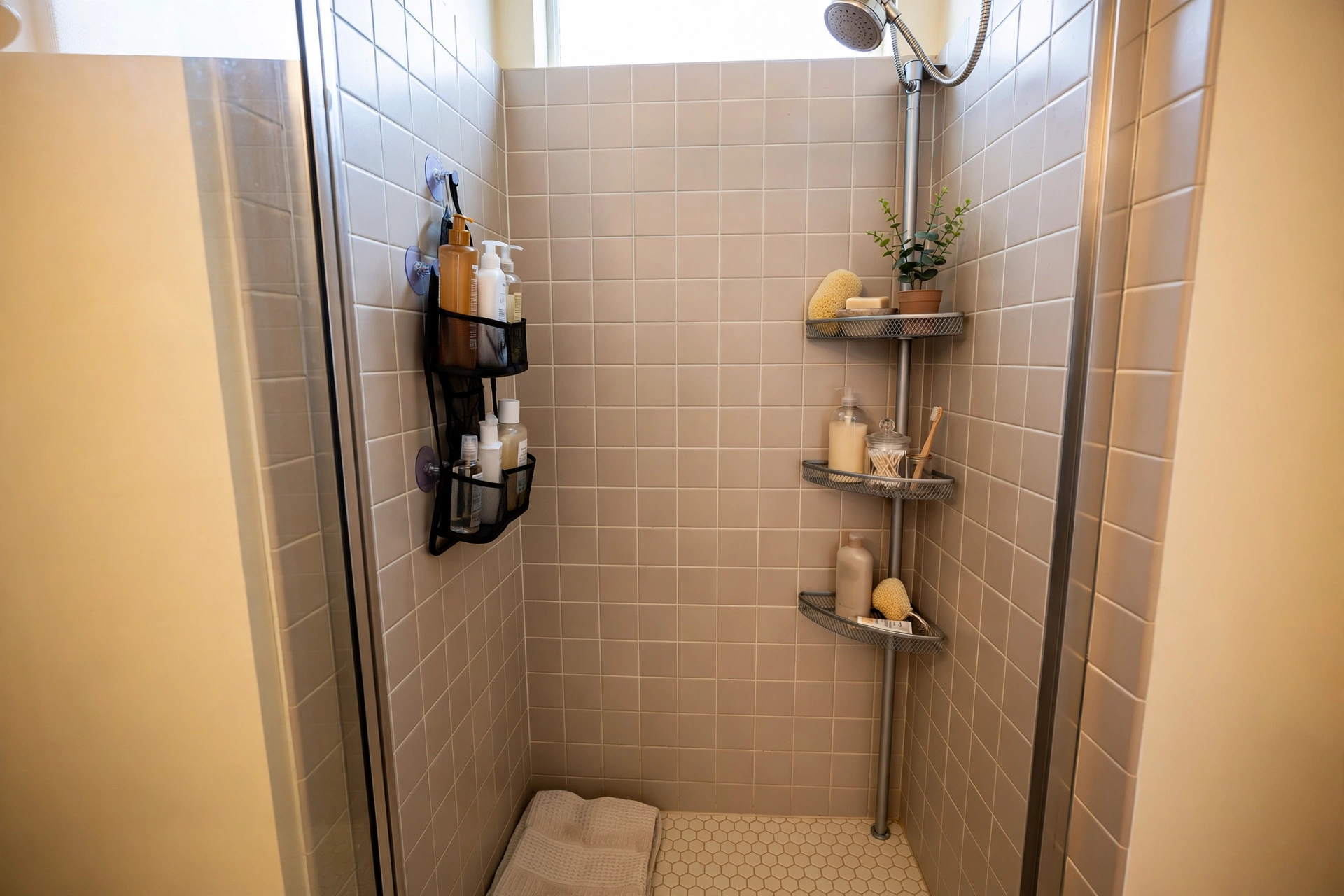
Suction-cup caddies are the fastest option. Press them onto clean, smooth tile, glass, or fiberglass, and give the suction mechanism a full day before loading it heavily. They hold two to four bottles each, which covers one person’s routine. Their weakness is weight and texture: heavy shampoo bottles on textured tile will eventually slide. Wipe the tile with rubbing alcohol before mounting and re-press the cups monthly to keep the seal strong.
Tension-pole corner caddies solve the weight problem. A pole wedged between the shower floor and ceiling holds three or four corner shelves and carries much more weight than suction cups, with zero holes. Measure your ceiling height before buying, and make sure the pole seats on solid tub edge or floor, not on a shower pan lip that flexes.
An over-the-showerhead or over-the-door hook handles what caddies cannot: a washcloth, a razor, a bath brush, or a mesh bag of kids’ toys. One hook is enough; a whole rack of hanging bottles makes the shower feel cramped and drips water onto the floor when the door opens.
Whatever you mount, choose open wire or mesh designs so water drains and air circulates. Closed plastic bins trap moisture and breed mildew. And keep only the products you use every single day in the shower; the rest live on a shelf outside it.
Zone 3: Around the Sink (Clear Counter in a 2-Foot Vanity)
Most rental vanities give you about 18 to 24 inches of counter around the faucet, and half of it disappears the moment two people’s morning routines collide. The goal here is not more stuff, it is less: a clear counter with exactly what both people use daily.
Go vertical with a two-tier countertop shelf. A small riser shelf lifts daily items onto two levels, roughly doubling usable counter in the same footprint. Keep it shallow, about 5 to 6 inches deep, so it does not crowd the faucet. The top tier holds the shared items (hand soap, a cup with two toothbrushes), the lower tier holds your daily creams and serums.
Corral with a tray. One small tray, roughly 8 by 10 inches, holds everything loose: lip balm, a contact lens case, hair ties. When the tray is full, something leaves the counter; it is a built-in capacity limit. Clean the tray weekly, because bathroom counters collect dust and toothpaste specks fast.
Move the rest off the counter entirely. Anything you use less than daily does not earn counter space. Cotton balls and q-tips go in a tall jar on the over-toilet shelf, styling tools go on the door-back organizer, and cleaning supplies go under the sink. A clear counter is the whole point of a small bathroom; defend it.
Zone 4: The Door Back (A Free Wall You Walk Past Daily)
The back of the bathroom door is a full wall of storage that costs nothing and requires no tools. Over-door hooks rated for the actual weight hold robes, towels, and tomorrow’s outfit. For a single robe, one sturdy hook beats a whole rack that clutters the door.
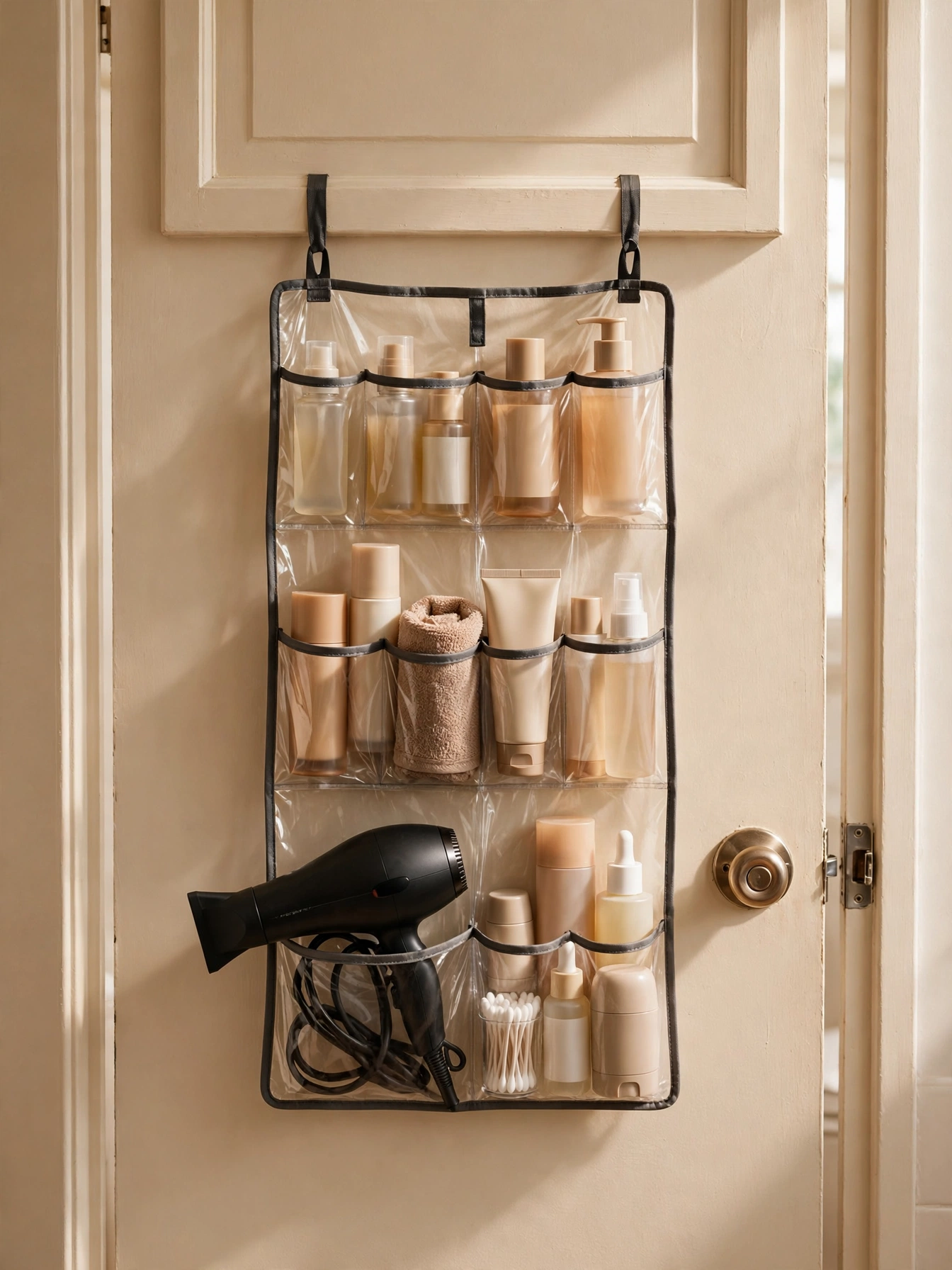
An over-door pocket organizer is the highest-capacity no-drill option in the whole bathroom. A clear-pocket version holds toiletries, skincare, a hairdryer, rolled washcloths, and spare toilet paper in visible rows, and it lifts a dozen items off the counter and shelves in one move. Hang it on the inside of the door so it stays out of sight, check that the door still closes and latches fully, and keep heavy items low so the door swings freely.
If your door has less than an eighth of an inch of top clearance, or the door rubs the frame, switch to removable adhesive hooks on the door itself. They hold robes and towels fine, come off cleanly with the pull tab, and never affect how the door closes. Just follow the package weight limits and the full cure time before hanging anything.
Zone 5: The Walls (Adhesive and Tension Options That Hold)
Wall space beyond the toilet and the door usually means the wall beside the vanity or the empty stretch above the sink. Since drilling is off the table, you have two reliable methods.
Removable adhesive hooks and strips are the workhorse. Use them for a hand towel ring substitute, a robe hook, a small basket for daily items, or hanging a lightweight mirror. The two rules that decide whether they hold: match the hook’s rated weight to the real load, and clean the wall with rubbing alcohol and let it dry before sticking. Glossy painted walls and tile hold well; textured or matte paint holds less, so test one hook overnight before loading it.
Tension rods do jobs hooks cannot. A short tension rod across a recessed nook holds spray bottles by their triggers, which is a classic fix for the space between the wall and the vanity. A rod across the shower or tub holds a curtain or hangs a second caddy. Size the rod to the actual gap and twist it tight enough that it cannot slide; a rod that slips dumps everything it holds.
Keep wall storage light and shallow. Heavy cabinets and tall shelving belong on the floor, not hanging from adhesive strips. If a wall solution needs more than a couple of pounds of holding power, it is the wrong solution for this wall.
Zone 6: The Floor (Slim Carts and Baskets in the Gaps)
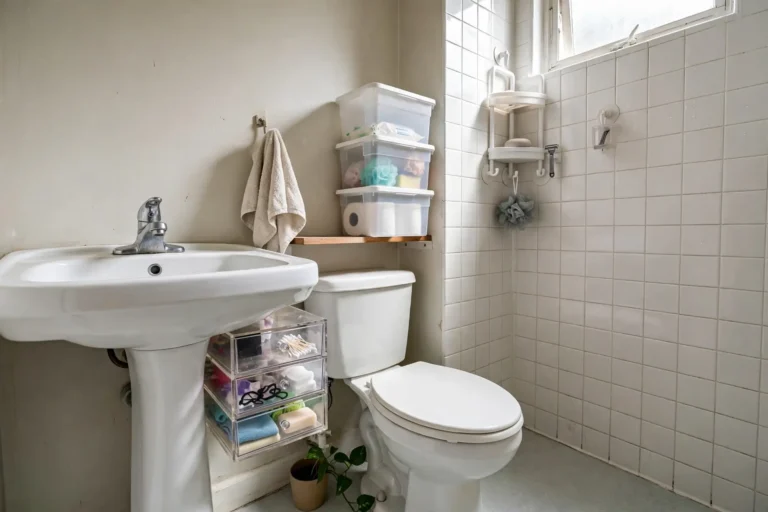
Small bathrooms have floor gaps, not floor space: the strip between the vanity and the toilet, the few inches beside the tub, the corner nobody walks through. A slim rolling cart, usually 5 to 7 inches wide, slides into these gaps and holds three or four tiers of supplies, from spare toilet paper to cleaning products to styling tools.
Measure the gap before buying, because carts vary and a stuck cart is worse than no cart. Choose one with locking wheels if your floor slopes toward the drain, and keep the top tier light so the cart does not tip when you roll it out. When guests come, the whole cart rolls into a closet and the bathroom looks twice as big.
For the laundry pile, a tall slim hamper fits the same gaps better than a wide one, and a lidded hamper keeps the room smelling clean. One hamper per bathroom is plenty; the moment you need two, you are behind on laundry, not short on storage. This is the same gap-filling thinking we use in our small apartment organization guide, applied to the smallest room in the home.
Zone 7: Under the Sink (Taming the Pipe Maze)
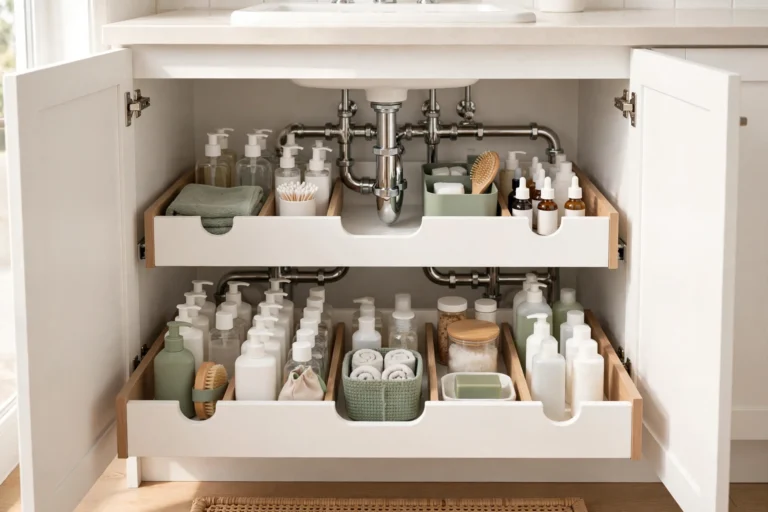
The vanity cabinet is the most disappointing storage in the room: a big dark box with pipes running through the middle, so half of it is unusable. Stackable organizers fix it, but only if you plan around the pipes.
Measure around the pipes first. Note the height from the cabinet floor to the lowest pipe, the width on each side of the drain trap, and the door opening width. Buy stackable bins or a two-tier organizer that fit the clear zones, not the full cabinet. A tall bottle of cleaner under a low pipe wastes the space above it, so keep tall items to the side zones and short bins in the center.
Sort by use, not by type. Daily cleaning wipes and the toilet brush cleaner go at the front where you grab them without bending. Backups and rarely used supplies go behind or below. Add one small bin per category, cleaning, hair, backup toiletries, so the cabinet stays sorted when you pull things out in a hurry.
Protect the cabinet floor. Line it with a washable mat or a cheap plastic tray. Bathroom cabinets see drips and leaks, and in a rental, water damage under the sink can cost you part of your deposit at move-out. A ten-minute lining job is the cheapest insurance in this whole project.
Quick Answers
Will suction cups damage rental bathroom tile?
No. Suction cups grip with air pressure, not adhesive, so they leave no residue and cause no damage when removed. They only work on smooth, non-porous surfaces like glazed tile, glass, and fiberglass. Press them onto a clean surface and re-press them monthly to keep the seal strong.
Do over-toilet storage units need to be anchored?
Many freestanding over-toilet units are designed to stand on the floor without wall screws, but a tall unit loaded with bottles can be top-heavy. Follow the manufacturer’s stability instructions exactly, choose a unit with a wide base, and never skip required anti-tip measures to preserve a no-drill claim. If the instructions require wall anchoring, pick a different unit or a different solution.
How do I keep a tiny bathroom from looking cluttered?
Clear the counter first, because a clean counter makes the whole room feel bigger. Then hide the visual noise: put daily items in a tray, small items in baskets, and anything you do not use weekly behind the door or in a closed cabinet. Matching baskets on the over-toilet shelf hide a dozen mismatched bottles in one move.
Your Next Step
Start with your loudest pain point, not the whole list. If the counter is the mess, do Zone 3 this afternoon. If bottles are all over the tub edge, mount a suction caddy and a tension pole in the shower. Two or three zones in one weekend is a realistic pace, and each finished zone makes the remaining clutter easier to see. By Sunday night, the bathroom can be the most organized room in the apartment.
For the same renter-safe thinking across every room, read our 45 renter-friendly storage ideas for small apartments, and browse more in the bathroom hub.
2 Comments