Small Apartment Organization Ideas: The Complete Guide
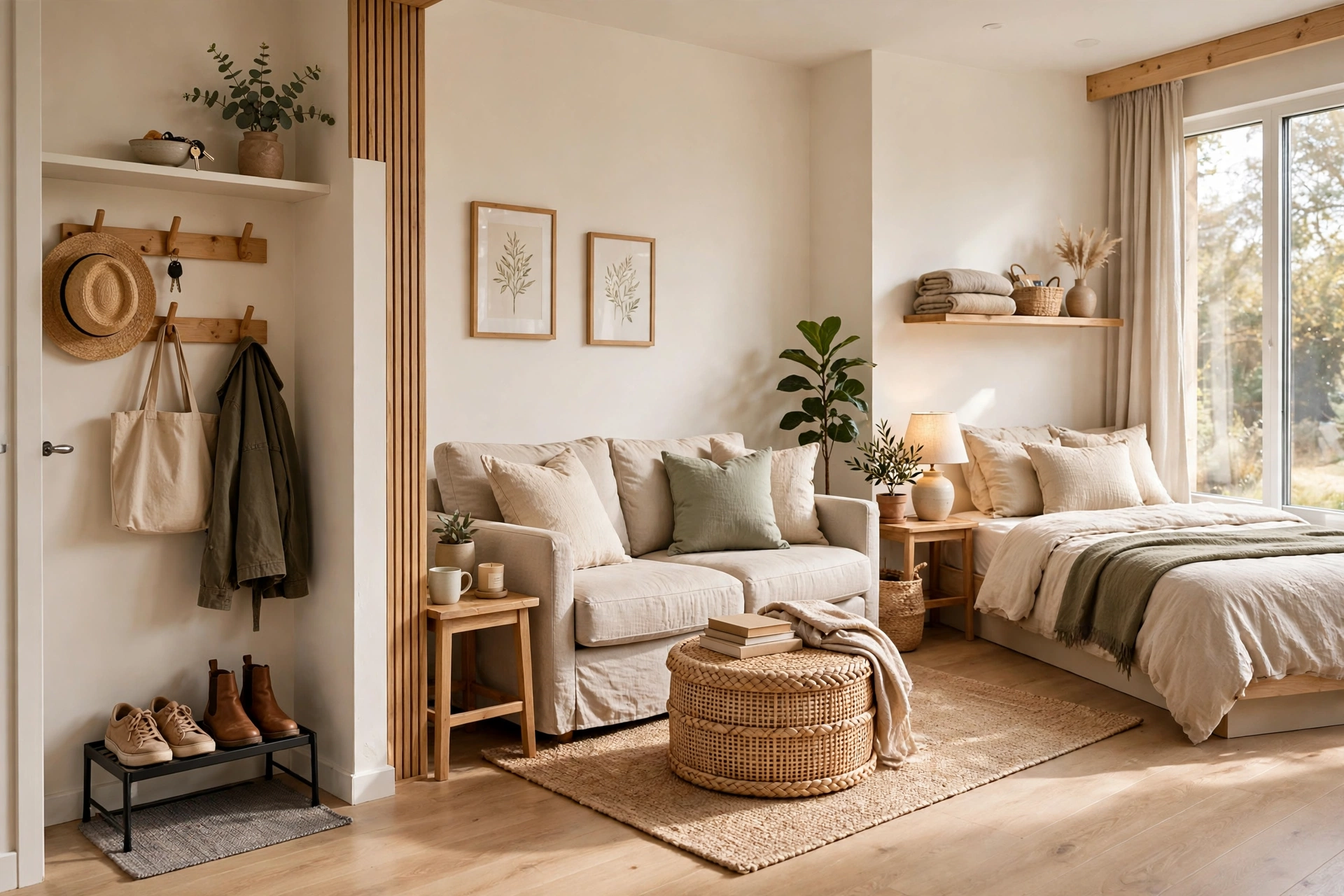
Living in a small apartment can feel like a losing battle. The mail piles up on the counter, shoes migrate to the middle of the floor, and every closet is full before you've even unpacked. If you're renting, it's harder still: no drilling, no built-ins, no renovations, and the deposit to think about.
Here's the good news: small apartment organization ideas work best when you stop thinking room by room and start thinking in zones. This guide walks you through every zone of a small apartment (entryway, living, sleep, work, kitchen, and bath) with renter-friendly, no-drill systems that cost little and are designed to come down at move-out. No renovations. No landlord negotiations. Just a calmer home.
The Zone Method: How Small Apartment Organization Actually Works
Most organization advice fails in small apartments because it treats each room as separate. In a 500-square-foot apartment, rooms bleed into each other. The method that works is zones: divide your space by what you *do* there, then give every item a home inside its zone.
There are three rules that hold the whole system together:
- Everything has a home. If an item doesn't have a designated spot, it becomes clutter. Assign one.
- Store by frequency, not by category. Daily-use items live between knee and eye level. Rarely used items go high, low, or far.
- One in, one out. In a small space, every new item needs an old one to leave. This single habit prevents re-clutter better than any product.
Before you buy a single bin, do a 20-minute walkthrough. Carry a trash bag and a donation bag through every zone. Toss the expired, the broken, and the obvious trash. Bag up anything you haven't used in a year for donation. Organizing is dramatically easier (and cheaper) when there's less to organize.
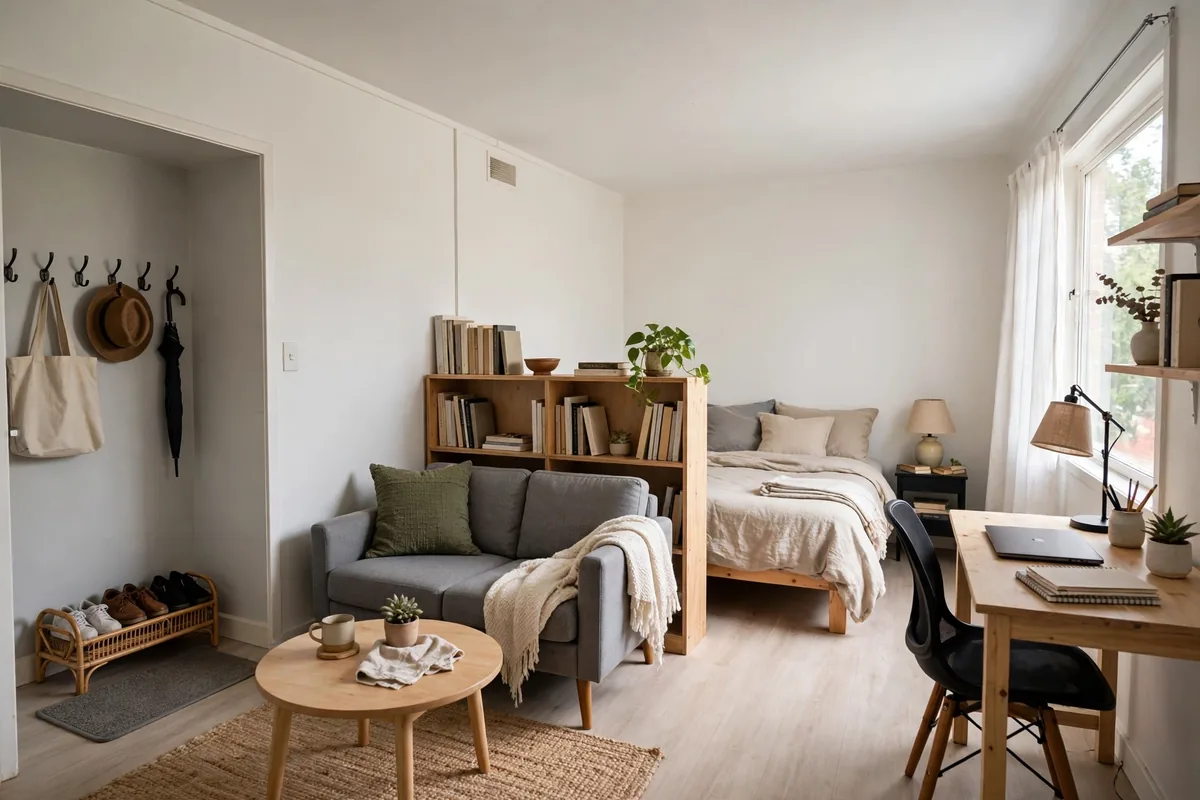
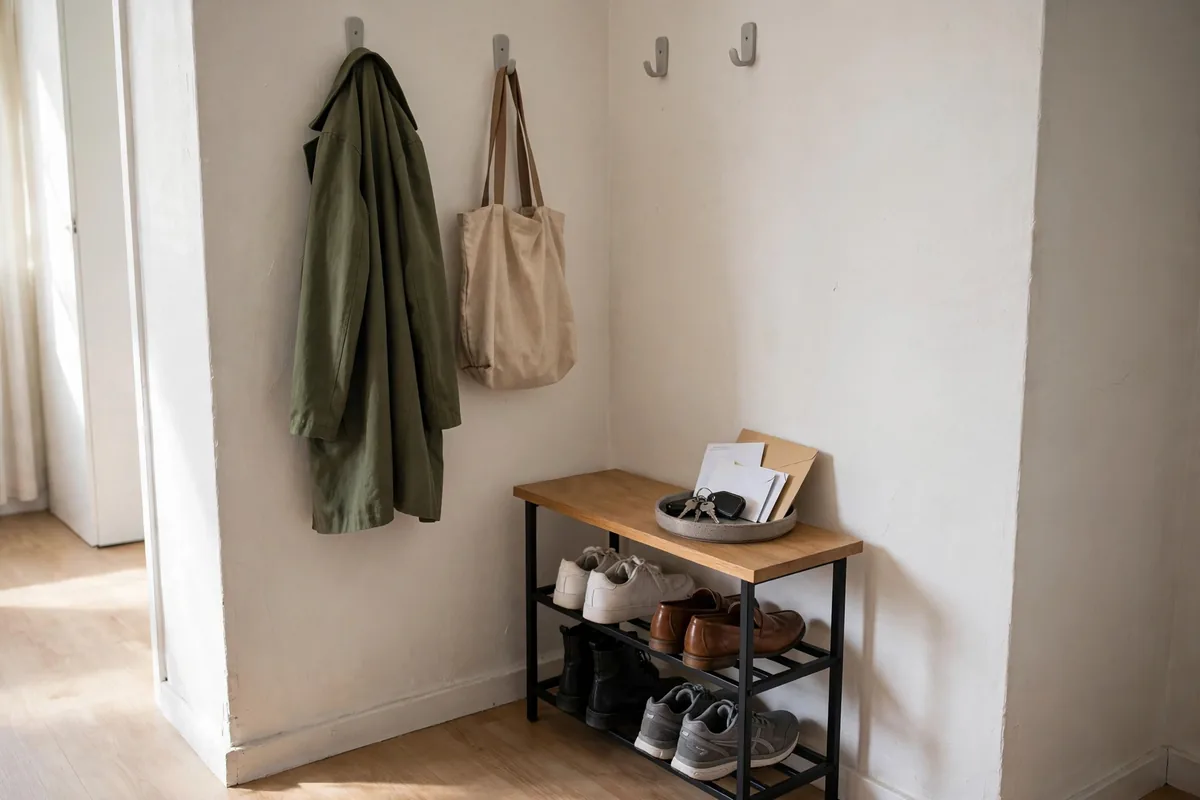
Here's what the zone method looks like in practice. In a studio, the "entryway zone" might be just the wall beside the front door: two adhesive hooks for your coat and bag, a small tray on a narrow shelf for keys, and a boot tray on the floor for shoes. That's it, four items, one wall, zero clutter spilling into the living zone. Every zone works the same way: define the boundary, assign the homes, contain the overflow.
Small Apartment Organization Ideas for the Entryway
Many apartments have no foyer at all: the front door opens straight into the living room. That makes the entryway the highest-impact zone to fix, because it's the first thing you see and the place clutter breeds fastest.
Build a landing strip
Give everything you carry in the door a designated drop spot: keys, wallet, sunglasses, mail. A small tray or basket on a narrow console works. No console? A wall-mounted pocket organizer hung with adhesive strips does the same job without a single hole.
Sort mail the moment it lands. Keep a small recycling bin or paper bag right by the door for junk mail, and a single tray for the mail that needs action. Paper left "to deal with later" is how entryways turn into filing cabinets.
Get shoes under control
Shoes are the number-one entryway clutter source. Set a hard limit (two to three pairs per person by the door) and store the rest in bedroom closets. A slim vertical shoe rack or an over-the-door organizer keeps the active pairs contained. A washable boot tray underneath catches dirt and defines the shoe zone visually, which makes the whole entry look intentional instead of chaotic.
Entryway checklist:
- One landing spot for keys, wallet, and daily carry
- A mail sorting system (tray + recycling for junk)
- Shoe limit set, with overflow stored elsewhere
- Hooks for the one coat and bag you grab daily
Small Apartment Organization Ideas for the Living Zone
The living zone usually doubles as dining room, guest room, and hallway. Every piece of furniture here should earn its footprint, ideally twice.
Choose double-duty furniture
This is the single biggest lever in a small living room. A storage ottoman holds blankets and doubles as seating. A lift-top coffee table hides remotes, chargers, and laptops while giving you a work surface. Nesting side tables tuck away until guests arrive. When you're shopping, ask of every piece: "What does this store?" If the answer is nothing, it needs to be small or beautiful, preferably both.
Go vertical
Floor space is precious; wall space is free. A tall, narrow bookcase holds more than a wide low one while using half the footprint. Freestanding leaning shelves need no mounting and move with you. For renters who can't drill, adhesive picture ledges display books and art, and over-the-door organizers turn the backs of closet doors into storage for games, chargers, and cleaning supplies.
Hide the visual clutter
Small rooms feel cluttered faster because everything is visible. Favor closed storage (cabinets, lidded baskets, fabric bins) over open shelving for the messy categories (cables, paperwork, kids' toys). Corral the remaining visible items: one basket for throws, one tray for remotes, one box for chargers. Run cables through a simple cord box or clip them along furniture legs so they disappear. The goal isn't minimalism, it's giving your eyes fewer things to process.
Living zone checklist:
- Each furniture piece stores something or stays compact
- One tall vertical storage piece in use
- Cables contained and out of sight
- Every surface has a clear purpose (no "dumping" surfaces)
The Sleep Zone: Bedroom Storage Without a Big Closet
Bedrooms in small apartments usually mean one thing: a tiny closet and no dresser space. The fix is using the three hidden dimensions: under the bed, the closet's vertical space, and the walls.
Use under the bed
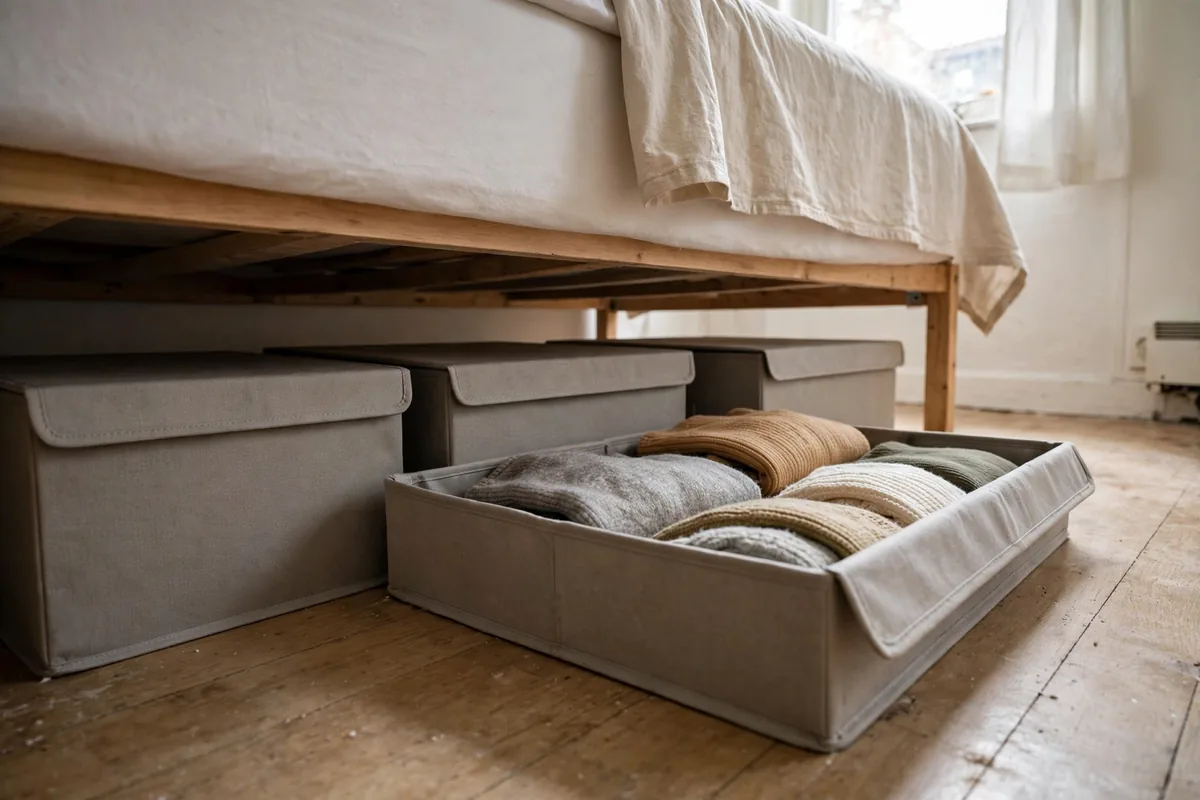
The space under your bed is the largest unused storage area in most apartments. Bed risers add several inches of clearance; flat bins or zippered bags slide underneath for off-season clothes, spare bedding, and shoes. If your bed sits low, even slim rolling drawers made for under-bed use fit.
Double your closet without drilling
A tension rod hung below the existing closet rod instantly doubles hanging space for shirts and pants, no tools, no holes, removable in seconds. Swap bulky hangers for slim velvet ones; they take up roughly half the rod space and keep clothes from sliding off. Hang a multi-pocket organizer on the closet door for accessories, scarves, and small items. Put a small bin on the closet floor for shoes.
Keep the nightstand minimal
Nightstands collect clutter because they're within arm's reach. Limit yours to three things: light, book, water. Move chargers to a small wall-mounted pocket beside the bed (adhesive-mounted) so cables leave the surface. If you share a small bedroom, a bedside caddy that slips between mattress and frame gives each person a pocket without needing two tables.
The Work Zone: A Home Office in 20 Square Feet
Working from a small apartment doesn't require a spare room. It requires a defined zone (even a tiny one) so work has a place to start and, just as important, a place to end.
Pick a desk that fits the zone
Match the desk to your space, not the other way around. A fold-down wall desk (mounted with removable heavy-duty strips or simply leaned) gives you a full work surface that vanishes after hours. A rolling kitchen cart with a top tray works as a mobile desk you can wheel into a closet. A corner of the bedroom or living room, defined by a small rug or a bookshelf divider, is enough, the boundary matters more than the square footage.
Control paper and cables
Paper is the work zone's clutter engine. Go digital where you can, and keep one slim tray for the papers that must stay physical, nothing else. Empty it weekly. For cables, a single adhesive cable clip trail from outlet to desk keeps chargers off the floor, and a small box hides the power strip. When the workday ends, close the laptop and clear the surface. A work zone that resets daily never becomes a junk zone.
Kitchen and Bathroom: High-Impact Small Wins
Kitchens and bathrooms are small but dense: a few targeted changes pay off fast.
Kitchen wins:
- Use the inside of cabinet doors: adhesive hooks hold measuring cups, lids, and wraps.
- Add an over-the-cabinet-door organizer for spices or cleaning supplies, it creates a whole extra storage unit from dead space.
- Tame under the sink with a tension rod across the cabinet to hang spray bottles, freeing the floor for bins.
- Decant dry goods into uniform stackable containers; they fit shelves better and end the half-open bag chaos.
For the full room-by-room kitchen playbook, see our Small Kitchen Organization Ideas: The Complete Guide.
Bathroom wins:
- An over-the-toilet shelf unit (freestanding) adds storage without touching walls.
- Adhesive shower caddies and hooks work on tile and glass: clean the surface with rubbing alcohol first so they hold.
- A slim rolling cart slides into the gap beside the vanity for toiletries.
- Decant cotton balls, swabs, and bath salts into matching jars; grouped small items read as decor instead of clutter.
The Systems That Keep a Small Apartment Organized
Organizing once is easy. Staying organized is the actual skill, and it's built on small systems, not willpower.
The 10-minute reset. Every evening, set a timer for ten minutes and return things to their zone homes. In a small apartment, ten minutes genuinely covers the whole space. This one habit does more than any product.
The donation box. Keep a bag or box in a closet at all times. When you notice something you don't use, drop it in. When it's full, donate it. Outflow has to be as easy as inflow.
One in, one out. Buying new shoes? An old pair leaves. New kitchen gadget? One gets donated. Say it as a household rule and clutter stops compounding.
Seasonal rotation. Twice a year, swap the seasonal items: winter coats and boots go up high or under the bed in labeled bins; summer gear comes down. Label everything. In a small apartment, the wrong-season stuff is just clutter wearing a disguise.
The $25 renter starter kit
You don't need a shopping spree to start. These inexpensive basics solve the most common small-apartment problems:
- Tension rod ($8-12): doubles closet hanging space or organizes under-sink bottles
- Pack of adhesive hooks ($5-8): keys, hats, cables, and bathroom tools on any smooth surface
- Over-the-door organizer ($10-15): shoes, pantry goods, or cleaning supplies on dead door space
- Two lidded bins ($4-6): one for the donation outflow, one for under-bed or closet-top storage
Buy for a specific problem, not in advance. The kit above handles the entryway, closet, and bathroom wins in this guide for about the cost of a takeout dinner.
FAQ: Small Apartment Organization Questions
How do I organize a small apartment with no storage?
Start by creating storage where none exists: under the bed, over doors, on walls, and inside cabinet doors. Freestanding pieces (a tall bookcase, a rolling cart, a storage ottoman) add capacity without renovations. Then declutter ruthlessly; in a space with no storage, every item you remove matters twice as much.
How can I organize my apartment without drilling holes?
Lean on four renter-friendly methods: tension rods (closets, under sinks, windows), adhesive hooks and strips (walls, tile, cabinet doors), over-the-door organizers (pantry, closet, bathroom), and freestanding furniture (bookcases, carts, shelf units). All of them are designed to remove cleanly at move-out without wall repair, but always check your lease and test in a hidden spot first.
What's the best way to organize a studio apartment?
Divide the single room into zones (sleep, living, work, kitchen) using rugs, bookcases, or curtains as boundaries. Give each zone its own storage so items don't migrate. Choose furniture that does double duty, and be strict about the one-in-one-out rule, since there's nowhere for overflow to hide.
How do I make my small apartment look less cluttered?
Reduce visual noise: use closed storage instead of open piles, group small items into baskets and trays, keep surfaces mostly clear, and stick to a limited color palette for your storage containers. Hide cables. Most "cluttered" feelings come from dozens of small visible items, not from the amount of stuff you own.
Where should I start organizing a small apartment?
Start with the entryway. It's small, it takes under an hour, and the visible win builds momentum for the bigger zones. Then move to whichever zone bothers you most when you walk in the door, that's the one draining your energy daily.
How do I organize a small apartment on a budget?
Declutter first (free), then buy only what a specific problem needs. Dollar-store bins, tension rods, and adhesive hooks solve most small-apartment problems for a few dollars each. Thrift stores are full of baskets, trays, and small furniture. Avoid buying storage "systems" before you've decluttered. Containers for clutter you don't need are just organized clutter.
Your Next Step: Start With One Zone Today
You don't need a full weekend or a big budget to change how your apartment feels. Pick the zone that greets you worst (the entryway avalanche, the living room surfaces, the closet you avoid) and apply the zone method to just that one space today.
Give everything a home, store by frequency, and set up your donation box. Then do the 10-minute reset tonight and notice how different the place feels tomorrow morning.
For more ideas organized by space, browse the small apartment guides, each one goes deep on a single room or problem so you can fix zones one at a time.
One Comment