Small Hallway & Linen Closet Organization: The Complete Guide
Every apartment has closets that everyone forgets: the narrow hallway closet stuffed with coats, the linen closet where towels go to wrinkle, and the cleaning-supply closet that is really a pile behind a door. These three small spaces hold the items you reach for daily, which makes them high-impact organization projects. One focused afternoon per closet is enough, and every upgrade below is renter-friendly with no drilling.
For the bedroom side of closet organization, see our small bedroom closet organization guide. For the over-the-door organizers used below, the room-by-room over-the-door guide covers every type, and the renter-friendly storage ideas keep every upgrade deposit-safe.
The Hallway Coat Closet: The Outerwear Zone
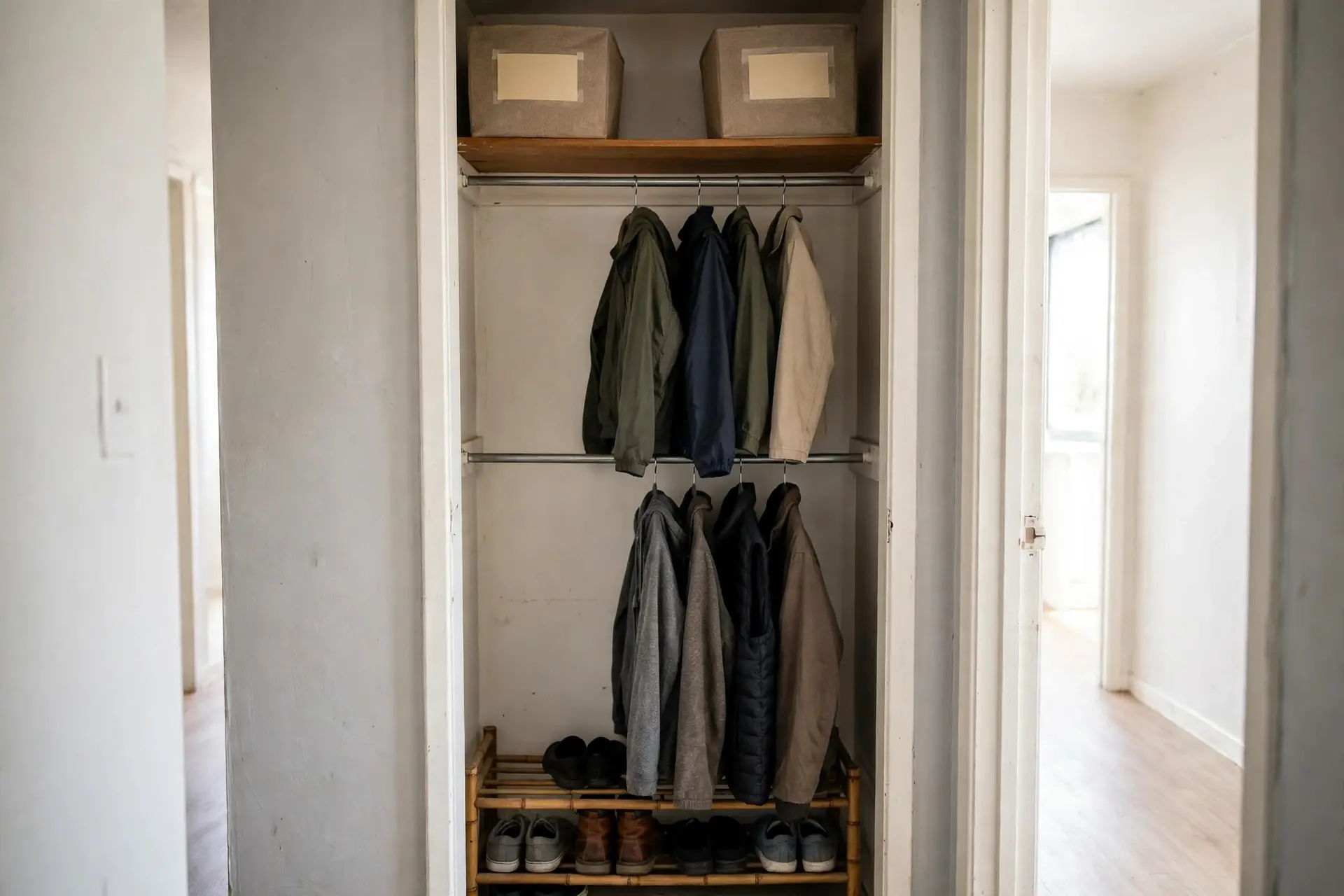
The hallway closet fails for one reason: everything in it hangs at the same height, so the floor becomes a shoe pile and the shelf becomes a hat graveyard. Fix it with three zones. The hang zone gets a double-hang setup: add a tension rod below the existing rod and you instantly double hanging space, with short jackets up top and longer coats below. The floor zone gets a low shoe rack or a boot tray, one pair per person for daily shoes, with the rest stored elsewhere. The top shelf zone gets two labeled bins: one for hats, gloves, and scarves, one for the bags and umbrellas you grab on the way out.
Keep only in-season outerwear in this closet. Out-of-season coats move to the bedroom closet or under-bed storage, because a hallway closet holding four seasons of coats has no room to function. When the seasons change, do a ten-minute swap: it is the cheapest closet upgrade there is.
The Linen Closet: The Linens Zone
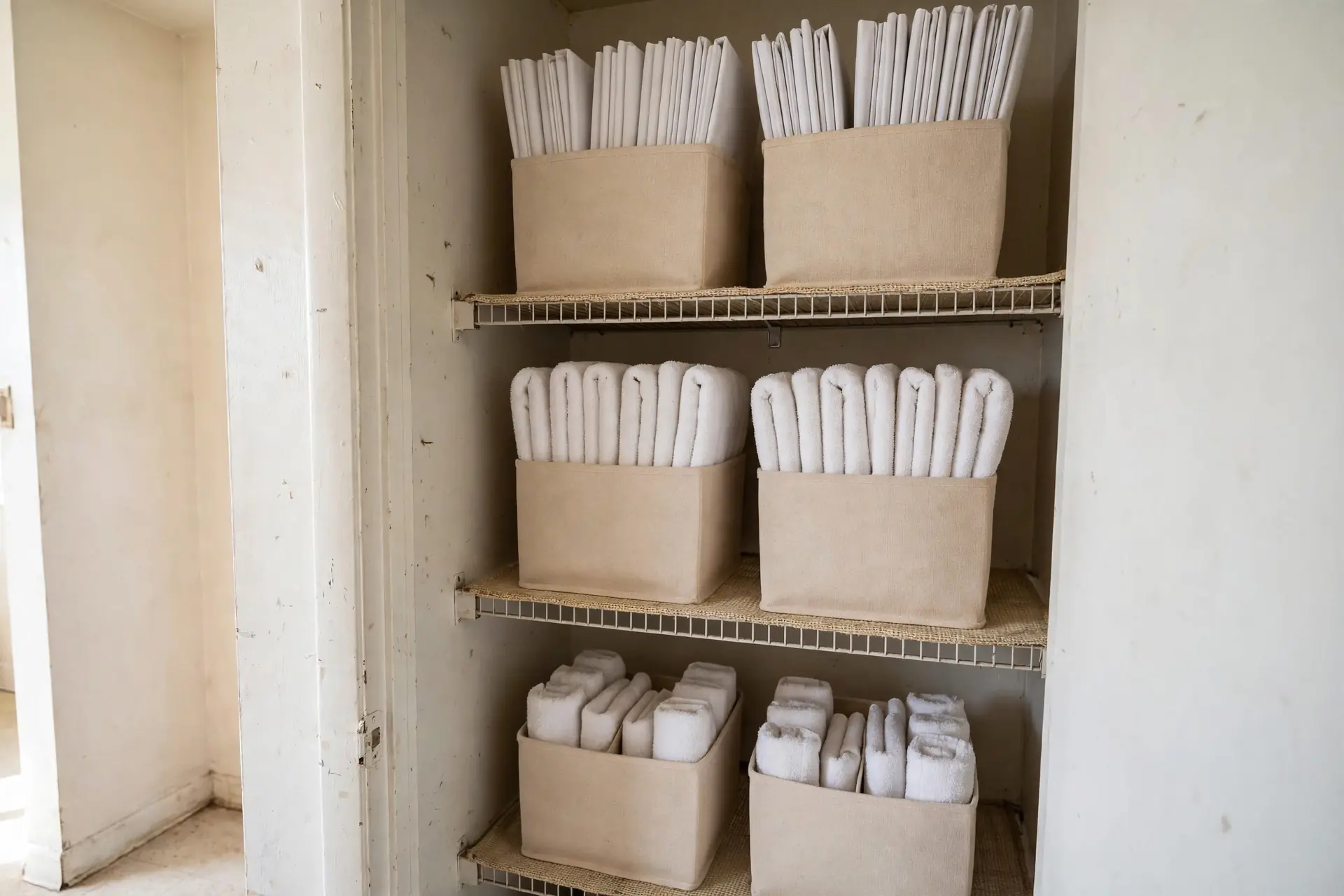
Linen closets are usually deep shelves where folded towels lean against each other and eventually avalanche. The fix is containment by category: one shelf or bin per category (bath towels, hand towels, sheets, table linens), with each category folded to the same size so stacks stay stable. File-fold towels vertically in a bin instead of stacking them flat; you can see every towel at a glance and pull one out without disturbing the rest.
Use the full depth of the shelves, not just the front half. Put the rarely-used guest linens at the back and daily towels at the front. If the shelves are wire, add shelf liners or slim bins first, because folded linens snag and tip on bare wire. A small bin on the bottom shelf corrals the extras: stain remover, spare pillowcases, and the duvet cover waiting for laundry day.
The Cleaning-Supply Closet: The Supplies Zone
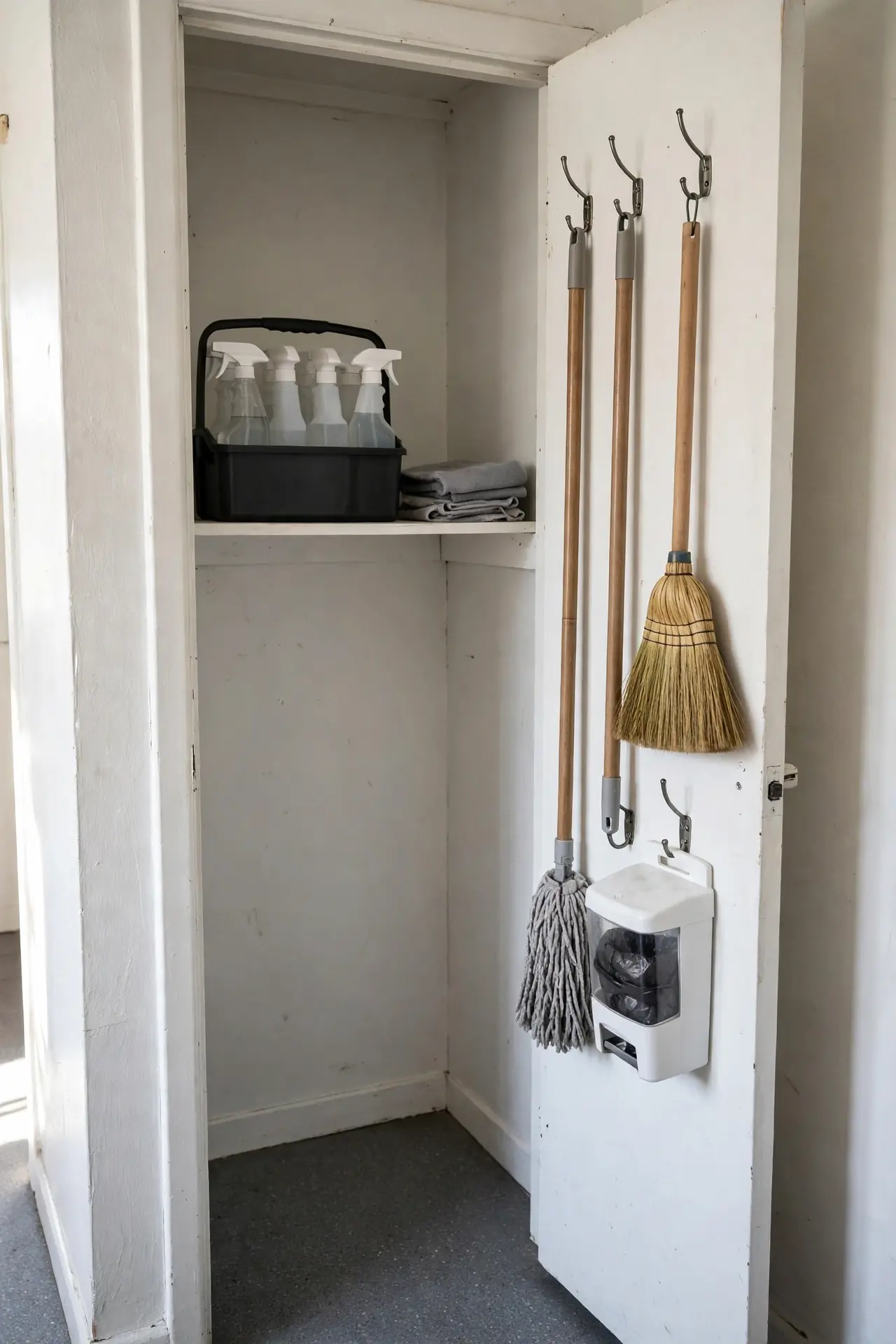
The cleaning closet is usually a narrow space, sometimes just the cabinet under a utility sink or a broom closet off the hallway. Treat it as a workstation: everything you need for a cleaning session should be reachable without moving something else. Group supplies by task in a handled caddy (bathroom cleaners in one caddy, floor supplies in another), hang the broom and mop on adhesive hooks on the inside of the door, and put a small trash bag dispenser on a hook at eye level.
Keep the floor of this closet clear. Mops and brooms hang, caddies sit on the one shelf, and nothing lives on the floor where it blocks the door from opening fully. If the closet has no shelf, a tension-rod shelf or a stack of two sturdy crates creates one without a single screw.
No-Drill Upgrades That Work in All Three Closets
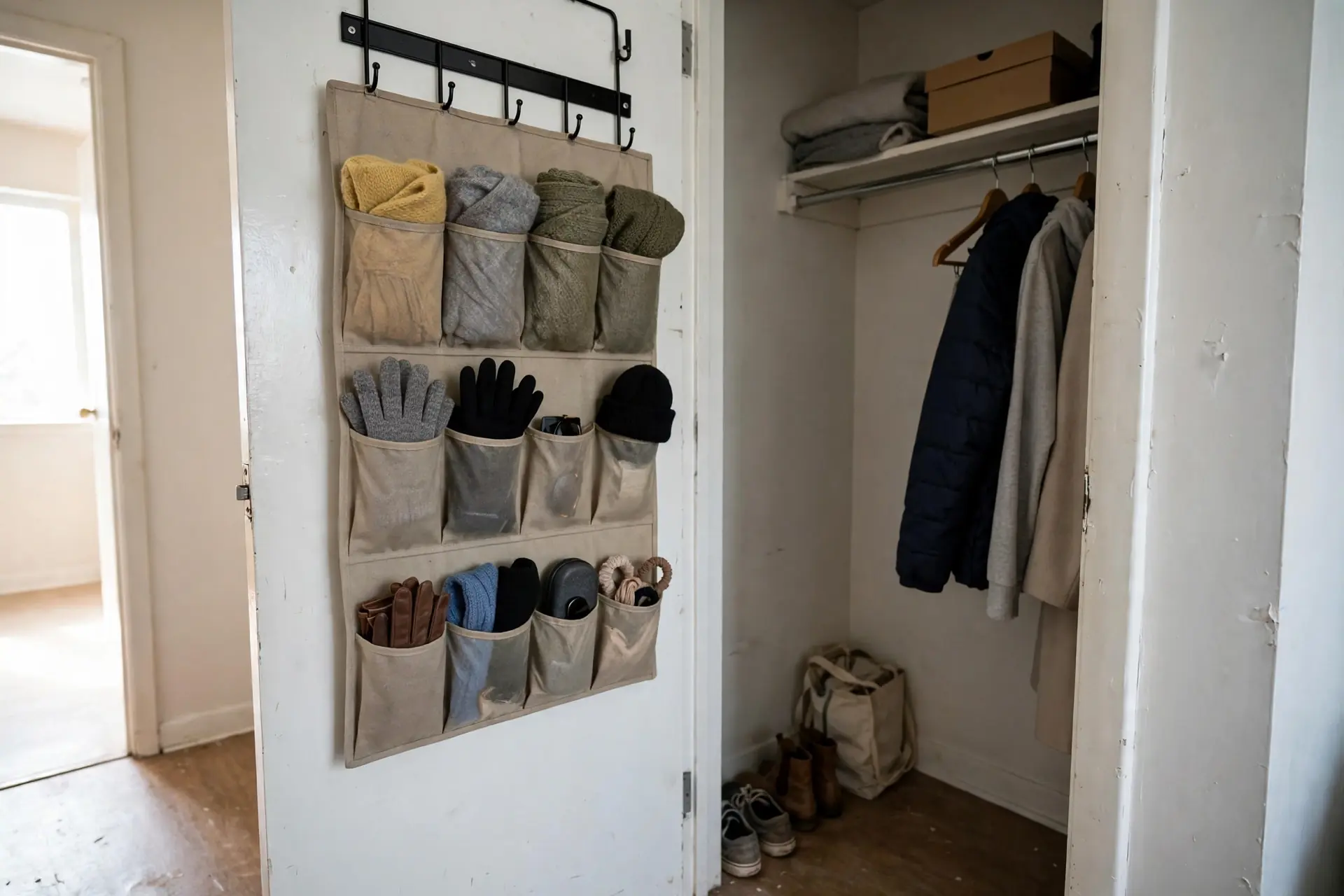
These five upgrades apply to any small closet and none of them need a drill. Tension rods create a second hanging level or a shelf support in minutes. Over-the-door organizers add a full wall of pocket storage to the inside of any closet door (see the over-the-door guide for the best types per room). Adhesive hooks hold robes, bags, and cleaning tools on walls and door backs. Shelf dividers keep stacks of linens or sweaters from toppling on deep shelves. And uniform bins, one size per shelf, turn every shelf into a pull-out drawer.
The common thread is reversibility. Every one of these comes out cleanly when you move, which is why they pair so well with the renter-friendly storage ideas used across the rest of the apartment.
Your Next Step
Start with the closet that annoys you most, usually the coat closet, and empty it completely before you reorganize: the empty-closet reset takes twenty minutes and makes every decision easier. Sort into keep, relocate, and donate, then rebuild with the zones above. Once one closet works, the other two follow the same pattern. For the bedroom closets, continue with our small bedroom closet organization guide.